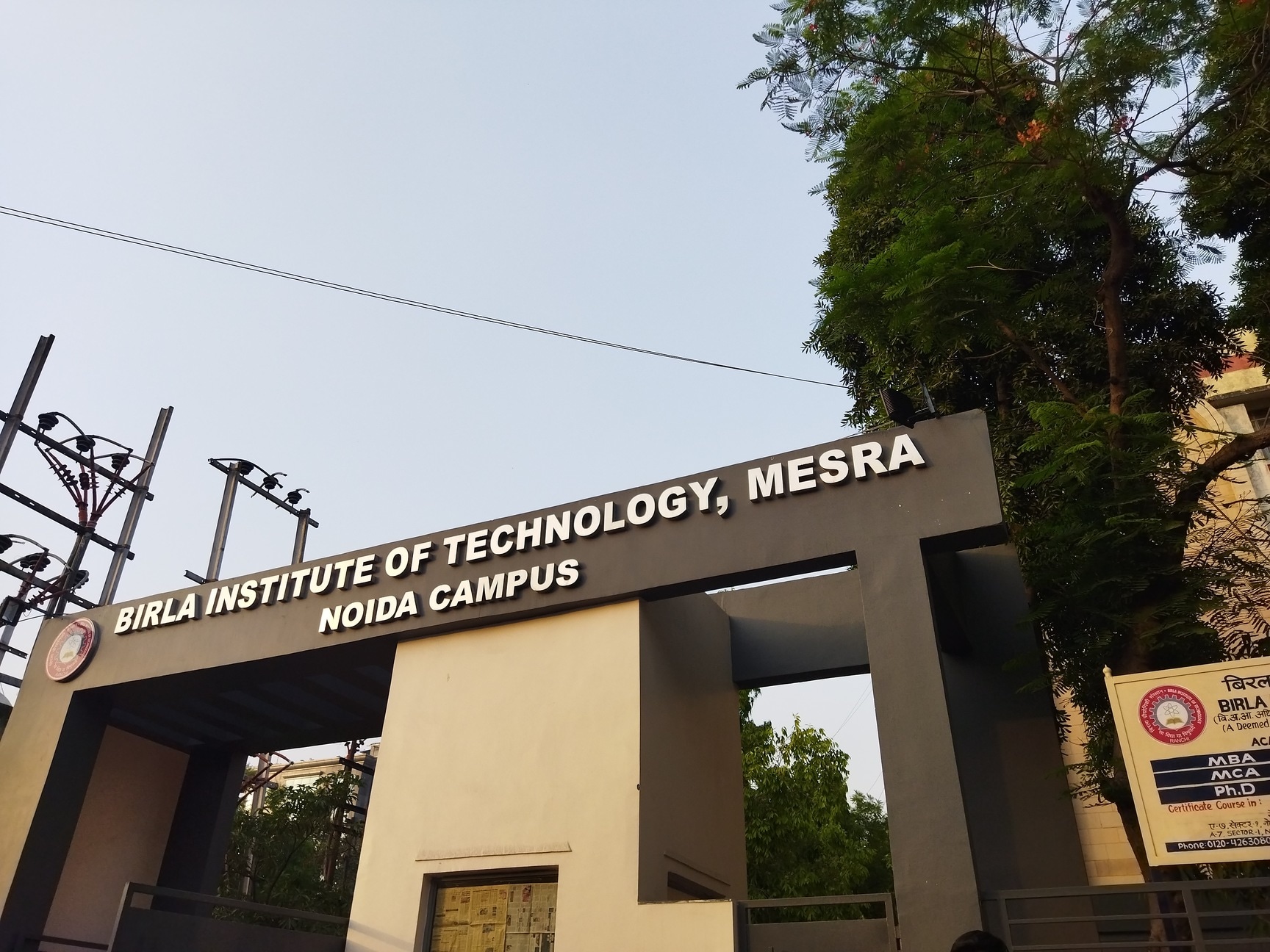
Introduction about Ph.D. in Physics at Birla Institute of Technology
The Birla Institute of Technology (BIT) has earned a reputation as a premier research university in India. Its Ph.D. in Physics program blends rigorous theoretical foundations with cutting‑edge experimental work, aiming to produce thought leaders for academia, industry, and national laboratories. Prospective scholars join a vibrant community of distinguished faculty, state‑of‑the‑art laboratories, and interdisciplinary collaborations that span quantum technologies, condensed matter, astrophysics, and applied optics.
Ph.D Admission 2026-2027 & Writing Support Services by Shiksha Research
Eligibility Criteria for Ph.D. in Physics at Birla Institute of Technology
- Educational Qualifications: Minimum of 55% (or equivalent CGPA) in a Master’s degree (M.Sc./M.E./M.Tech.) in Physics or a closely related discipline.
- Qualifying Examinations: Candidates who have qualified GATE (Physics) with a valid score are also considered.
- Research Experience: Prior research exposure, publications, or project work greatly strengthens the application.
- Age Limit: No upper age limit, though some funding agencies may have restrictions.
Entrance Exam for Ph.D. in Physics at Birla Institute of Technology
BIT conducts its own entrance examination, commonly known as the BIT Ph.D. Entrance Test (BIT-DET). The test assesses:
- Core physics concepts – classical mechanics, electrodynamics, quantum mechanics, and statistical physics.
- Mathematical proficiency – differential equations, linear algebra, and complex analysis.
- Analytical reasoning and problem‑solving abilities.
GATE‑qualified candidates may be exempted from BIT‑DET, subject to a minimum qualifying score set by the university. The selection process also includes a personal interview and a research proposal presentation.
Fee Structure for Ph.D. in Physics at Birla Institute of Technology
| Category | Annual Fee (INR) | Notes |
|---|---|---|
| General Category (Self‑Financed) | ₹45,000 | Includes tuition, library, and laboratory access. |
| SC/ST/PWD (Self‑Financed) | ₹30,000 | Government concession applicable. |
| Scholarship Holders (e.g., UGC‑JRF, CSIR‑NET) | ₹0 (Waiver) | Full tuition waiver; stipend as per funding agency. |
| Research Assistantship (Institute‑Sponsored) | ₹0 (Waiver) | Includes stipend and contingency grant. |
Admission Process for Ph.D. in Physics at Birla Institute of Technology
- Online Application: Fill the BIT admission portal, upload academic transcripts, GATE score (if any), and a concise research proposal.
- Entrance Examination: Appear for BIT‑DET (or submit GATE score).
- Interview & Presentation: Shortlisted candidates are invited for a panel interview and a brief presentation of their proposed research.
- Final Selection: Merit list released based on exam performance, interview assessment, and academic record.
- Admission Confirmation: Pay the requisite fees (or submit scholarship award letter) and complete registration.
Ph.D. Subjects and Specializations in Physics at Birla Institute of Technology
BIT offers a broad spectrum of research domains. Candidates may specialize in:
- Quantum Information & Computing
- Condensed Matter Physics & Materials Science
- High Energy & Particle Physics
- Astrophysics & Cosmology
- Laser Physics & Nonlinear Optics
- Nanophotonics & Plasmonics
- Statistical Mechanics & Complex Systems
Research Areas in Physics at Birla Institute of Technology
The institute’s research infrastructure supports interdisciplinary projects such as:
- Design and fabrication of quantum devices for secure communication.
- Exploration of topological insulators and superconductors.
- Simulation of astrophysical phenomena using high‑performance computing.
- Development of ultrafast laser systems for material processing.
- Investigation of thermodynamic properties in low‑dimensional systems.
Documents Required for Ph.D. in Physics at Birla Institute of Technology
| Document | Requirement Details |
|---|---|
| Academic Transcripts | Original mark sheets & degree certificates (M.Sc./M.E./M.Tech.) |
| GATE Score Card | Valid for the year of admission (if applicable) |
| Research Proposal | 2‑3 page document outlining objectives, methodology, and expected outcomes |
| Curriculum Vitae | Professional profile, publications, and conference participation |
| Identity Proof | Aadhar Card, Passport, or Voter ID |
| Letter of Recommendation | Two academic referees familiar with the candidate’s research potential |
Birla Institute of Technology Ph.D. Syllabus for Physics
The syllabus is structured around three core components:
- Coursework (Year 1): Advanced Quantum Mechanics, Statistical Physics, Computational Methods, and Research Ethics.
- Comprehensive Exams (End of Year 1): Written and oral assessments covering the coursework.
- Dissertation Research (Years 2‑4): Original research, publications in peer‑reviewed journals, and a final thesis defense.
Students also have the flexibility to enroll in specialized electives such as Nonlinear Dynamics, Particle Detector Technology, or Photonics Engineering.
How To Apply for Ph.D. in Physics at Birla Institute of Technology
Follow these step‑by‑step instructions:
- Visit the official BIT admissions portal and create a user account.
- Complete the online application form, ensuring accurate entry of personal and academic details.
- Upload scanned copies of all required documents (see “Documents Required” section).
- Submit a concise research proposal (max 1500 words) highlighting your research question, methodology, and anticipated impact.
- Pay the non‑refundable application fee of ₹2,000 via net banking or UPI.
- Monitor email for admission test schedule or GATE score validation confirmation.
- Attend the entrance test/interview as per the communicated date.
- Upon selection, complete fee payment or upload scholarship award letter to finalize enrollment.
Career Scope and Job Opportunities After Ph.D. in Physics from Birla Institute of Technology
Graduates enjoy a wide array of career pathways:
- Academic Positions: Assistant Professor, Post‑Doctoral Fellow, or Research Scientist in premier universities and institutes.
- Industry Roles: R&D Engineer, Materials Scientist, Quantum Computing Specialist, or Senior Analyst in sectors like aerospace, semiconductor, and renewable energy.
- Government & Public Laboratories: Positions at DRDO, ISRO, BARC, and the Indian Institute of Science.
- Entrepreneurship: Founding technology start‑ups focused on photonics, nanomaterials, or AI‑driven simulation tools.
- Consultancy & Policy: Science policy advisor, technical consultant for international research collaborations, or patent examiner.
According to recent placement data, Ph.D. physicists from BIT command an average starting salary ranging from ₹12 lakhs to ₹20 lakhs per annum, with rapid growth for those entering cutting‑edge fields such as quantum technologies.
Scholarship for Ph.D. in Physics at Birla Institute of Technology
BIT honors academic excellence through multiple scholarship schemes:
- UGC Junior Research Fellowship (JRF): Stipend of ₹31,000 per month plus contingency.
- CSIR NET Fellowship: Similar financial support with additional research grants.
- Institute Merit Scholarship: Full tuition waiver for top 5% of incoming cohort.
- Industry Sponsored Fellowships: Partnerships with companies like Tata Motors and Infosys provide project‑based funding.
Applicants are encouraged to explore the Thesis and Dissertation Writing Services for guidance on crafting a compelling research proposal, which can significantly improve scholarship prospects.
FAQs Regarding Ph.D. in Physics at Birla Institute of Technology
- Q: Is a GATE score mandatory for admission?
- A: No. While a valid GATE score offers an exemption from BIT‑DET and can enhance eligibility, candidates without GATE can still apply by clearing the institute’s entrance test.
- Q: How long does the Ph.D. program typically take?
- A: The minimum duration is three years, but most students complete it in 4‑5 years, depending on research progress and publication requirements.
- Q: Can I pursue a part‑time Ph.D. while working?
- A: BIT offers flexible study options for working professionals, provided they meet the minimum attendance for laboratory work and submit periodic progress reports.
- Q: Are there opportunities for interdisciplinary research?
- A: Absolutely. BIT encourages collaborations across departments such as Electrical Engineering, Materials Science, and Computer Science, fostering projects like quantum sensing and AI‑driven data analysis.
- Q: What support is available for data analysis?
- A: Students can access the Research Data Analysis Services platform,








