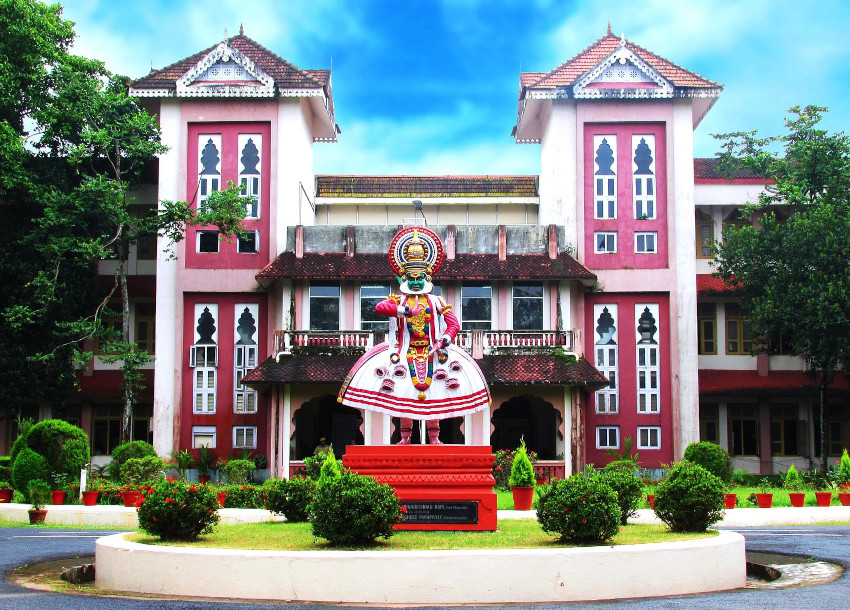
Introduction about Ph.D. in Physics at Cochin University of Science & Technology
Embarking on a doctoral journey in physics at Cochin University of Science & Technology (CUSAT) is more than an academic pursuit; it is a gateway to pioneering research that shapes the future of science and technology. Nestled in the vibrant educational hub of Kerala, CUSAT offers world‑class laboratories, seasoned faculty, and a collaborative ecosystem that fuels innovation. Whether your ambition lies in quantum mechanics, astrophysics, or condensed matter, a Ph.D. from CUSAT equips you with the expertise, credibility, and network to become a leader in the global scientific community.
Ph.D Admission 2026-2027 & Writing Support Services by Shiksha Research
Eligibility Criteria for Ph.D. in Physics at Cochin University of Science & Technology
Prospective candidates must satisfy the following baseline requirements:
- Hold a Master’s degree in Physics or a closely related discipline (M.Sc., M.Tech, M.Phil) with at least 55% aggregate marks (or equivalent CGPA).
- Candidates with a valid GATE score in Physics (or related engineering streams) are given preference.
- For candidates holding a Ph.D. in another discipline, a minimum of 5 years of relevant research experience is mandatory.
- Foreign nationals must possess an equivalent degree approved by the University’s International Admissions Committee.
Entrance Exam for Ph.D. in Physics at Cochin University of Science & Technology
CUSAT conducts its own entrance test, the CUSAT Ph.D. Entrance Examination (CPEE), twice a year. The exam assesses:
- Fundamental concepts in Classical Mechanics, Electromagnetism, Quantum Theory, and Statistical Physics.
- Analytical and problem‑solving skills through numerical and conceptual questions.
- Research aptitude via a written proposal summary and a viva‑voce interview with faculty members.
Qualified GATE or CSIR‑NET scorers may be exempted from the written component but will still attend the interview.
Fee Structure for Ph.D. in Physics at Cochin University of Science & Technology
| Category | Annual Fee (INR) | Duration | Notes |
|---|---|---|---|
| General Category | 22,000 | 4 years (full‑time) | Includes tuition, library, and lab access |
| OBC/SC/ST | 18,000 | 4 years (full‑time) | Subsidized rate as per government policy |
| International Students | 35,000 | 4 years (full‑time) | Additional student services fee |
| Part‑time / Research Scholar (stipend) | 0 (stipend payable by sponsoring agency) | Varies | Applicable to candidates with external funding |
Admission Process for Ph.D. in Physics at Cochin University of Science & Technology
- Online Application: Complete the web‑based application on the university portal, upload academic transcripts, and pay the non‑refundable application fee.
- Entrance Examination: Appear for CPEE or submit a valid GATE/CSIR‑NET score.
- Interview: Shortlisted candidates are invited for a research interview with the department’s faculty panel.
- Admission Offer: Successful candidates receive an official admission letter and details regarding fee payment.
- Enrollment: Submit original documents, sign the enrollment form, and commence the research program.
Ph.D. Subjects and Specializations in Physics at Cochin University of Science & Technology
CUSAT’s Department of Physics offers a broad spectrum of specializations, allowing scholars to tailor their research focus:
- Quantum Optics and Photonics
- Condensed Matter Physics
- Plasma Physics
- Astrophysics and Cosmology
- Computational Physics
- Nanoscience and Nanotechnology
- Statistical Mechanics
- Materials Science (Physics‑centric)
Research Areas in Physics at Cochin University of Science & Technology
The university’s research ecosystem is anchored by state‑of‑the‑art facilities such as the Center for Advanced Research in Nanoscience (CARn) and the Space Science Laboratory. Current research thrusts include:
- Ultra‑fast laser–matter interactions.
- Quantum information processing and entanglement dynamics.
- Low‑dimensional materials and topological insulators.
- Solar energy conversion through photonic materials.
- High‑energy astrophysical phenomena and gravitational wave detection.
- Computational modeling of complex systems using AI‑driven algorithms.
Documents Required for Ph.D. in Physics at Cochin University of Science & Technology
| Document | Details | Format |
|---|---|---|
| Academic Transcripts | Mark sheets of all qualifying degrees | PDF (scanned) |
| GATE/CSIR‑NET Scorecard | Valid score not older than 5 years | |
| Research Proposal | 2‑page synopsis outlining objectives and methodology | Word or PDF |
| Curriculum Vitae | Academic achievements, publications, and work experience | |
| Letter of Recommendation | Two letters from senior academicians or industry mentors | |
| Proof of Identity | Aadhar / Passport |
Cochin University of Science & Technology Ph.D. Syllabus for Physics
The syllabus is designed to deepen theoretical knowledge while fostering experimental competence. Core modules include:
- Advanced Classical Mechanics
- Quantum Theory and Applications
- Statistical Physics and Thermodynamics
- Electrodynamics in Complex Media
- Computational Techniques in Physics
- Research Methodology and Scientific Writing
- Laboratory Rotation (customized per specialization)
How To Apply for Ph.D. in Physics at Cochin University of Science & Technology
Follow these steps to submit a successful application:
- Create an account on the CUSAT admission portal.
- Fill in personal and academic details, then upload the required documents (see the “Documents Required” table).
- Pay the INR 1,500 application fee via net banking or credit card.
- Select your preferred research supervisor from the faculty list; you may contact them beforehand for alignment.
- Submit the proposal in the prescribed format and await confirmation for the entrance exam date.
Career Scope and Job Opportunities After Ph.D. in Physics from Cochin University of Science & Technology
A doctorate from CUSAT opens doors to diverse career pathways:
- Academic Positions: Assistant Professor, Associate Professor, and tenured faculty roles in premier universities worldwide.
- Research Institutes: Scientist or Senior Scientist roles at ISRO, DRDO, CSIR, and international labs such as CERN.
- Industry R&D: Positions in semiconductor, aerospace, renewable energy, and quantum computing firms.
- Entrepreneurship: Founding tech‑startups focused on photonic devices, nanomaterials, or AI‑enabled simulation tools.
- Policy & Consulting: Scientific advisory roles for governmental agencies and think‑tanks.
Scholarship for Ph.D. in Physics at Cochin University of Science & Technology
Financial assistance is available through multiple channels:
- University Merit Scholarships: Up to 75% tuition waiver for top 10% scorers in CPEE.
- UGC/JRF Fellowships: Annual stipend of INR 31,000 plus contingency allowance.
- CSIR‑NET Fellowships: Stipend of INR 31,000 with additional research grant.
- Industry Sponsored Projects: Funding linked to specific research collaborations with companies like Tata & Philips.
FAQs Regarding Ph.D. in Physics at Cochin University of Science & Technology
- Q1: Can I pursue a part‑time Ph.D. while working?
- A: Yes, CUSAT offers a part‑time mode for candidates with external funding or employer sponsorship.
- Q2: Is there a minimum age limit for admission?
- A: No specific age restriction exists; however, candidates must meet the academic qualifications and research aptitude.
- Q3: How long does the Ph








