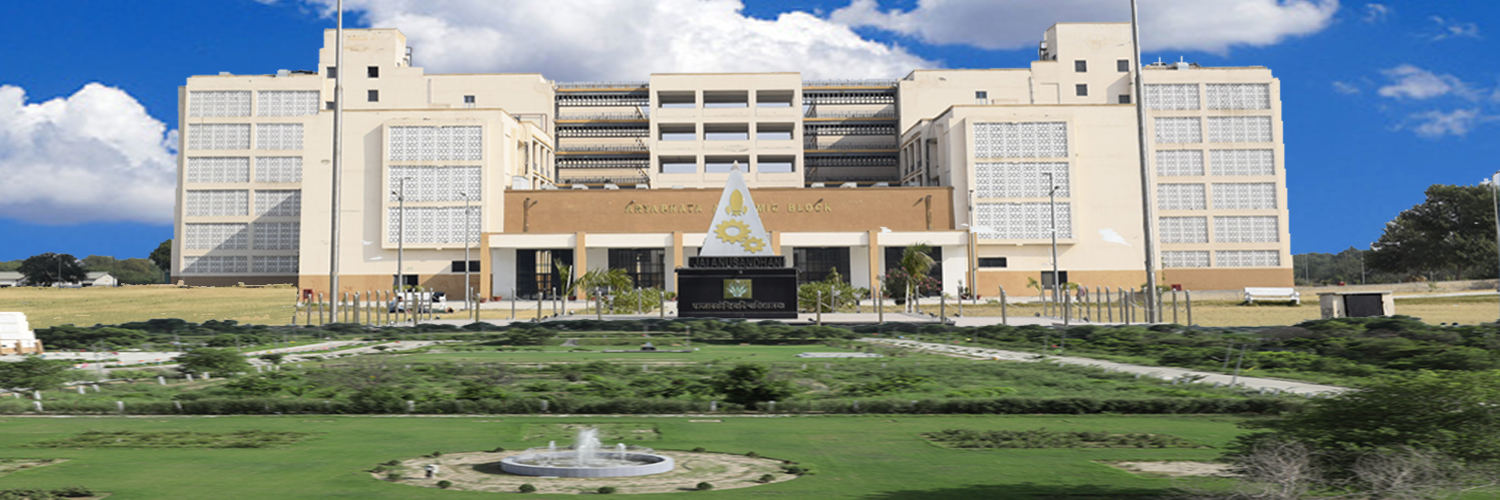
Ph.D. in Physics from Central University of Punjab: Eligibility, Entrance Exam, Fee Structure, Admission Process, Subjects, Research Areas, Syllabus, Scholarship & Career Scope
Introduction about Ph.D. in Physics at Central University of Punjab
The Doctorate in Physics at Central University of Punjab (CUP) is a gateway to cutting‑edge research, world‑class mentorship, and a vibrant academic community. Designed for professionals who aim to push the boundaries of knowledge, this program blends rigorous coursework with intensive research, empowering scholars to become leaders in theoretical, experimental, and applied physics.
Whether you aspire to explore quantum phenomena, develop advanced materials, or contribute to astrophysical discoveries, CUP offers state‑of‑the‑art laboratories, interdisciplinary collaborations, and industry partnerships that translate scientific insight into real‑world impact.
Eligibility Criteria for Ph.D. in Physics at Central University of Punjab
- Master’s degree in Physics or a closely related discipline with a minimum of 55% aggregate (or equivalent CGPA).
- Qualified in National Eligibility Test (NET), GATE, CSIR‑UGC, or CUP’s own entrance examination.
- For candidates possessing a Ph.D. in a related field, direct registration may be allowed based on research proposal merit.
- Proficiency in English (minimum IELTS 6.0 or TOEFL 80 for foreign nationals).
- Strong analytical and mathematical foundation demonstrated through academic transcripts and research publications.
Entrance Exam for Ph.D. in Physics at Central University of Punjab
CUP conducts a comprehensive entrance test that evaluates:
- Fundamental concepts of classical mechanics, electrodynamics, quantum mechanics, and statistical physics.
- Mathematical aptitude – complex analysis, linear algebra, differential equations.
- Research aptitude – statement of purpose, previous research work, and interview performance.
Candidates can also gain admission through recognized national examinations such as NET, GATE, or CSIR‑UGC JRF, which waive the university’s written test.
Fee Structure for Ph.D. in Physics at Central University of Punjab
| Category | Annual Fee (INR) | Additional Charges |
|---|---|---|
| General Category | ₹ 25,000 | Lab & Library Fee: ₹ 5,000 |
| SC/ST/PWD | ₹ 12,500 (50% waiver) | Lab & Library Fee: ₹ 5,000 |
| International Students | ₹ 45,000 | Lab & Library Fee: ₹ 7,000 |
Scholarships, research grants, and teaching assistantships can further reduce the financial burden.
Admission Process for Ph.D. in Physics at Central University of Punjab
- Online application submission through the university portal.
- Upload required documents (transcripts, entrance exam scores, research proposal).
- Payment of application fee (₹ 2,500).
- Qualify in the entrance exam or present a valid national test score.
- Attend personal interview and presentation of research proposal.
- Final selection based on academic merit, research potential, and interview performance.
Ph.D. Subjects and Specializations in Physics at Central University of Punjab
CUP offers a diverse array of specializations, including:
- Quantum Mechanics & Quantum Information
- Condensed Matter Physics & Nanomaterials
- Particle Physics & High‑Energy Experiments
- Astrophysics & Cosmology
- Computational Physics & Data‑Driven Modelling
- Optical Physics & Photonics
Research Areas in Physics at Central University of Punjab
The university’s research ecosystem is anchored in multidisciplinary collaboration. Current focal areas include:
- Quantum computing and entanglement dynamics.
- Topological insulators and 2‑D materials.
- Dark matter detection and neutrino physics.
- Space‑based telescopic observations and gravitational wave analysis.
- Machine‑learning applications in theoretical modelling.
- Environmental radiation monitoring and health physics.
Documents Required for Ph.D. in Physics at Central University of Punjab
| Document | Format | Remarks |
|---|---|---|
| Academic Transcripts (M.Sc.) | PDF (Scanned) | Official seal required. |
| Entrance Exam Scorecard (NET/GATE) | Valid for the last 3 years. | |
| Research Proposal (2,000 words) | DOCX or PDF | Include objectives, methodology, and expected outcomes. |
| Curriculum Vitae | Highlight publications and research experience. | |
| Letter of Recommendation (2) | PDF (Signed) | From academic supervisors or industry mentors. |
Central University of Punjab Ph.D. Syllabus for Physics
The syllabus blends core physics modules with research methodology:
- Advanced Classical Mechanics
- Statistical Mechanics & Thermodynamics
- Quantum Theory I & II
- Electrodynamics and Field Theory
- Computational Techniques in Physics
- Research Methodology, Ethics, and Publication Writing
Students are encouraged to complement their coursework with workshops on Thesis and Dissertation Writing Services, Research Data Analysis Services, and Research Paper Writing Services. Additionally, the department offers Questionnaire Design and Development sessions for experimental researchers.
How To Apply for Ph.D. in Physics at Central University of Punjab
Follow these steps to submit a successful application:
- Visit the official CUP admissions portal and create a user account.
- Complete the online application form, ensuring all fields are accurately filled.
- Upload the scanned copies of required documents (see Documents Required section).
- Pay the non‑refundable application fee via net banking or credit card.
- Submit the application before the deadline (usually 30 days prior to the entrance test).
- Monitor email for entrance exam details and interview schedule.
Career Scope and Job Opportunities After Ph.D. in Physics from Central University of Punjab
A doctorate from CUP opens doors to a broad spectrum of career paths:
- Academic positions – Lecturer, Assistant Professor, Associate Professor, Full Professor.
- Research scientist roles in national laboratories (e.g., DRDO, ISRO, BARC).
- Industry research and development – semiconductor, aerospace, renewable energy, and quantum technology firms.
- Data science and analytics – leveraging physics‑based modeling for finance, healthcare, and AI.
- Consultancy and policy advisory for governmental science agencies.
- Entrepreneurship – start‑ups focused on scientific instrumentation, nanotech, or space applications.
Graduates enjoy competitive salaries, international collaborations, and a robust alumni network that fuels lifelong professional growth.
Scholarship for Ph.D. in Physics at Central University of Punjab
CUP provides several financial assistance options:
- University Merit Scholarships – awarded to top 10% of candidates based on academic performance.
- Research Assistantships – stipend + laboratory allowances for project‑based work.
- External Fellowships – eligibility for CSIR, DST, and UGC research fellowships.
- Industry Sponsored Grants – collaborations with technology firms offering project funding.
Applicants should explore each opportunity early, as many scholarships require separate applications and supporting documents.
FAQs Regarding Ph.D. in Physics at Central University of Punjab
- What is the minimum duration of the Ph.D. program?
- The program is designed for a minimum of 3 years, extendable up to 5 years based on research progress.
- Can I pursue a part‑time Ph.D. while working?
- Yes, CUP offers a flexible part‑time mode for qualified professionals, subject to supervisor approval.
- Is there a provision for publishing my thesis in open‑access journals?
- Absolutely. The university encourages open‑access publishing and provides APC (Article Processing Charge) support for selected journals.
- Do I need to relocate to the campus?
- While on‑campus residence is recommended for laboratory access, students can arrange remote research with periodic campus visits.
- How many publications are expected before thesis submission?
- Typically, candidates should have at least two peer‑reviewed journal articles or conference papers.








