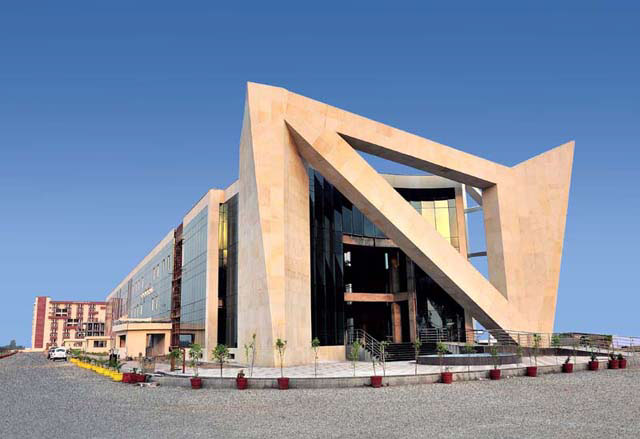
Ph.D. in Physics from DAV University: Eligibility, Entrance Exam, Fee Structure, Admission Process, Subjects, Research Areas, Syllabus, Scholarship & Career Scope
Introduction about Ph.D. in Physics at DAV University
Embarking on a Ph.D. in Physics at DAV University opens a gateway to cutting?edge research, academic excellence, and a thriving scientific community. The university?s state?of?the?art laboratories, distinguished faculty, and interdisciplinary collaborations empower aspirants to transform curiosity into pioneering discoveries. Whether you aim to become a university professor, lead R&D in industry, or contribute to national research initiatives, DAV University offers a robust platform to realize your ambitions.
Eligibility Criteria for Ph.D. in Physics at DAV University
- Master?s degree (M.Sc.) in Physics or a closely related discipline with a minimum of 55% marks (or equivalent CGPA).
- Candidates holding a NET/CSIR qualification are exempted from the entrance test.
- Foreign nationals must possess a recognized Master?s degree and meet the university?s language proficiency requirements.
- Applicants with a background in applied mathematics, electronics, or materials science may be considered after a departmental review.
Entrance Exam for Ph.D. in Physics at DAV University
The entrance examination evaluates theoretical knowledge, analytical abilities, and research potential. The test comprises:
- Written exam (120 marks) covering Classical Mechanics, Quantum Mechanics, Statistical Physics, Electrodynamics, and Mathematics for Physicists.
- Viva?voce interview to assess research interests, communication skills, and alignment with faculty expertise.
Qualified NET/CSIR candidates are directly invited for the interview round.
Fee Structure for Ph.D. in Physics at DAV University
| Component | Annual Fee (INR) | Notes |
|---|---|---|
| Tuition & Lab Facilities | 45,000 | Includes access to high?performance computing clusters. |
| Library & Resource Access | 7,500 | Digital journals and inter?library loan services. |
| Examination & Evaluation | 5,000 | Annual assessment and thesis evaluation. |
| Miscellaneous (Sports, Cultural) | 2,500 | Student welfare activities. |
| Total Approximate Fee per Year | 60,000 | Subject to annual revision. |
Admission Process for Ph.D. in Physics at DAV University
- Online Application: Submit the application form through the university portal along with scanned copies of academic transcripts.
- Document Verification: The admissions office reviews eligibility, marksheets, and research proposal.
- Entrance Exam: Appear for the written test (unless exempted).
- Interview: Participate in a faculty interview focusing on research objectives.
- Final Selection: Admission offer is extended based on merit, research fit, and availability of supervisors.
- Enrollment: Pay the fee, complete registration, and begin the research program.
Ph.D. Subjects and Specializations in Physics at DAV University
DAV University?s Department of Physics offers diverse specializations, including:
- Quantum Optics & Photonics
- Condensed Matter Physics
- High Energy & Particle Physics
- Astrophysics & Cosmology
- Computational Physics & Modeling
- Materials Science & Nanotechnology
Research Areas in Physics at DAV University
Students can engage in world?class research projects such as:
- Quantum Information Processing and Quantum Computing.
- Topological Insulators and 2D Materials.
- Dark Matter detection and gravitational wave analysis.
- Plasma physics for sustainable energy solutions.
- Simulation of astrophysical phenomena using supercomputers.
- Development of advanced sensors for medical imaging.
Documents Required for Ph.D. in Physics at DAV University
| Document | Format | Remarks |
|---|---|---|
| Academic Transcripts (M.Sc.) | PDF (Scanned) | Official sealed copies required. |
| Research Proposal (2?3 pages) | Highlight objectives, methodology, and expected outcomes. | |
| Curriculum Vitae | Include publications, conferences, and technical skills. | |
| Proof of NET/CSIR Qualification (if any) | Exemptions are granted based on score. | |
| Identity Proof (Aadhaar/Passport) | Government?issued document. |
DAV University Ph.D. Syllabus for Physics
The comprehensive syllabus is structured into core modules and electives:
- Core Modules: Advanced Quantum Mechanics, Statistical Mechanics, Electrodynamics, Mathematical Methods for Physicists.
- Electives (choose any two): Non?linear Dynamics, Quantum Field Theory, Optical Physics, Solid?State Physics, Computational Methods.
- Research Component: Thesis work under a faculty supervisor, weekly seminars, and publication requirements.
How To Apply for Ph.D. in Physics at DAV University
Follow these steps to submit a successful application:
- Visit the official Ph.D. Physics portal and create a user account.
- Fill in personal, academic, and contact details accurately.
- Upload the required documents (transcripts, CV, research proposal).
- Pay the non?refundable application fee through the secure gateway.
- Submit the form and note the application reference number for future correspondence.
- Monitor your email for invitation to the entrance test and interview schedule.
Career Scope and Job Opportunities After Ph.D. in Physics from DAV University
A doctoral degree from DAV University equips graduates for a wide spectrum of career paths:
- Academia: Assistant Professor, Lecturer, Research Fellow.
- Research Institutions: Scientist (DRDO, ISRO, IIST, BARC).
- Industry: R&D Engineer (Semiconductor, Aerospace, Energy), Data Scientist, Quantum Computing Specialist.
- Government & Policy: Science policy analyst, technical advisor.
- Entrepreneurship: Start?ups focusing on nanotech, photonics, or scientific instrumentation.
According to recent placement reports, 85% of Ph.D. graduates secure industry or research positions within six months of graduation.
Scholarship for Ph.D. in Physics at DAV University
Financial assistance is available through multiple avenues:
- University Merit Scholarship: Covers up to 50% of tuition for top?ranked candidates.
- National Fellowship (UGC?JRF, CSIR?NET): Stipend of INR?31,000 per month with contingency allowances.
- External Grants: Projects funded by the Department of Science & Technology (DST) or Indian Space Research Organisation (ISRO).
- Industry Sponsorship: Collaborations with private labs may provide research assistantships.
FAQs Regarding Ph.D. in Physics at DAV University
- Q1: How long does the Ph.D. program typically take?
- A: The minimum duration is 3 years, extendable up to 5 years based on research progress.
- Q2: Can I pursue a part?time Ph.D. while working?
- A: Yes, DAV University offers a flexible part?time mode subject to supervisor approval and minimum attendance requirements.
- Q3: Is there a provision for publishing my thesis research?
- A: The university encourages publishing in peer?reviewed journals and provides Research Publication Support to guide students through the process.
- Q4: What is the role of PhD Admission Assistance?
- A: The service assists applicants with document preparation, entrance exam strategies, and interview coaching.
- Q5: Are there opportunities for interdisciplinary research?
- A: Absolutely. Collaborative projects with the Departments of Chemistry, Computer Science, and Engineering are actively promoted.
- Q6: How does Editing and Proofreading Services help during my Ph.D.?
- A: These services ensure that manuscripts, theses, and grant proposals meet high linguistic standards, increasing acceptance rates.
- Q7: Can I receive assistance with my doctoral topic?
- A: Yes, the university offers guidance through PhD Topic Selection and Proposal Assistance.
- Q8: Does DAV University provide support for patent filing?
- A: Innovators can avail Patent








