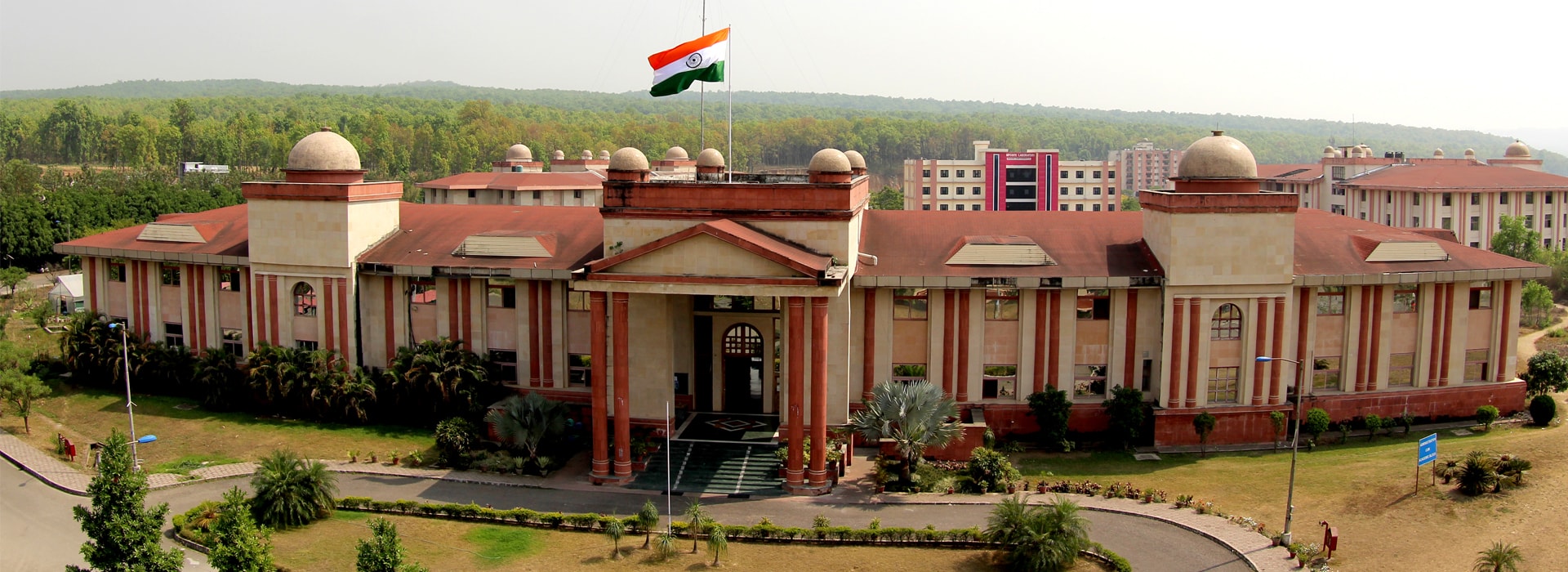
Ph.D. in Physics from Doon University: Eligibility, Entrance Exam, Fee Structure, Admission Process, Subjects, Research Areas, Syllabus, Scholarship & Career Scope
Introduction about Ph.D. in Physics at Doon University
The Ph.D. in Physics at Doon University stands as a beacon for aspiring researchers who wish to push the frontiers of knowledge in fundamental and applied physics. Renowned for its state‑of‑the‑art laboratories, interdisciplinary research clusters, and a faculty comprising internationally recognised scientists, Doon University offers a nurturing ecosystem where curiosity transforms into breakthrough innovations. Whether you aim to explore quantum mechanics, astrophysics, condensed matter, or emerging nanotechnologies, the doctoral programme equips you with rigorous analytical tools, hands‑on experimental experience, and a robust scholarly network.
Eligibility Criteria for Ph.D. in Physics at Doon University
Prospective candidates must meet the following baseline requirements:
- Master’s degree in Physics or a closely related discipline (e.g., Applied Physics, Materials Science) with a minimum aggregate of 55% (or 5.5 CGPA on a 10‑point scale).
- Valid GATE score in Physics (or equivalent national level examination) is preferred but not mandatory.
- Demonstrated research aptitude through publications, project work, or conference presentations.
- For international applicants, an equivalent qualification recognized by the University’s Academic Council.
Entrance Exam for Ph.D. in Physics at Doon University
Doon University conducts a dedicated Ph.D. entrance examination to assess candidates’ conceptual depth and analytical proficiency. The exam comprises:
- Written Test: 100 marks – 60 questions covering Classical Mechanics, Electrodynamics, Quantum Theory, Statistical Mechanics, and Modern Physics.
- Viva‑Voce Interview: 30 marks – Evaluation of research proposal, past academic work, and subject‑specific problem‑solving.
- English Proficiency: 10 marks – Assessment of communication skills essential for research dissemination.
Candidates with a qualifying GATE score may be exempted from the written test and progress directly to the interview stage.
Fee Structure for Ph.D. in Physics at Doon University
| Fee Component | Annual Amount (INR) | Notes |
|---|---|---|
| Tuition & Laboratory Charges | 45,000 | Inclusive of access to research labs and software licences. |
| Registration & Examination Fee | 8,500 | One‑time fee payable at the start of the programme. |
| Library & Digital Resources | 3,000 | Covers e‑journal subscriptions and inter‑library loans. |
| Miscellaneous (Student Activity, Insurance) | 2,500 | Estimated annual cost. |
| Total Approximate Cost per Year | 59,000 | Subject to revision each academic year. |
Admission Process for Ph.D. in Physics at Doon University
- Online Application: Submit the web‑based application form along with scanned copies of academic transcripts.
- Document Verification: Upload required documents (see section “Documents Required”).
- Entrance Examination: Appear for the written test or submit a valid GATE score for exemption.
- Interview & Research Proposal Review: Shortlisted candidates attend a panel interview where the research proposal is scrutinised.
- Offer Letter & Admission Confirmation: Successful candidates receive an official offer and must confirm admission by paying the initial registration fee.
- Orientation & Allocation of Supervisor: New scholars attend a comprehensive orientation and are paired with a faculty supervisor aligned with their research interests.
Ph.D. Subjects and Specializations in Physics at Doon University
Doon University offers a diverse spectrum of specializations, enabling candidates to tailor their doctoral journey:
- Quantum Optics and Photonics
- Condensed Matter Physics & Nanostructures
- Astrophysics & Cosmology
- High Energy Particle Physics
- Plasma Physics & Fusion Energy
- Computational Physics & Data‑Driven Modelling
- Materials Science and Soft Matter
Research Areas in Physics at Doon University
The university’s research agenda aligns with global scientific priorities. Key research clusters include:
- Quantum Information Science: Development of qubits, quantum communication protocols, and error‑correction algorithms.
- Renewable Energy Materials: Design of high‑efficiency photovoltaic and thermoelectric materials.
- Space‑Based Observatories: Participation in satellite missions to study cosmic microwave background radiation.
- Biomedical Physics: Imaging techniques, radiation therapy, and nanomedicine.
- Computational Fluid Dynamics (CFD) for Plasma: Simulation of magnetically confined plasma for fusion reactors.
Students are encouraged to collaborate across departments and leverage the university’s partnerships with national laboratories and industry R&D centres.
Documents Required for Ph.D. in Physics at Doon University
| Document | Details |
|---|---|
| Academic Transcripts | Original mark sheets and degree certificates (M.Sc. Physics or equivalent). |
| GATE Scorecard (if applicable) | Valid scorecard not older than 3 years. |
| Research Proposal (2,000–3,000 words) | Outline of research objectives, methodology, and expected outcomes. |
| Curriculum Vitae (CV) | Highlighting academic achievements, publications, and relevant experience. |
| Two Reference Letters | From professors or industry professionals familiar with the candidate’s research potential. |
| Photographs & Identity Proof | Passport‑size colour photographs and a government‑issued ID. |
Doon University Ph.D. Syllabus for Physics
The doctoral syllabus is structured around three core components:
- Coursework (24 credits): Advanced topics such as Relativistic Quantum Mechanics, Statistical Field Theory, and Advanced Experimental Techniques.
- Research Project (60 credits): Original research leading to a dissertation submitted for peer review.
- Seminars & Workshops (6 credits): Participation in weekly seminars, guest lectures, and skill‑building workshops on scientific writing, data analysis, and presentation.
Students may also enrol in elective modules that complement their research focus, such as Research Paper Writing Services to hone publication skills.
How To Apply for Ph.D. in Physics at Doon University
Follow these steps to submit a successful application:
- Visit the official Doon University admissions portal and create a user account.
- Complete the online application form, ensuring all fields are accurately filled.
- Upload scanned copies of the required documents (see “Documents Required” section).
- Pay the non‑refundable application fee of INR 2,500 via net banking or UPI.
- Schedule the entrance examination date or submit a valid GATE score for exemption.
- After clearing the entrance test, upload your detailed research proposal and await interview scheduling.
- Accept the admission offer and remit the first year’s tuition fee to secure your seat.
Career Scope and Job Opportunities After Ph.D. in Physics from Doon University
Graduates of the Ph.D. programme emerge as highly sought‑after experts, capable of thriving in academia, industry, and government sectors. Typical career pathways include:
- Assistant/Associate Professor – University teaching and independent research.
- Post‑Doctoral Fellow – Specialized research projects at national labs or international institutes.
- R&D Scientist – Roles in semiconductor, aerospace, renewable energy, and defense industries.
- Data Scientist / Quantitative Analyst – Applying computational physics techniques to finance and big‑data analytics.
- Science Policy Advisor – Shaping research agendas for governmental bodies and NGOs.
With an average starting salary ranging from INR 12‑18 lakhs per annum in industry and competitive research grants in academia, the Ph.D. in Physics from Doon University offers a robust platform for long‑term professional growth.
Scholarship for Ph.D. in Physics at Doon University
Doon University provides several merit‑based and need‑based scholarships to ease financial burdens:
- Full Tuition Waiver: Awarded to top 10% of candidates based on entrance exam scores and research proposal quality.
- Research Stipend: INR 15,000 per month, disbursed throughout the doctoral tenure.
- External Fellowships: Guidance for applying to CSIR, DST, and UGC fellowships.
- International scholarships for collaborative projects with partner universities.
Applicants are encouraged to explore Thesis and Dissertation Writing Services for assistance in preparing compelling scholarship applications.
FAQs Regarding Ph.D. in Physics at Doon University
- 1. How long does the Ph.D. programme typically take?
- On average, the programme is completed in 4‑5 years, contingent upon research progress and publication requirements.
- 2. Is there a provision for part‑time Ph.D. study?
- Yes, working professionals may opt for part‑time enrolment with a flexible schedule, subject to supervisor approval.
- 3. Can I switch supervisors








