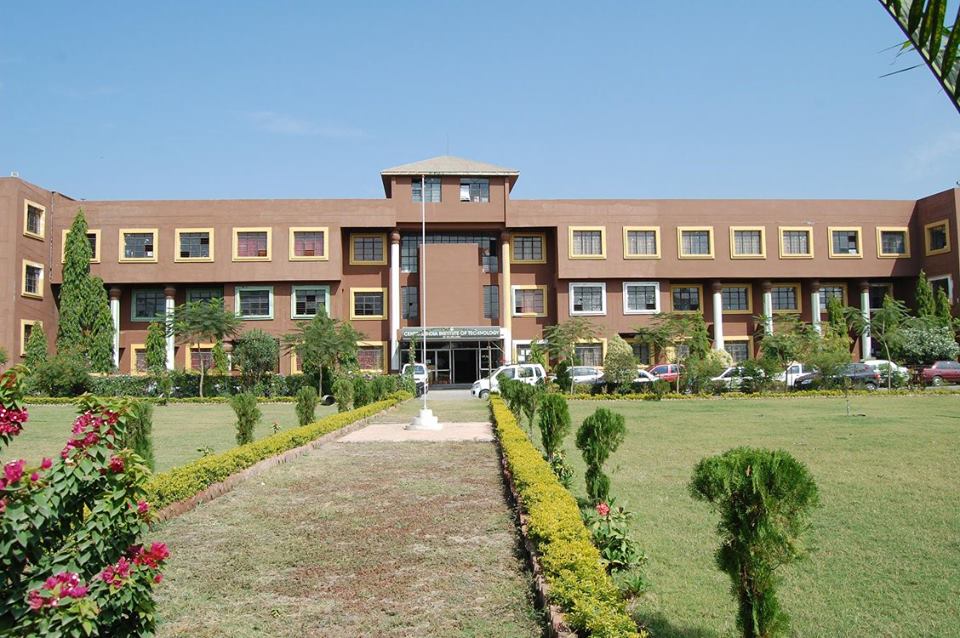
Ph.D. in Physics from Dr. A.P.J. Abdul Kalam Technical University: Eligibility, Entrance Exam, Fee Structure, Admission Process, Subjects, Research Areas, Syllabus, Scholarship & Career Scope
Introduction about Ph.D. in Physics at Dr. A.P.J. Abdul Kalam Technical University
Embarking on a Ph.D. in Physics at Dr. A.P.J. Abdul Kalam Technical University (AKTU) is more than just an academic pursuit; it is a journey toward the frontiers of scientific discovery. Named after the legendary "Missile Man of India," the university fosters an environment where innovation meets rigorous inquiry. A doctoral degree in Physics from AKTU equips professionals and researchers with the analytical depth and technical prowess required to solve complex global challenges. Whether you are aiming to decode the mysteries of quantum mechanics or develop sustainable energy solutions through material science, AKTU provides the infrastructure and intellectual mentorship necessary to transform your vision into reality. This program is meticulously designed for those who aspire to lead in academia, R&D sectors, and high-tech industries.
Ph.D Admission 2026-2027 & Writing Support Services by Shiksha Research
To ensure your research meets international standards from the very beginning, seeking professional PhD Topic Selection and Proposal Assistance can be a strategic first step in aligning your interests with the university's academic framework.
Eligibility Criteria for Ph.D. in Physics at Dr. A.P.J. Abdul Kalam Technical University
Aspiring candidates must meet specific academic benchmarks to qualify for the Ph.D. program at AKTU. The university maintains high standards to ensure that admitted scholars possess the requisite foundational knowledge for advanced research.
- Educational Qualification: Candidates must hold a Master?s degree in Physics, Applied Physics, or a relevant allied discipline from a recognized university.
- Minimum Marks: A minimum of 55% aggregate marks (or an equivalent CGPA) in the Master?s degree is mandatory. A relaxation of 5% is typically provided to SC/ST/OBC (non-creamy layer) and differently-abled candidates as per government norms.
- Master's Thesis: Preference may be given to candidates who have completed an experimental or theoretical dissertation during their post-graduation.
- Professional Experience: While not mandatory, industry professionals with significant R&D experience in Physics-related fields are encouraged to apply.
Entrance Exam for Ph.D. in Physics at Dr. A.P.J. Abdul Kalam Technical University
Admission to the Ph.D. program is primarily facilitated through the AKTU Research Admission Test (RAT). This exam is designed to test the candidate's subject-specific expertise and research aptitude.
The entrance exam structure generally includes:
- Part A: Research Methodology: Focusing on logic, data interpretation, and fundamental research techniques.
- Part B: Physics Core: Covering Classical Mechanics, Quantum Physics, Electrodynamics, Statistical Mechanics, and Solid State Physics.
Candidates who have qualified for national-level examinations such as UGC-NET (including JRF), CSIR-NET, GATE, or GPAT are often exempted from the written test but must appear for the mandatory interview process. Navigating this competitive landscape often requires expert guidance, and many candidates opt for specialized PhD Admission Assistance to streamline their application journey.
Fee Structure for Ph.D. in Physics at Dr. A.P.J. Abdul Kalam Technical University
The fee structure at AKTU is designed to be affordable while supporting world-class research facilities. Below is an approximate breakdown of the costs associated with the doctoral program:
| Particulars | Approximate Fee (INR) | Type |
|---|---|---|
| Registration & Application Fee | ?2,000 - ?5,000 | One-time |
| Enrollment Fee | ?5,000 - ?10,000 | One-time |
| Annual Tuition/Research Fee | ?20,000 - ?50,000 | Yearly |
| Examination & Thesis Submission | ?15,000 - ?25,000 | At the time of submission |
| Coursework Fee | ?5,000 - ?10,000 | One-time |
Note: Fees are subject to change based on university ordinances and government regulations.
Admission Process for Ph.D. in Physics at Dr. A.P.J. Abdul Kalam Technical University
The admission process at AKTU is rigorous, ensuring that only the most dedicated scholars are selected for this prestigious program. The steps involve:
- Notification: AKTU releases the admission notification on its official website, detailing available seats and specialization options.
- Online Application: Candidates must submit their applications through the AKTU ERP portal, uploading all necessary credentials.
- Entrance Testing: Eligible candidates appear for the RAT or provide proof of exemption (NET/GATE).
- Interview/Presentation: Shortlisted candidates are invited to present their research interests before the Departmental Research Committee (DRC). This is where your research proposal is scrutinized for its feasibility and originality.
- Final Selection: Based on the performance in the entrance test, interview, and academic record, a merit list is generated.
- Course Work: Upon admission, scholars must complete a mandatory six-month coursework phase before formal registration of the Ph.D. topic.
Ph.D. Subjects and Specializations in Physics at Dr. A.P.J. Abdul Kalam Technical University
Physics at AKTU is not confined to textbooks; it is applied to solve real-world engineering and technological problems. The curriculum and specializations reflect this philosophy:
- Condensed Matter Physics: Researching properties of solids and liquids.
- Materials Science & Nanotechnology: Developing advanced materials for the sensors and semiconductors of tomorrow.
- Nuclear and Particle Physics: Exploring the fundamental building blocks of matter.
- Optics and Lasers: Studying photonics and laser applications in industry and medicine.
- Renewable Energy Sources: Physics of solar cells and energy harvesting devices.
- Theoretical Physics: Mathematical modeling of physical phenomena.
With such a vast array of topics, scholars often utilize Research Publication Support to ensure their findings are published in high-impact journals during their tenure.
Research Areas in Physics at Dr. A.P.J. Abdul Kalam Technical University
The research ecosystem at AKTU is vibrant and interdisciplinary. Key focus areas include:
- Composite Materials: Investigating the mechanical and thermal properties of polymer-matrix and metal-matrix composites.
- Superconductivity: High-temperature superconductors and their practical applications.
- Nonlinear Optics: Research into laser-matter interactions and fiber optics.
- Plasma Physics: Studies related to fusion energy and industrial plasma applications.
- Computational Physics: Using advanced simulation tools like MATLAB, Python, and ANSYS to model physical systems.
In these technical domains, maintaining linguistic precision is vital, making Editing and Proofreading Services indispensable for finalizing research papers and dissertations.
Documents Required for Ph.D. in Physics at Dr. A.P.J. Abdul Kalam Technical University
The following documents are essential for the verification process during the application and interview stages:
- High School (10th) and Intermediate (12th) Marksheets and Certificates.
- Graduation and Post-Graduation Degree Certificates.
- Consolidated Marksheets of Master's Degree.
- NET/GATE Scorecard (if applicable).
- Transfer Certificate (TC) and Migration Certificate.
- No Objection Certificate (NOC) from current employer (for part-time candidates).
- Caste Certificate (if claiming reservation).
- Passport-sized Photographs and Government ID proof (Aadhar Card/Passport).
- A well-drafted Research Proposal (Synopsis).
Dr. A.P.J. Abdul Kalam Technical University Ph.D. Syllabus for Physics
The initial phase of the Ph.D. involves coursework designed to bridge the gap between postgraduate learning and independent research. The syllabus typically covers:
- Research Methodology: Quantitative methods, computer applications in research, and ethics in scientific publication.
- Advanced Physical Techniques: Characterization techniques like XRD, SEM, TEM, and Spectroscopy.
- Elective Courses: Specialized subjects tailored to the scholar's research area (e.g., Crystallography, Advanced Statistical Mechanics, or Semiconductor Physics).
- Literature Review: A dedicated semester focusing on critical analysis of existing research in the chosen niche.
How To Apply for Ph.D. in Physics at Dr. A.P.J. Abdul Kalam Technical University
Application is a streamlined digital process. Follow these steps to ensure a successful submission:
- Visit the official AKTU website and navigate to the "Admission" tab.
- Register as a new user by providing email and contact details.
- Fill out the online application form with accurate personal and academic information.
- Upload scanned copies of required documents in the specified format.
- Pay the application fee through the integrated online payment gateway.
- Download the confirmation page and keep a copy of the admit card for the entrance exam (RAT).
Career Scope and Job Opportunities After Ph.D. in Physics from Dr. A.P.J. Abdul Kalam Technical University
A Ph.D. from AKTU opens doors to elite career paths. Graduates are uniquely positioned to transition into various roles such as:
- Academia: Professors or Researchers in IITs, NITs, and top private universities.
- Scientific Research: Scientist roles in organizations like ISRO, DRDO, BARC, and CSIR.
- Industrial R&D: Leading research roles in Tech giants, Semiconductor companies, and Renewable energy firms.
- Data Science: Utilizing mathematical modeling and physics-based logic in financial and technological data analysis.
For those who have made significant lifetime contributions to the field outside traditional academic pathways, exploring Honorary Doctorate Programs is an alternative way of gaining recognition. Furthermore, scholars looking to commercialize their research can benefit from Patent Filing and Support Services to protect their intellectual property.
Scholarship for Ph.D. in Physics at Dr. A.P.J. Abdul Kalam Technical University
Financial support is available for meritorious students to ensure that financial constraints do not hinder scientific progress:
- University Fellowships: AKTU offers limited fellowships to top scorers in the entrance exam.
- State & Central Government Scholarships: Support via UGC-JRF, CSIR-JRF, and various minority or category-based scholarships.
- Project-Based Fellowships: Scholars may receive funding by working as Junior Research Fellows (JRF) in externally funded projects by DST, SERB, or AICTE.
FAQs Regarding Ph.D. in Physics at Dr. A.P.J. Abdul Kalam Technical University
Q1: Can I pursue Ph.D. in Physics part-time?
A: Yes, AKTU provides a part-time Ph.D. option for working professionals, provided they submit an NOC from their employer and meet the residency requirements for coursework.
Q2: Is the AKTU Ph.D. recognized globally?
A: Absolutely. AKTU is a premier state technical university, and its doctoral degrees are recognized by the UGC and internationally for research and employment.
Q3: How long does it take to complete the Ph.D.?
A: The minimum duration is three years, and the maximum is usually six years, including the coursework period.
Q4: Do I need a GATE score for admission?
A: While not mandatory, a valid GATE score can exempt you from the written entrance exam and prioritize your application for certain fellowships.
Q5: What is the success rate of the RAT?
A: The RAT is competitive, but thorough preparation in core Physics and Research Methodology ensures a high chance of success.
The pursuit of physics is the pursuit of truth. At Dr. A.P.J. Abdul Kalam Technical University, your Ph.D. journey will transform your curiosity into concrete scientific advancements. Lead the way into the future today.








