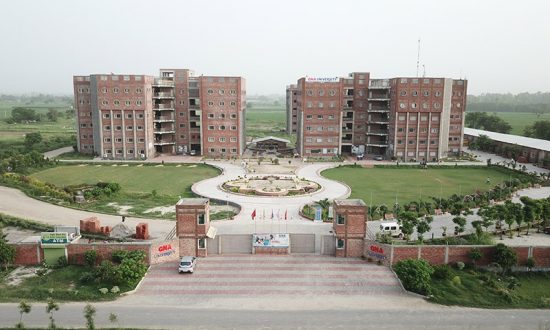
Ph.D. in Physics from GNA University: Eligibility, Entrance Exam, Fee Structure, Admission Process, Subjects, Research Areas, Syllabus, Scholarship & Career Scope
Introduction about Ph.D. in Physics at GNA University
GNA University has emerged as a leading hub for advanced scientific inquiry, offering a rigorous Ph.D. in Physics designed for innovators, researchers, and industry leaders. The program blends theoretical depth with experimental mastery, empowering scholars to push the boundaries of knowledge across quantum mechanics, condensed matter, astrophysics, and emerging technologies. With state‑of‑the‑art labs, interdisciplinary collaborations, and a distinguished faculty, GNA University provides the ideal environment for transformative research and academic excellence.
Eligibility Criteria for Ph.D. in Physics at GNA University
- Master’s degree (M.Sc.) in Physics or a related discipline with a minimum of 55% aggregate (or equivalent CGPA).
- For candidates with a B.E./B.Tech. in Physics‑oriented streams, a minimum of 60% aggregate is required.
- Nationally recognized entrance qualification (e.g., GATE) may be accepted in lieu of university‑specific exams.
- English proficiency (IELTS/TOEFL) for international applicants, if applicable.
- Valid research proposal aligned with the university’s focus areas.
Entrance Exam for Ph.D. in Physics at GNA University
The university conducts a comprehensive entrance test that evaluates:
- Core physics concepts (Classical Mechanics, Electrodynamics, Statistical Mechanics).
- Mathematical aptitude (advanced calculus, linear algebra, differential equations).
- Analytical reasoning and problem‑solving skills.
- Research methodology and scientific writing.
Qualified candidates are also required to appear for a personal interview where their research interests and motivation are assessed.
Fee Structure for Ph.D. in Physics at GNA University
| Component | Annual Cost (INR) | Notes |
|---|---|---|
| Tuition & Examination Fee | 45,000 | Includes coursework and semester exams |
| Laboratory & Equipment Charges | 20,000 | Access to advanced labs and instrumentation |
| Library & Digital Resources | 5,000 | Unlimited access to journals and e‑books |
| Annual Administration Fee | 10,000 | Campus services and student support |
| Total (per year) | 80,000 | Approximately 3‑4 years to complete the degree |
Scholarships, teaching assistantships, and research grants are available to eligible candidates, significantly reducing the financial burden.
Admission Process for Ph.D. in Physics at GNA University
- Online application submission through the university portal.
- Upload academic transcripts, research proposal, and two letters of recommendation.
- Payment of the non‑refundable application fee.
- Entrance exam (online or on‑campus) followed by a personal interview.
- Receipt of admission offer and enrollment in the chosen research group.
- Completion of mandatory orientation and coursework modules.
Ph.D. Subjects and Specializations in Physics at GNA University
Students can tailor their doctorate to one of the following cutting‑edge specializations:
- Quantum Optics & Quantum Information
- Condensed Matter Physics & Nanomaterials
- High‑Energy Particle Physics
- Astrophysics & Cosmology
- Plasma Physics & Fusion Energy
- Computational Physics & Data‑Driven Modeling
- Biophysics & Medical Imaging
Research Areas in Physics at GNA University
GNA University’s research ecosystem nurtures interdisciplinary projects that align with global scientific priorities. Highlighted research domains include:
- Topological Insulators and 2D Materials
- Quantum Computing Architectures
- Dark Matter Detection Techniques
- Gravitational Wave Astronomy
- Renewable Energy Materials (perovskites, photovoltaics)
- Machine Learning for Physical Simulations
- Radiation Therapy Physics
Documents Required for Ph.D. in Physics at GNA University
| Document | Format | Remarks |
|---|---|---|
| Academic Transcripts (M.Sc./M.Tech.) | PDF (Scanned) | Officially sealed; include degree certificate. |
| Research Proposal (2‑3 pages) | DOCX or PDF | Clear objectives, methodology, and expected outcomes. |
| Letters of Recommendation (2) | PDF (Signed) | From faculty or industry mentors. |
| Curriculum Vitae | Highlight publications, projects, and skills. | |
| English Proficiency Test Score (if applicable) | IELTS/TOEFL; minimum 6.5/80. |
GNA University Ph.D. Syllabus for Physics
The doctoral syllabus blends core coursework with research milestones:
- Year 1: Advanced Quantum Mechanics, Statistical Physics, Research Methodology, Scientific Writing.
- Year 2: Specialized electives (choose based on specialization), Data Analysis Techniques, Ethics in Research.
- Year 3‑4: Original research, publication of at least two peer‑reviewed papers, dissertation writing and defense.
How To Apply for Ph.D. in Physics at GNA University
Prospective candidates should follow these steps:
- Visit the official admission portal and create a user account.
- Complete the online application form, ensuring all mandatory fields are filled.
- Upload the required documents (as listed above) and submit your research proposal.
- Pay the application fee via secure online payment.
- Schedule and sit for the entrance examination; monitor email for interview invitations.
- Upon receiving the admission offer, confirm your seat by paying the first-year tuition deposit.
Career Scope and Job Opportunities After Ph.D. in Physics from GNA University
A doctorate from GNA University opens doors to a spectrum of high‑impact roles:
- Post‑doctoral researcher at premier national/international labs (e.g., CERN, ISRO, JNU).
- Senior scientist in R&D departments of technology firms (semiconductor, aerospace, renewable energy).
- University faculty (Assistant/Associate Professor) with tenure‑track potential.
- Data scientist or quantitative analyst in finance and AI‑driven enterprises.
- Consultant for government research agencies and policy think‑tanks.
- Entrepreneurial ventures focusing on quantum devices or advanced materials.
Scholarship for Ph.D. in Physics at GNA University
Financial assistance is offered through multiple avenues:
- University Merit Scholarships: Awarded to top 10% of applicants based on academic performance and research proposal.
- Government Fellowships: UGC‑JRF, CSIR‑NET, and DST‑SERB schemes.
- Industry‑Sponsored Grants: Partnerships with leading corporations providing project‑based funding.
- Teaching Assistantships: Stipends for conducting labs and grading, covering tuition fees.
FAQs Regarding Ph.D. in Physics at GNA University
- What is the average duration of the Ph.D. program?
- Typically 3‑4 years, depending on research progress and publication requirements.
- Can I pursue the Ph.D. part‑time while working?
- Yes, GNA University offers a flexible part‑time mode for qualified professionals, with extended timelines.
- Is GATE qualification accepted in place of the university entrance exam?
- GATE scores are accepted as an alternative eligibility criterion for Indian applicants.
- How many publications are required before dissertation submission?
- At least two articles in peer‑reviewed international journals are mandatory.
- Are there any collaboration opportunities with industry?
- GNA University maintains active MOUs with leading tech firms, enabling joint research projects and internships.
Related Services
For additional support throughout your doctoral journey, consider the following professional services:








