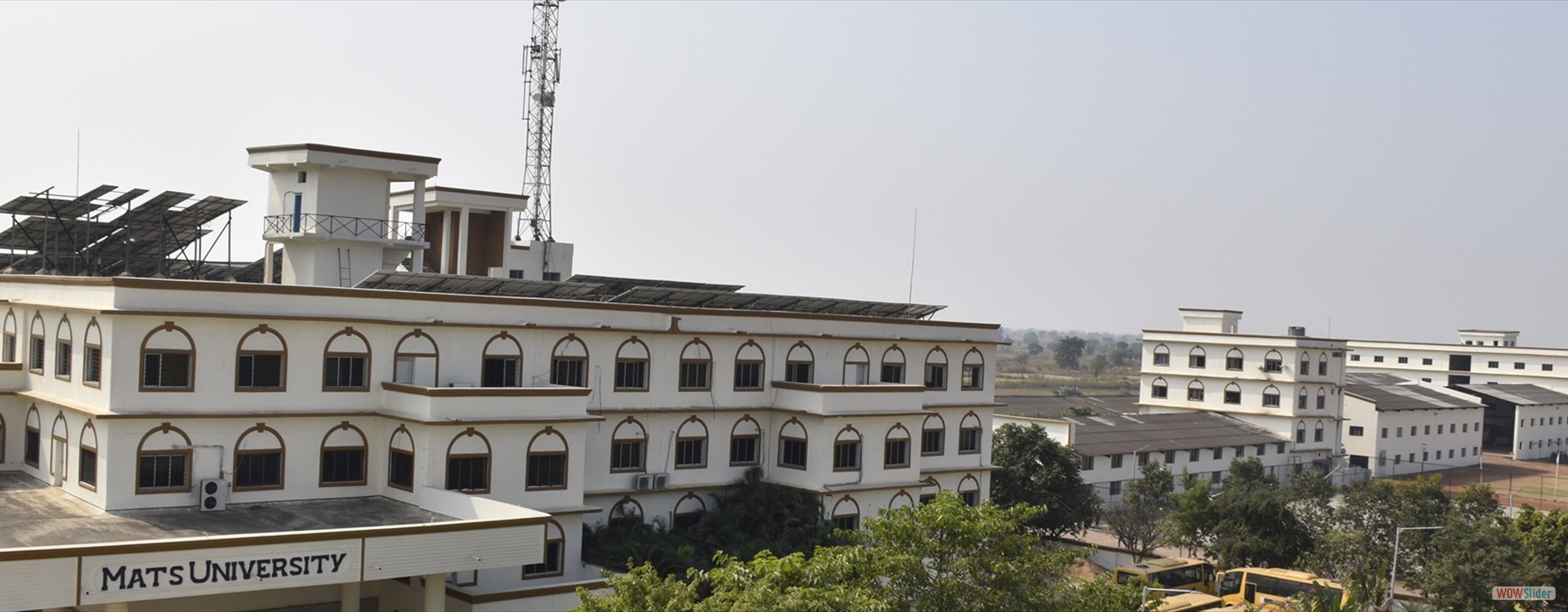
Introduction about Ph.D. in Physics at MATS University
Embarking on a journey toward a Ph.D. in Physics at MATS University is more than an academic pursuit; it is a commitment to pushing the boundaries of human understanding. As one of the premier institutions in Central India, MATS University offers a vibrant ecosystem for scientific inquiry, blending theoretical rigor with experimental excellence. The Department of Physics is dedicated to fostering an environment where curiosity meets cutting-edge technology, empowering professionals and aspiring scientists to tackle complex challenges in the physical sciences. Whether you are interested in the mysteries of the cosmos, the intricacies of nanotechnology, or the potential of renewable energy, a Ph.D. from MATS University provides the intellectual framework and resources to transform your vision into reality. This doctoral program is designed for those who aspire to lead in academia, industry, and global research laboratories, ensuring that every graduate emerges as a thought leader in their specialized domain.
Ph.D Admission 2026-2027 & Writing Support Services by Shiksha Research
Eligibility Criteria for Ph.D. in Physics at MATS University
To maintain a high standard of academic excellence, MATS University has established comprehensive eligibility criteria for its doctoral program in Physics. Prospective candidates must demonstrate a strong academic background and a genuine passion for advanced research. The following requirements must be met for consideration:
- Post-Graduation: Candidates must hold a Master?s degree (M.Sc.) in Physics or a closely related discipline from a recognized university or institution.
- Minimum Marks: A minimum of 55% marks in the aggregate or an equivalent grade (CGPA) is required. For candidates belonging to SC/ST/OBC (non-creamy layer)/Differently-abled categories, a relaxation of 5% is provided, as per UGC guidelines.
- Professional Experience: While not mandatory, candidates with prior research experience or professional tenure in scientific industries are highly encouraged to apply.
- Final Year Students: Students appearing for their final semester Master?s examination may also apply, provided they submit proof of meeting the eligibility criteria at the time of admission.
Entrance Exam for Ph.D. in Physics at MATS University
The selection process for the Ph.D. program is rigorous and transparent, ensuring that only the most dedicated scholars are admitted. MATS University conducts its own entrance test, known as the MATS University Entrance Test (MET). This examination evaluates the candidate's proficiency in core physics subjects and their aptitude for research methodology.
The entrance exam typically consists of two parts:
1. Research Methodology: Testing logical reasoning, data interpretation, and foundational research principles.
2. Subject-Specific Knowledge: Focusing on advanced topics in Physics such as Quantum Mechanics, Electrodynamics, and Statistical Mechanics.
Candidates who have successfully cleared national-level examinations like UGC-NET (including JRF), GATE, or SLET are often exempted from the written entrance test. However, all candidates, including exempted ones, must appear for a personal interview/viva-voce where they present their research interest before the Departmental Research Committee (DRC).
Fee Structure for Ph.D. in Physics at MATS University
The fee structure at MATS University is designed to be competitive yet reflective of the high-quality infrastructure and resources provided to doctoral scholars. Below is an approximate breakdown of the investment required for the program:
| Particulars | Estimated Amount (INR) |
|---|---|
| Registration Fee (One-time) | ?10,000 - ?15,000 |
| Annual Tuition Fee | ?60,000 - ?80,000 |
| Coursework Fee | ?15,000 |
| Library and Lab Charges (Annual) | ?10,000 |
| Thesis Submission and Evaluation Fee | ?25,000 |
Note: The fees mentioned above are subject to change according to university policy. Candidates are advised to check the official university brochure for the most current figures.
Admission Process for Ph.D. in Physics at MATS University
The admission journey at MATS University is structured to guide students through the transition from professional life to scholarly research. The process generally follows these steps:
- Notification: The university releases an official advertisement on its website and in leading newspapers regarding Ph.D. admissions.
- Online Application: Interested candidates must fill out the application form available on the MATS University portal and pay the requisite application fee.
- Entrance Examination: Eligible candidates appear for the MET or provide proof of exemption (NET/GATE).
- Interview/Viva-Voce: Shortlisted candidates discuss their research proposal and vision with the faculty panel. This stage is crucial as it determines the candidate's alignment with the university's research goals.
- Merit List: A final merit list is prepared based on the cumulative scores of the entrance test (or qualifying exam) and the interview.
- Enrollment: Selected candidates complete the documentation process and pay the admission fees to secure their seat.
Ph.D. Subjects and Specializations in Physics at MATS University
At MATS University, the Ph.D. in Physics is not a one-size-fits-all program. Research scholars can specialize in diverse areas that cater to both fundamental science and practical applications. During the initial coursework, students delve into subjects that strengthen their analytical foundations. Navigating complex variables and experimental designs often requires specialized assistance; for instance, many scholars utilize professional Questionnaire Design and Development services to ensure their surveys are scientifically sound and statistically valid.
Specializations include:
- Condensed Matter Physics
- Nuclear and Particle Physics
- Material Science and Nanotechnology
- Electronics and Instrumentation
- Atmospheric and Space Physics
- Theoretical and Computational Physics
Research Areas in Physics at MATS University
Research is the heartbeat of the MATS University Physics Department. The university encourages interdisciplinary studies and collaboration with national and international laboratories. Current research areas of focus include:
- Material Science: Investigating the properties of thin films, polymers, and advanced composites.
- Optoelectronics: Exploring light-matter interactions for communication and sensor technologies.
- Renewable Energy: Research into solar cell efficiency and new materials for energy storage.
- Astrophysics: Analyzing data from space missions to understand cosmic phenomena.
To ensure high-impact results, scholars often require advanced data processing capabilities. Utilizing Research Data Analysis Services can significantly enhance the precision of experimental findings, making them ready for top-tier journal publications.
Documents Required for Ph.D. in Physics at MATS University
Candidates must ensure they have all valid documents ready during the admission and registration phases. These include:
- High School (10th) and Higher Secondary (12th) Marksheets.
- Graduation and Post-Graduation Marksheets and Degree Certificates.
- Transfer Certificate (TC) and Migration Certificate.
- Caste Certificate (if applicable) for reservation benefits.
- Passport-sized photographs.
- Valid Proof of Identity (Aadhar Card, Passport, etc.).
- NOC from current employer (for working professionals).
- Research Proposal (Preliminary Draft).
- NET/GATE/SLET Qualifying Certificate (if applicable).
MATS University Ph.D. Syllabus for Physics
The Ph.D. syllabus is divided into two major phases: Coursework and Independent Research. The coursework is mandatory and must be completed within the first year to proceed to the thesis phase.
Coursework Components:
- Research Methodology: Philosophy of science, research ethics, statistical tools, and literature review techniques.
- Advanced Physics: Tailored depth in the student's chosen area of specialization (e.g., Quantum Electrodynamics or Nanoscale Engineering).
- Computer Applications: Training in software like MATLAB, Mathematica, or Python for scientific simulations.
- Seminar Presentations: Developing communication skills and defending research ideas in front of peers and faculty.
Post-coursework, the focus shifts entirely to the doctoral thesis. Writing a compelling scientific document is a monumental task. Many doctoral candidates find immense value in professional Thesis and Dissertation Writing Services to articulate their complex findings into a cohesive and academically rigorous format.
How To Apply for Ph.D. in Physics at MATS University
Follow these steps to officially apply for the doctoral program at MATS University:
1. Visit the Official Website: Navigate to the MATS University Ph.D. Admission section.
2. Registration: Create a user profile using your email and mobile number.
3. Fill Application: Enter personal, academic, and professional details carefully.
4. Upload Documents: Securely upload scanned copies of all required certificates.
5. Fee Payment: Pay the application fee through the online payment gateway (Net Banking/Credit Card/UPI).
6. Submission: Review the application and click 'Submit'. Print a copy for future reference.
7. Track Application: Check the portal regularly for notifications regarding the entrance exam dates.
Career Scope and Job Opportunities After Ph.D. in Physics from MATS University
Earning a Ph.D. from MATS University opens doors to some of the most prestigious career paths globally. The deep analytical and problem-solving skills developed during the program are highly valued in various sectors. To maximize visibility in the global scientific community, scholars are encouraged to publish their findings early. Engaging Research Paper Writing Services can help in drafting manuscripts that adhere to the strict guidelines of high-impact journals, thereby enhancing the researcher's professional profile.
Prominent Career Paths:
- Academic Researcher/Professor: Teaching and leading research teams at universities.
- Scientist in National Labs: Working with organizations like ISRO, DRDO, or BARC.
- Data Scientist: Analyzing complex datasets in the tech and finance sectors.
- R&D Lead in Industry: Driving innovation in electronics, energy, and materials manufacturing.
- Consultant: Providing technical expertise to governmental and non-governmental agencies.
Scholarship for Ph.D. in Physics at MATS University
MATS University is committed to ensuring that financial constraints do not hinder scientific progress. Several scholarship opportunities are available to meritorious and eligible candidates:
- University Research Fellowships: Provided to top-ranking students in the entrance exam.
- State and National Scholarships: Assistance for students from minority and reserved categories through governmental schemes.
- Project-Based Fellowships: Scholars working under funded research projects (from agencies like DST, CSIR, or SERB) often receive monthly stipends and contingency grants.
- Corporate Sponsorships: Some professionals may secure funding from their employers for research that aligns with industrial needs.
FAQs Regarding Ph.D. in Physics at MATS University
Q1: Is the Ph.D. program at MATS University recognized by the UGC?
A: Yes, MATS University is a recognized institution, and its Ph.D. programs adhere strictly to the regulations and standards set by the University Grants Commission (UGC).
Q2: Can I pursue a Ph.D. in Physics while working full-time?
A: MATS University offers flexibility for working professionals, but candidates must fulfill the mandatory coursework requirements and attend residential sessions as prescribed by the department.
Q3: How long does it take to complete the Ph.D.?
A: The minimum duration is three years, while the maximum is typically six years, including the coursework.
Q4: Does the university provide assistance in publishing research?
A: Yes, the university provides mentorship through experienced supervisors. Furthermore, students can seek external expertise for data and manuscript preparation to ensure high-quality output.
Q5: What is the primary language of instruction for the Ph.D. program?
A: The primary medium of instruction and thesis writing is English.
In conclusion, a Ph.D. in Physics from MATS University is a transformative experience that equips you with the tools to innovate and inspire. By choosing this path, you join a community of scholars dedicated to excellence and contribute to the global pool of knowledge that drives our future.








