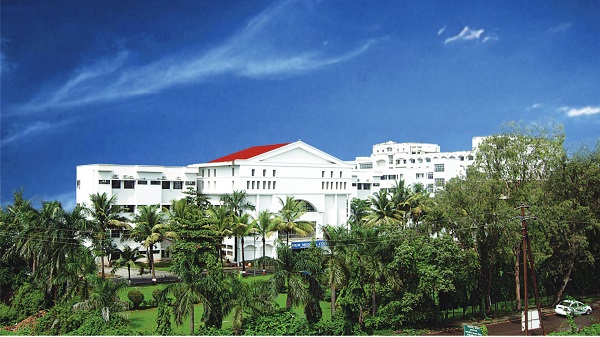
Introduction about Ph.D. in Physiotherapy at MGM Institute of Health Sciences
Embarking on a Ph.D. in Physiotherapy at the MGM Institute of Health Sciences (MGMIHS) is a transformative journey for healthcare professionals seeking to lead the next generation of clinical innovation. This doctoral program is designed to bridge the gap between clinical practice and advanced scientific inquiry. As the healthcare landscape evolves towards evidence-based practice, the need for visionary researchers in physiotherapy has never been greater. MGM Institute of Health Sciences offers a prestigious environment where clinicians can transition into scholar-practitioners, contributing original knowledge to the field of physical rehabilitation. The program focuses on rigorous scientific training, allowing candidates to explore complex movement dysfunctions and develop novel therapeutic interventions. For many professionals, the road to a doctorate requires meticulous planning and support; hence, utilizing expert Thesis and Dissertation Writing Services can be instrumental in navigating the complex documentation required during this scholarly pursuit.
Ph.D Admission 2026-2027 & Writing Support Services by Shiksha Research
Eligibility Criteria for Ph.D. in Physiotherapy at MGM Institute of Health Sciences
Prospective candidates must meet stringent academic standards to ensure they are prepared for the rigors of independent research. The eligibility criteria for the Ph.D. in Physiotherapy at MGM Institute of Health Sciences include:
- Academic Qualification: Candidates must possess a Master of Physiotherapy (MPT) degree from a recognized university or institute.
- Minimum Percentage: A minimum of 55% marks in aggregate or its equivalent grade 'B' in the UGC 7-point scale (or an equivalent grade in a point scale wherever grading system is followed) is required. A relaxation of 5% may be allowed for candidates belonging to SC/ST/OBC (non-creamy layer)/Differently-Abled categories.
- Professional Standing: Applicants should ideally have completed their Master?s degree in a relevant specialization (e.g., Orthopaedics, Neurology, Sports, Cardiorespiratory).
- Registration: Being a registered therapist with the respective State or Central Physiotherapy Council is generally expected for clinical research applications.
Entrance Exam for Ph.D. in Physiotherapy at MGM Institute of Health Sciences
The entrance examination is the gateway to the doctoral program at MGMIHS. It is designed to test the candidate?s research aptitude and core knowledge in physiotherapy. The Ph.D. Common Entrance Test (CET) typically consists of two parts:
- Part A: Research Methodology: This section evaluates structural understanding of research design, statistical reasoning, and ethical considerations. Aspiring researchers often seek professional Research Data Analysis Services to better understand the quantitative and qualitative tools necessary to pass this segment.
- Part B: Subject-Specific Knowledge: This section focuses on advanced concepts within Physiotherapy, including biomechanics, exercise physiology, and specialized clinical assessments.
Candidates who have qualified for UGC-NET (including JRF), UGC-CSIR NET (including JRF), SLET, GATE, or have been awarded a teacher fellowship may be exempted from the entrance test, though they must still undergo the interview process.
Fee Structure for Ph.D. in Physiotherapy at MGM Institute of Health Sciences
Investment in a Ph.D. program is an investment in your future leadership in the healthcare domain. The fee structure at MGM Institute of Health Sciences is competitive and reflects the high quality of laboratory access and faculty mentorship provided.
| Fee Component | Estimated Amount (INR) | Frequency |
|---|---|---|
| Registration Fee | ?10,000 - ?20,000 | One-time |
| Annual Tuition Fee | ?1,00,000 - ?1,50,000 | Per Annum |
| Library & Laboratory Fees | ?15,000 | Annual |
| Thesis Submission Fee | ?25,000 | At the end of program |
| Security Deposit (Refundable) | ?10,000 | One-time |
Note: Fees are subject to revision by the University management. Candidates are advised to check the official prospectus for the most current figures.
Admission Process for Ph.D. in Physiotherapy at MGM Institute of Health Sciences
The admission process is comprehensive, ensuring that only the most dedicated candidates are selected. The steps are as follows:
- Notification: MGMIHS releases official notifications for Ph.D. admissions on their website and in major newspapers.
- Application Submission: Interested candidates fill out the online application form and upload the necessary documents.
- Entrance Test: Eligible candidates appear for the Ph.D. CET.
- Personal Interview: Those who clear the entrance test are called for a personal interview/viva-voce. Candidates are expected to discuss their research interest and preliminary proposal.
- Selection: A merit list is prepared based on the performance in the entrance test (70% weightage) and the interview (30% weightage).
- Confirmation and Enrollment: Selected candidates pay the admission fees and are assigned a research supervisor (guide).
Ph.D. Subjects and Specializations in Physiotherapy at MGM Institute of Health Sciences
While a Ph.D. is inherently a specialized pursuit of a single topic, MGMIHS encourages research across various sub-disciplines of physiotherapy. Specializations include:
- Musculoskeletal Physiotherapy: Focus on orthopedic conditions and manual therapy.
- Neuro-Physiotherapy: Researching rehabilitation techniques for stroke, Parkinson?s, and spinal cord injuries.
- Cardiovascular and Pulmonary Physiotherapy: Investigating respiratory health and cardiac rehabilitation.
- Sports Physiotherapy: Dedicated to athletic performance and injury prevention.
- Community Physiotherapy: Focusing on geriatric care and public health rehabilitation.
- Pediatric Physiotherapy: Innovation in developmental delay and pediatric motor control.
Research Areas in Physiotherapy at MGM Institute of Health Sciences
The research environment at MGM Institute of Health Sciences is vibrant, encouraging cross-disciplinary studies. Current research areas include gait analysis through advanced sensor technology, the efficacy of virtual reality in motor retraining, and ergonomic interventions in workplace health. A critical part of these studies often involves Questionnaire Design and Development to collect patient-reported outcome measures and qualitative data from clinical trials. Faculty members are actively involved in studying the impact of manual therapy on chronic pain syndromes and the molecular changes associated with therapeutic exercise. Researchers are encouraged to push the boundaries of conventional therapy through clinical controlled trials and longitudinal cohort studies.
Documents Required for Ph.D. in Physiotherapy at MGM Institute of Health Sciences
To ensure a smooth admission process, candidates should keep the following scanned and physical copies ready:
- 10th and 12th Marksheets and Passing Certificates.
- Bachelor of Physiotherapy (BPT) Degree and Marksheets.
- Master of Physiotherapy (MPT) Degree and Marksheets.
- Degree Migration Certificate.
- Identity Proof (Aadhar Card, PAN, or Passport).
- Passport-sized Photographs.
- Research Proposal emphasizing the gap in current literature.
- Work Experience Certificates (if applicable).
- Category Certificate (for SC/ST/OBC candidates).
- NOC from the current employer (for part-time candidates).
MGM Institute of Health Sciences Ph.D. Syllabus for Physiotherapy
The curriculum for the Ph.D. program is divided into two main phases: Course Work and the Thesis Phase. The mandatory course work (usually 6 months to 1 year) covers:
- Research Methodology: Philosophy of science, research designs, and literature review techniques.
- Biostatistics: Advanced statistical methods for healthcare research, data management, and probability.
- Ethics and IPR: Bioethics, clinical trial regulations, and intellectual property rights.
- Information Technology: Use of digital tools and databases for research.
- Specific Subject Review: Intensive review of advanced physiotherapy concepts related to the candidate's chosen domain.
After successful completion of course work, the candidate focuses entirely on original research. During this stage, clinical professionals find that professional Research Paper Writing Services are invaluable for formatting their findings for high-impact international journals.
How To Apply for Ph.D. in Physiotherapy at MGM Institute of Health Sciences
Follow these steps to apply for the Ph.D. program:
- Visit the Website: Go to the official MGMIHS admissions portal.
- Register: Create a user profile using a valid email and mobile number.
- Fill the Form: Complete the personal, academic, and professional details sections.
- Upload Files: Upload the required documents and a copy of your preliminary research outline.
- Pay Application Fee: Pay the non-refundable application fee via the online payment gateway.
- Submit: Review all details and submit the application. Take a printout for future reference.
Career Scope and Job Opportunities After Ph.D. in Physiotherapy from MGM Institute of Health Sciences
Earning a Ph.D. opens doors to elite career paths that are often inaccessible with only a Master's degree. Professionals with a doctorate from MGMIHS are highly sought after for:
- Academic Leadership: Professors, Heads of Departments, or Principals in prestigious physiotherapy colleges.
- Research Scientists: Leading research and development in healthcare institutions or private pharmaceutical companies.
- Rehabilitation Consultants: Designing system-wide protocols for multi-specialty hospitals.
- Public Policy Advisors: Working with government bodies to shape national health and disability policies.
- Entrepreneurship: Establishing specialized research-led rehabilitation centers.
- International Opportunities: Post-doctoral fellowships and research roles in global healthcare organizations.
Scholarship for Ph.D. in Physiotherapy at MGM Institute of Health Sciences
MGMIHS believes in fostering talent and reducing the financial burden on bright researchers. Several scholarship and funding avenues are available:
- Institutional Fellowships: MGMIHS may offer stipends to full-time research scholars based on performance in the entrance test.
- Junior Research Fellowship (JRF): Candidates who have cleared the UGC-NET are eligible for government-funded stipends.
- Industry Sponsorships: Research projects funded by medical equipment manufacturers or NGOs.
- Travel Grants: The university provides financial support for presenting research at national and international conferences.
FAQs Regarding Ph.D. in Physiotherapy at MGM Institute of Health Sciences
Q1: Is the Ph.D. program available in part-time mode?
A1: Yes, MGM Institute of Health Sciences generally offers both full-time and part-time Ph.D. options to accommodate working professionals, provided they meet the residency requirements and have an NOC from their employer.
Q2: What is the minimum and maximum duration of the program?
A2: The minimum duration is typically 3 years (including course work), and the maximum duration is usually 6 years.
Q3: Do I need a guide before applying?
A3: It is not mandatory to have a guide before applying, but it is highly recommended to identify potential supervisors whose research interests align with yours during the interview phase.
Q4: How important is the research proposal for the interview?
A4: The research proposal is critical. It demonstrates your ability to identify a clinical gap and your preparedness for the doctoral journey.








