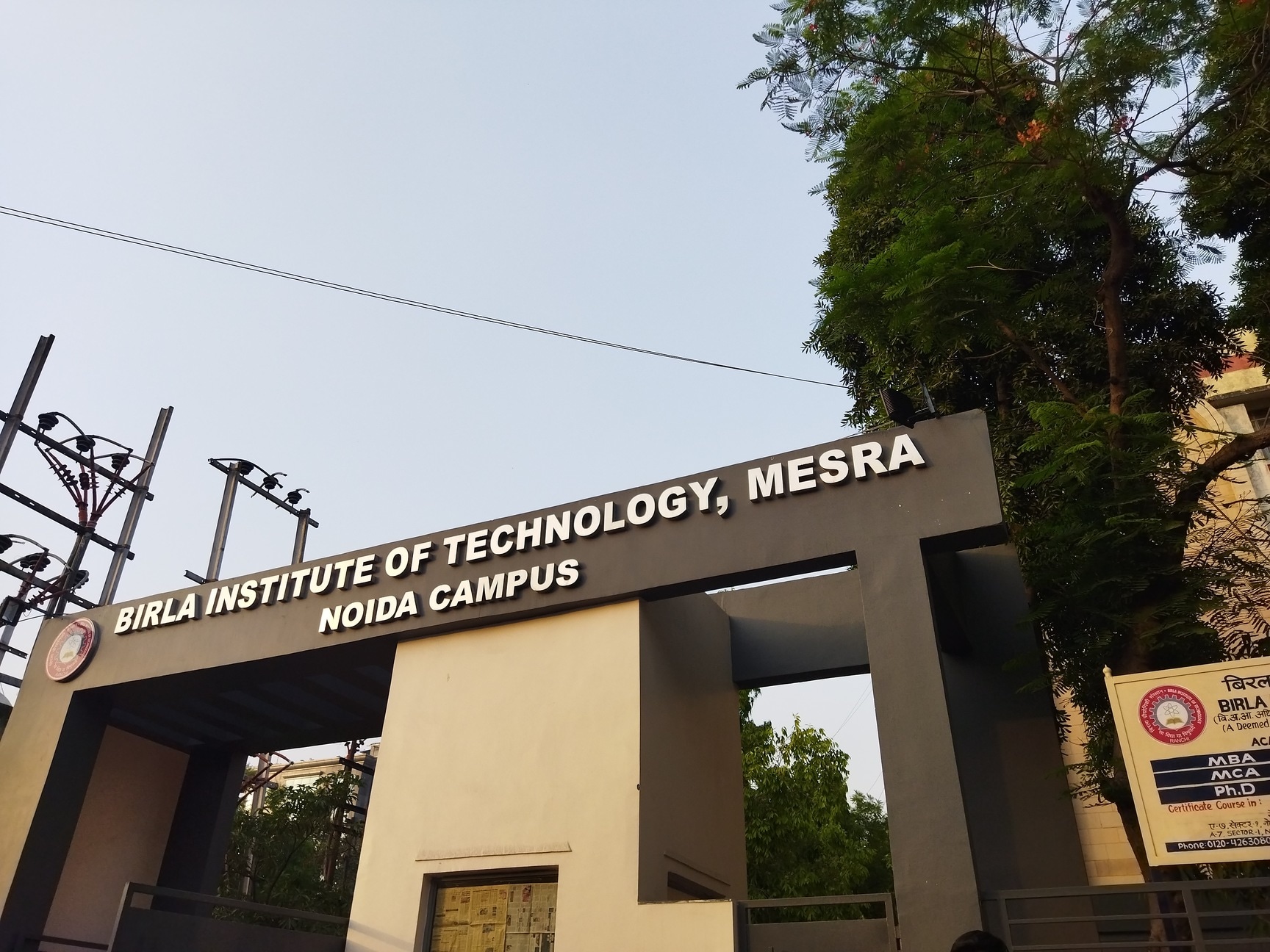
Introduction about Ph.D. in Processing and Food Engineering at Birla Institute of Technology
Embarking on a Ph.D. in Processing and Food Engineering at Birla Institute of Technology (BIT) is a transformative journey for professionals who aspire to lead the next revolution in the global food industry. As the world faces unprecedented challenges in food security, sustainability, and nutritional quality, the need for advanced engineering solutions has never been more critical. Birla Institute of Technology, renowned for its academic excellence and research-driven environment, offers a robust platform for scholars to push the boundaries of food technology. This program is designed to inspire innovation, fostering a new generation of researchers who can integrate core engineering principles with biological sciences to create efficient, safe, and sustainable food processing systems. Whether you are aiming to pioneer novel preservation techniques or optimize supply chain logistics through automation, this doctorate program provides the intellectual rigor and technical resources required to make a global impact.
Ph.D Admission 2026-2027 & Writing Support Services by Shiksha Research
Eligibility Criteria for Ph.D. in Processing and Food Engineering at Birla Institute of Technology
The pursuit of excellence at Birla Institute of Technology begins with a stringent yet fair selection process. To be eligible for the Ph.D. in Processing and Food Engineering, candidates must possess a strong academic foundation in engineering or technology. Generally, the requirements include:
- An M.E. or M.Tech. degree in Food Engineering, Agricultural Engineering, Chemical Engineering, or a related discipline from a recognized university.
- A minimum aggregate of 60% marks or a 6.5 CGPA on a 10-point scale for general category candidates.
- For SC/ST candidates, a relaxation is typically provided, requiring a minimum of 55% marks or 6.0 CGPA.
- Professionals with significant industry experience and a strong research orientation are highly encouraged to apply, provided they meet the academic benchmarks.
Entrance Exam for Ph.D. in Processing and Food Engineering at Birla Institute of Technology
Admission to the doctoral program is competitive and merit-based. Candidates are usually required to appear for the BIT Ph.D. Entrance Test. The examination evaluates the candidate?s aptitude for research, mathematical ability, and core knowledge in food engineering. However, candidates who have qualified in national-level examinations such as GATE, CSIR-NET, or UGC-NET are often exempted from the written entrance test, though they must still participate in the personal interview round. This multi-layered evaluation ensures that the institute selects individuals who possess not only the knowledge but also the critical thinking skills necessary for high-level technical research.
Fee Structure for Ph.D. in Processing and Food Engineering at Birla Institute of Technology
The investment in a Ph.D. from Birla Institute of Technology is an investment in your future leadership. The fee structure is designed to support a world-class research infrastructure while remaining accessible to dedicated scholars. Below is an approximate breakdown of the fee components:
| Fee Component | Approximate Amount (INR) | Frequency |
|---|---|---|
| Admission Fee | ?15,000 - ?25,000 | One-time |
| Semester Tuition Fee | ?50,000 - ?75,000 | Per Semester |
| Library and Infrastructure Fee | ?10,000 | Annual |
| Caution Money (Refundable) | ?10,000 | One-time |
| Examination Fee | ?5,000 | Per Semester |
Admission Process for Ph.D. in Processing and Food Engineering at Birla Institute of Technology
The admission journey at BIT is streamlined to identify the most promising researchers. It typically follows these steps:
- Online Application: Interested candidates must register and submit their application through the official university portal.
- Entrance Screening: Shortlisted candidates based on academic records are called for the BIT Ph.D. Entrance Test (unless exempted via national exams).
- Personal Interview: Candidates who clear the entrance round or meet exemption criteria must present their research vision before a departmental committee.
- Selection and Document Verification: Final selection is based on the cumulative performance in the entrance test, interview, and academic history.
- Registration: Successful candidates complete the formalities and enroll in their respective research groups.
Ph.D. Subjects and Specializations in Processing and Food Engineering at Birla Institute of Technology
The curriculum is designed to provide depth in technical expertise while allowing for interdisciplinary exploration. During the coursework phase, scholars engage with advanced subjects that form the bedrock of their research. Key topics include:
- Advanced Heat and Mass Transfer in Food Systems
- Rheology of Food Materials
- Non-Thermal Processing Technologies
- Food Process Modeling and Simulation
- Cold Chain Management and Logistics
In addition to technical subjects, scholars often require mastery over data gathering; for those embarking on field studies, utilizing professional Questionnaire Design and Development is essential to ensure high-quality primary data for their thesis.
Research Areas in Processing and Food Engineering at Birla Institute of Technology
BIT encourages research that addresses real-world industrial problems. The Department of Processing and Food Engineering focuses on several cutting-edge domains:
- Preservation and Storage: Innovations in modified atmosphere packaging (MAP) and controlled atmosphere storage.
- Functional Foods: Extraction of bioactive compounds and the development of nutraceutical-rich food products.
- Food Machinery: Designing energy-efficient processing equipment and smart sensors for food safety.
- Waste Valorization: Converting food industry by-products into high-value ingredients.
Scholars working in these areas often find that complex data sets require precision, leading many to seek expert Research Data Analysis Services to validate their experimental results and draw statistically significant conclusions.
Documents Required for Ph.D. in Processing and Food Engineering at Birla Institute of Technology
Proper documentation is vital for a smooth admission process. Candidates should prepare the following:
- 10th, 12th, and Graduation Marksheets and Certificates.
- Master's Degree Certificate and Consolidated Transcript.
- Valid GATE/NET Scorecard (if applicable).
- No Objection Certificate (NOC) from the current employer (for part-time/sponsored candidates).
- A comprehensive Research Proposal outlining the intended area of study.
- Migration and Transfer Certificates.
- Identity Proof (Aadhar Card, Passport, etc.).
Birla Institute of Technology Ph.D. Syllabus for Processing and Food Engineering
The Ph.D. syllabus at BIT is bifurcated into mandatory coursework and independent research. The coursework phase typically lasts for two semesters and includes:
- Research Methodology: Training in experimental design, literature review, and ethical research practices.
- Advanced Computation: Introduction to software tools used for food engineering simulation.
- Elective Courses: Tailored subjects such as Grain Processing, Dairy Engineering, or Emerging Food Technologies.
Finalizing the syllabus requirements concludes with a comprehensive examination, after which the scholar focuses entirely on their dissertation. Navigating this stage can be demanding, and many students opt for Thesis and Dissertation Writing Services to ensure their final submission meets the highest academic and linguistic standards.
How To Apply for Ph.D. in Processing and Food Engineering at Birla Institute of Technology
Ready to take the leap into advanced research? Follow these steps:
- Visit the BIT Mesra (or specific campus) official admissions website.
- Create a user profile and fill in the online application form with accurate details.
- Upload scanned copies of all required documents and a passport-sized photograph.
- Pay the application fee via the integrated online payment gateway.
- Download and print the completed application form for future reference during the entrance exam/interview.
Career Scope and Job Opportunities After Ph.D. in Processing and Food Engineering from Birla Institute of Technology
A doctorate from an institution as prestigious as Birla Institute of Technology opens doors to elite career paths. Graduates are uniquely positioned to occupy high-level roles in both academia and the private sector. Potential career trajectories include:
- Principal Scientist: Leading Research & Development (R&D) wings of multinational food corporations.
- Academic Professor: Shaping the minds of future engineers in top-tier technical universities.
- Policy Advisor: Working with government bodies such as FSSAI or international organizations like the FAO on food safety regulations.
- Process Consultant: Offering strategic technical advice to food processing startups to scale their operations.
Moreover, visibility in the scientific community is crucial. Professionals often utilize Research Paper Writing Services to publish their findings in high-impact journals, thereby enhancing their global professional reputation and career mobility.
Scholarship for Ph.D. in Processing and Food Engineering at Birla Institute of Technology
BIT recognizes that financial support is essential for sustained research focus. A variety of scholarships and fellowships are available:
- Institute Research Fellowship: Provided to meritorious full-time scholars based on their performance in the entrance evaluations.
- Sponsored Projects: Scholars can work as JRFs (Junior Research Fellows) or SRFs (Senior Research Fellows) under funded projects from agencies like DST, DBT, or ICAR.
- External Scholarships: Candidates are encouraged to apply for Prime Minister?s Fellowship, Rajiv Gandhi National Fellowship, or other state-sponsored schemes.
FAQs Regarding Ph.D. in Processing and Food Engineering at Birla Institute of Technology
Q1: Can I apply for a Ph.D. while working in the food industry?
A: Yes, BIT offers a part-time Ph.D. category for working professionals, provided they submit an NOC from their employer and meet the residency requirements for coursework.
Q2: What is the typical duration of the Ph.D. program?
A: The program generally takes between 3 to 5 years, depending on the research progress and successful defense of the dissertation.
Q3: Is a GATE score mandatory?
A: While a GATE score is not mandatory for application, it is highly preferred and allows candidates to be exempted from the internal entrance test.
Q4: Are there housing facilities for Ph.D. scholars?
A: Yes, the university provides dedicated hostel facilities for research scholars to ensure a conducive environment for round-the-clock academic engagement.








