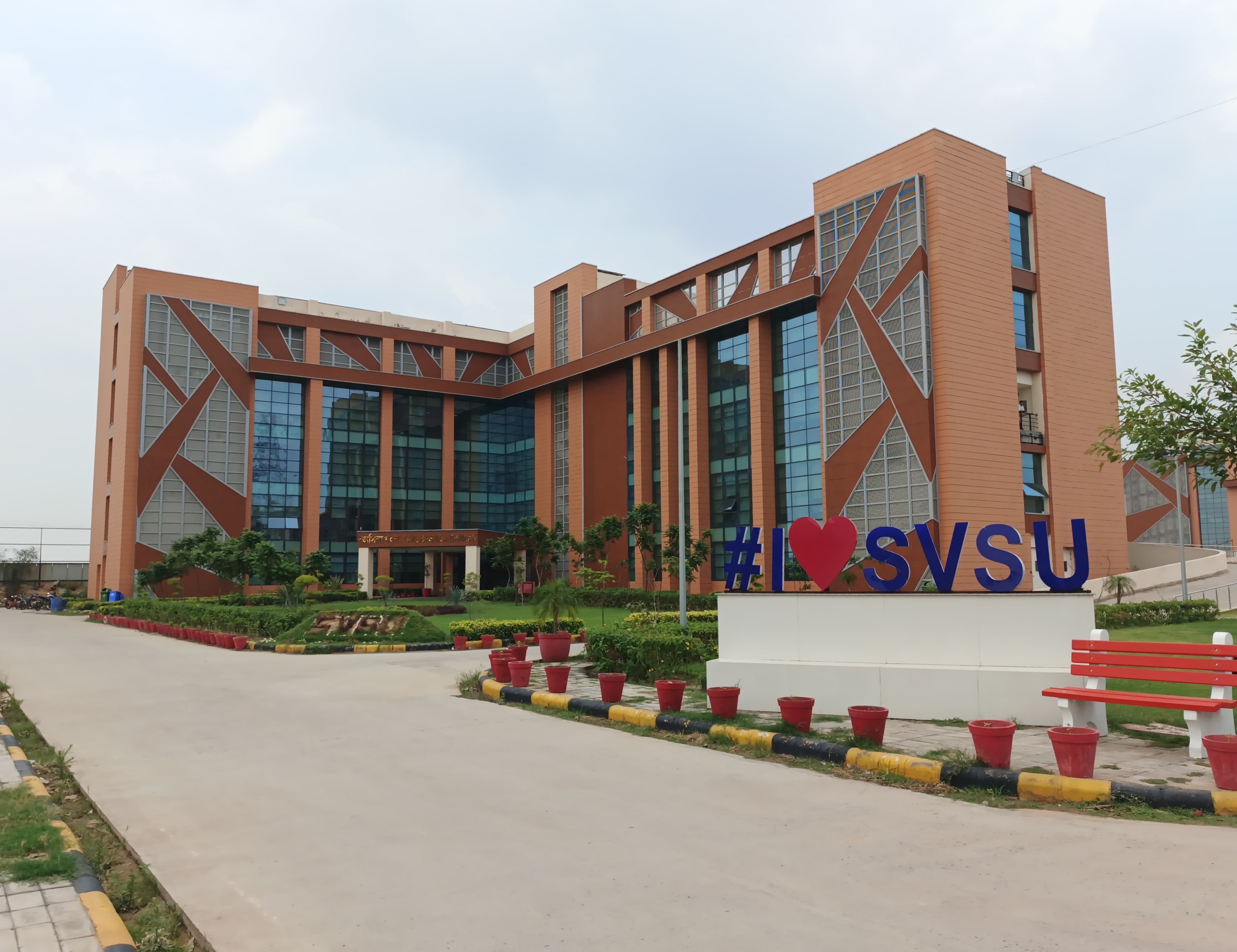
Ph.D. in Psychology at Shri Vishwakarma Skill University: Comprehensive Guide for Professionals
Introduction about Ph.D. in Psychology at Shri Vishwakarma Skill University
Pursuing a Ph.D. in Psychology from Shri Vishwakarma Skill University opens doors to advanced research, academic leadership, and high‑impact consulting roles. The university blends rigorous scientific methodology with a deep appreciation of human behavior, ensuring that graduates are equipped to address complex societal challenges. Whether you aim to become a university professor, a senior research scientist, or a policy advisor, this doctoral programme offers a robust platform for intellectual growth and professional distinction.
Eligibility Criteria for Ph.D. in Psychology at Shri Vishwakarma Skill University
Eligible candidates must meet the following requirements:
- Hold a Master’s degree (M.A./M.Sc.) in Psychology or a closely related discipline with a minimum of 55% marks (or 5.5 CGPA on a 10‑point scale).
- Candidates with a NET, UGC-CSIR, or GATE qualification are exempted from the university‑level entrance exam.
- Age limit: No upper age restriction; however, a candidate should be able to complete the programme within the stipulated time frame (typically 3‑4 years).
- Proficiency in English (minimum IELTS 6.0 or equivalent) for candidates whose prior education was not in English.
Entrance Exam for Ph.D. in Psychology at Shri Vishwakarma Skill University
Candidates without national eligibility qualifications must appear for the university’s entrance test. The exam pattern includes:
- Paper I – General Aptitude (Logical reasoning, quantitative ability, English comprehension – 60 marks).
- Paper II – Subject Specific (Research methodology, statistics, core concepts of psychology – 90 marks).
- Interview/ Viva‑voce (30 marks) to assess research orientation and communication skills.
The selection is based on a cumulative score out of 180. Detailed syllabus and sample papers are available on the university’s official website.
Fee Structure for Ph.D. in Psychology at Shri Vishwakarma Skill University
The fee structure is designed to be transparent and affordable. Below is a breakdown for the academic year 2025‑26:
| Component | Amount (INR) | Notes |
|---|---|---|
| Application & Registration Fee | 2,500 | One‑time, non‑refundable |
| Tuition Fee (per semester) | 22,000 | Four semesters per year |
| Laboratory & Resource Charges | 5,000 | Includes access to psychology labs and software |
| Examination & Evaluation Fee | 4,500 | Per semester |
| Annual Student Activity Fund | 1,200 | Supports conferences and workshops |
| Total Approx. Annual Cost | 1,10,200 | Subject to revisions each academic year |
Admission Process for Ph.D. in Psychology at Shri Vishwakarma Skill University
The admission timeline follows a structured flow:
- Online Application: Fill the application form on the university portal and upload required documents.
- Entrance Examination: Appear for the written test (or submit national eligibility scores).
- Interview: Shortlisted candidates are invited for a personal interview and research proposal discussion.
- Final Selection: Merit list released based on combined scores of entrance test, interview, and academic record.
- Admission Confirmation: Pay the registration fee and receive the admission letter.
All steps are managed through the university’s secure online portal, ensuring a seamless experience for working professionals.
Ph.D. Subjects and Specializations in Psychology at Shri Vishwakarma Skill University
The programme offers a wide array of specializations allowing candidates to tailor their research focus:
- Clinical Psychology
- Cognitive Neuroscience
- Industrial & Organizational Psychology
- Health Psychology
- Social & Cultural Psychology
- Educational Psychology
- Forensic Psychology
Students can select a primary specialization and optionally pursue a secondary focus, fostering interdisciplinary expertise.
Research Areas in Psychology at Shri Vishwakarma Skill University
Faculty members lead cutting‑edge research clusters in:
- Neuro‑cognitive mechanisms of learning and memory.
- Psychopathology and evidence‑based therapeutic interventions.
- Workplace well‑being, employee performance, and leadership development.
- Community mental health and public policy impact assessments.
- Digital behaviour analysis, including social media influence on self‑esteem.
Prospective Ph.D. scholars are encouraged to align their dissertation topics with these thematic areas, leveraging state‑of‑the‑art laboratory facilities.
Documents Required for Ph.D. in Psychology at Shri Vishwakarma Skill University
A concise checklist simplifies the submission process:
| Document | Details |
|---|---|
| Completed Application Form | Online submission with digital signature |
| Mark Sheets & Degree Certificates | Original and attested copies of Master’s degree |
| Research Proposal (500‑800 words) | Brief outline of intended dissertation topic |
| Curriculum Vitae (CV) | Highlight academic achievements, publications, and work experience |
| Proof of National Eligibility (NET/UGC‑CSIR/GATE) | If applicable, otherwise attach entrance exam admit card |
| English Proficiency Certificate | IELTS/TOEFL score report (if required) |
| Passport‑size Photographs | Four recent colour photographs |
| Fee Payment Receipt | Proof of registration fee transaction |
Shri Vishwakarma Skill University Ph.D. Syllabus for Psychology
The syllabus is divided into core modules, elective courses, and research components:
- Core Modules: Research Methodology, Advanced Statistics, Ethical Issues in Psychology, Academic Writing.
- Electives (choose any two): Neuropsychology, Psychometrics, Human Factors, Cross‑Cultural Studies, Positive Psychology.
- Research Component: Seminar series, Publication of at least two peer‑reviewed articles, and a defended dissertation.
The curriculum is regularly updated to incorporate emerging trends such as AI‑driven behavioural analytics.
How To Apply for Ph.D. in Psychology at Shri Vishwakarma Skill University
Follow these step‑by‑step instructions:
- Visit the official university website and navigate to the “Ph.D. Admissions” portal.
- Create a user account and fill in personal and academic details.
- Upload scanned copies of all required documents (as per the checklist above).
- Pay the non‑refundable application fee using net‑banking, credit card, or UPI.
- Submit the form and note the application reference number for future correspondence.
- Prepare for the entrance test (if applicable) using the university‑provided sample papers.
- Attend the interview and present your research proposal confidently.
Successful candidates will receive an admission email with further enrollment instructions.
Career Scope and Job Opportunities After Ph.D. in Psychology from Shri Vishwakarma Skill University
Graduates enjoy a diverse spectrum of career paths:
- Academia: Assistant Professor, Associate Professor, Department Head in universities and colleges.
- Research Institutes: Senior Scientist roles in government labs, private R&D centres, and think‑tanks.
- Clinical Settings: Clinical Director, Consultant Psychologist, or Head of Mental Health Services.
- Corporate Sector: Organizational Development Manager, Talent Analytics Lead, Human Resources Strategist.
- Public Policy & NGOs: Policy Analyst, Program Manager for mental health initiatives.
The university’s strong industry linkage ensures placement








