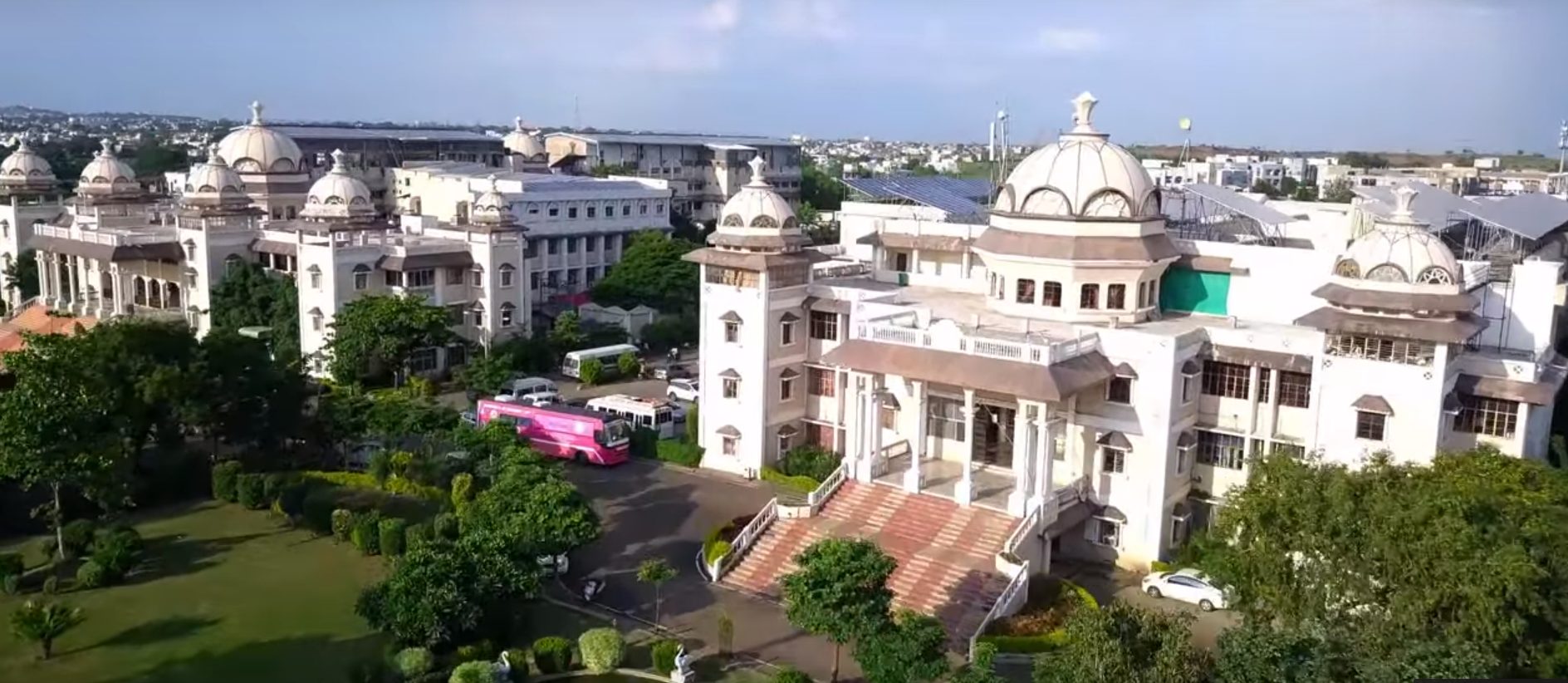
Ph.D. in Radio Diagnosis at Datta Meghe Institute of Medical Sciences
Introduction about Ph.D. in Radio Diagnosis at Datta Meghe Institute of Medical Sciences
The Doctor of Philosophy in Radio Diagnosis at Datta Meghe Institute of Medical Sciences (DMIMS) stands as a premier pathway for medical professionals and researchers who aim to shape the future of diagnostic imaging. This program blends rigorous academic coursework, cutting‑edge laboratory exposure, and original research, empowering candidates to become thought leaders in fields such as magnetic resonance imaging (MRI), computed tomography (CT), nuclear medicine, and interventional radiology. With a curriculum designed around innovation and clinical relevance, the Ph.D. nurtures analytical thinking, scientific writing, and translational research skills that align with global healthcare demands.
Eligibility Criteria for Ph.D. in Radio Diagnosis at Datta Meghe Institute of Medical Sciences
- Master’s degree (M.Sc., M.Tech., MD, or equivalent) in Radiology, Medical Physics, Biomedical Engineering, or a related discipline with a minimum aggregate of 55% (50% for SC/ST candidates).
- Valid registration with the Medical Council of India (MCI) or the Indian Council of Medical Research (ICMR) for clinical candidates.
- Proficiency in English (minimum TOEFL/IELTS score for international applicants, if applicable).
- Research-oriented mindset demonstrated through publications, conference presentations, or relevant project work.
Entrance Exam for Ph.D. in Radio Diagnosis at Datta Meghe Institute of Medical Sciences
Admission is based on the DMIMS Ph.D. Entrance Test (DMIMS-PET), a two‑stage assessment:
- Written Test – 100 multiple‑choice questions covering fundamentals of medical imaging, biophysics, research methodology, and statistics.
- Interview & Viva‑voce – Candidates present a research proposal, discuss past work, and demonstrate analytical reasoning.
The test is conducted annually in May, with application deadlines in March. Candidates can also qualify through national exams such as UGC‑NET or CSIR‑JRF, which are accepted as direct entry pathways.
Fee Structure for Ph.D. in Radio Diagnosis at Datta Meghe Institute of Medical Sciences
| Component | Amount (INR) | Details |
|---|---|---|
| Application Processing Fee | 2,500 | Non‑refundable, payable online |
| Annual Tuition & Lab Charges | 85,000 | Covers classroom instruction, lab access, and library resources |
| Research Project Grant | 30,000 (per year) | Allocated for consumables, imaging datasets, and conference travel |
| Miscellaneous (Health Insurance, Student Services) | 10,000 | One‑time payment |
| Total Approx. Cost (3‑Year Programme) | 322,500 | Excluding scholarships and external funding |
Admission Process for Ph.D. in Radio Diagnosis at Datta Meghe Institute of Medical Sciences
- Online Application – Fill the DMIMS portal form, upload academic transcripts, research CV, and a statement of purpose.
- Document Verification – The admissions office validates certificates and eligibility criteria.
- Entrance Examination – Appear for DMIMS‑PET or submit a valid UGC‑NET/CSIR‑JRF score.
- Interview & Proposal Review – Shortlisted candidates present their research proposal before the Faculty Committee.
- Final Admission Offer – Successful candidates receive an official admission letter and enrollment instructions.
Ph.D. Subjects and Specializations in Radio Diagnosis at Datta Meghe Institute of Medical Sciences
The program offers a flexible structure allowing students to tailor their research across several specializations:
- Advanced MRI Techniques and Functional Imaging
- Quantitative CT and Radiation Dose Optimization
- Nuclear Medicine & PET/CT Imaging
- Interventional Radiology Innovations
- Artificial Intelligence and Machine Learning in Diagnostic Imaging
- Radiomics and Image‑Based Biomarkers
- Radiation Safety and Protection
Research Areas in Radio Diagnosis at Datta Meghe Institute of Medical Sciences
Faculty mentors guide Ph.D. scholars through cutting‑edge research domains, including:
- Development of low‑field MRI protocols for resource‑limited settings.
- High‑resolution CT reconstruction algorithms to reduce exposure.
- Hybrid imaging (PET/MRI) for oncology and neuro‑degenerative diseases.
- Image‑guided minimally invasive therapies and robotic interventions.
- Deep learning models for automated lesion detection and classification.
- Evaluation of contrast agents and molecular imaging probes.
- Standardization of radiomics pipelines for multi‑center trials.
Documents Required for Ph.D. in Radio Diagnosis at Datta Meghe Institute of Medical Sciences
| Document | Purpose |
|---|---|
| Completed Application Form | Initial registration and fee payment |
| Academic Transcripts & Degree Certificates | Verification of eligibility |
| Research Proposal (2,000‑word abstract) | Evaluation of research fit and originality |
| Curriculum Vitae (CV) | Showcase publications, projects, and professional experience |
| Letter of Recommendation (2) | Academic endorsement from supervisors or senior faculty |
| Proof of English Proficiency (if applicable) | TOEFL/IELTS scores for non‑native speakers |
| Category Certificate (SC/ST/OBC) – if applicable | Eligibility for reservation benefits |
Datta Meghe Institute of Medical Sciences Ph.D. Syllabus for Radio Diagnosis
The syllabus is organized across four semesters, combining core coursework with research milestones:
- Semester 1: Research Methodology, Biostatistics, Fundamentals of Medical Imaging Physics.
- Semester 2: Advanced Imaging Modalities, Ethics in Clinical Research, Literature Review and Publication Writing.
- Semester 3: Specialized Electives (choose two) – AI in Imaging, Interventional Radiology, Nuclear Medicine, Radiomics.
- Semester 4: Thesis Work – data acquisition, analysis, manuscript preparation, and defense.
How To Apply for Ph.D. in Radio Diagnosis at Datta Meghe Institute of Medical Sciences
Prospective candidates should follow these steps:
- Visit the official DMIMS admissions portal and register an account.
- Fill in personal details, academic history, and upload scanned copies of required documents.
- Pay the non‑refundable application fee through the secured payment gateway.
- Submit the research proposal and await an email confirmation for the entrance examination schedule.
- Prepare for the written test using the DMIMS‑PET syllabus and practice previous years’ papers.
- Attend the interview and, upon selection, complete enrollment by submitting the original certificates and paying the first year tuition.
Career Scope and Job Opportunities After Ph.D. in Radio Diagnosis from Datta Meghe Institute of Medical Sciences
Graduates enjoy a broad spectrum of career avenues:
- Academic Positions: Assistant Professor, Lecturer, or Research Fellow in medical colleges and universities.
- Research Institutes: Senior Scientist or Project Leader at national labs such as ICMR, AIIMS, or international research centers.
- Industry Roles: R&D Manager, Imaging Product Development Engineer, Clinical Trial Scientist in medical device and pharmaceutical companies.
- Healthcare Administration: Director of Imaging Services, Quality Assurance Officer, or Consultant Radiologist with research expertise.
- Entrepreneurship: Founder of startups focusing on AI‑driven diagnostic solutions or tele‑radiology platforms.
Scholarship for Ph.D. in Radio Diagnosis at Datta Meghe Institute of Medical Sciences
Several financial assistance options are available:
- DMIMS Merit‑Based Fellowship (full tuition waiver + stipend of INR 15,000 per month).
- UGC–CSIR Junior Research Fellowship (JRF) – recognized nationwide.
- ICMR Short‑Term Fellowship for specific imaging projects.
- Corporate-sponsored scholarships from leading imaging firms (Siemens, GE Healthcare).
- Government schemes for SC/ST/OBC candidates covering tuition and living expenses.








