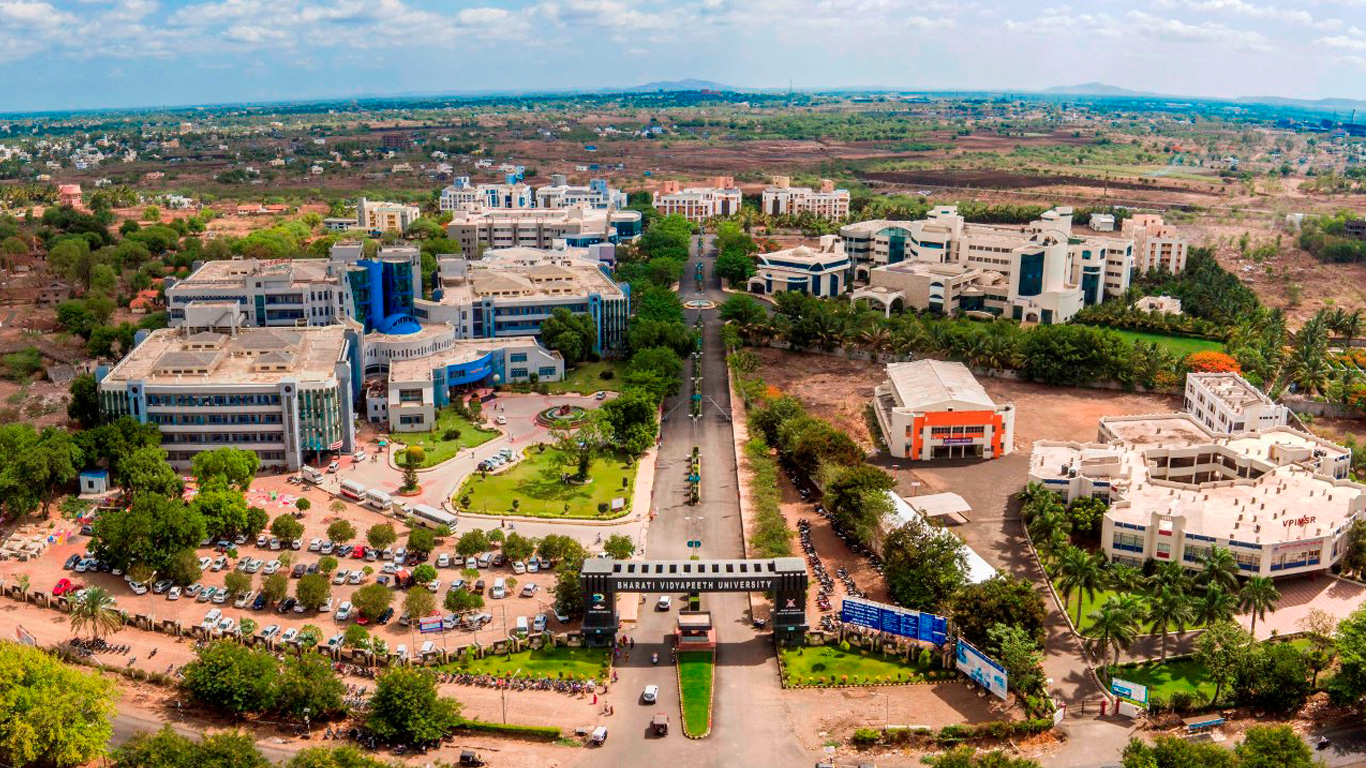
Introduction about Ph.D. in Radiology & Imaging Technology at Bharati Vidyapeeth
In the rapidly evolving landscape of modern medicine, medical imaging stands as the cornerstone of diagnostic precision and therapeutic planning. Pursuing a Ph.D. in Radiology & Imaging Technology at Bharati Vidyapeeth (Deemed to be University) is not merely an academic endeavor; it is a transformative journey for professionals who aspire to lead the next generation of medical innovation. Bharati Vidyapeeth, with its rich legacy of educational excellence and state-of-the-art healthcare infrastructure, offers a rigorous research environment designed to push the boundaries of imaging sciences. This doctoral program empowers scholars to bridge the gap between clinical practice and cutting-edge technology, fostering a culture of inquiry that addresses complex healthcare challenges through advanced visualization techniques.
Ph.D Admission 2026-2027 & Writing Support Services by Shiksha Research
The vision behind the Ph.D. program at Bharati Vidyapeeth is to cultivate researchers who are not only technically proficient but also ethically grounded. As the medical field leans more towards personalized medicine and artificial intelligence, the need for high-level researchers in radiology has never been greater. By enrolling in this program, professionals transition from being users of technology to being the architects of new diagnostic protocols and imaging modalities.
Eligibility Criteria for Ph.D. in Radiology & Imaging Technology at Bharati Vidyapeeth
To maintain the highest standards of research integrity, Bharati Vidyapeeth follows stringent eligibility criteria for its doctoral aspirants. Prospective candidates must possess a Master?s degree (M.Sc. or equivalent) in Radiology, Medical Imaging Technology, or a closely related field from a recognized university.
- Minimum Percentage: Candidates should have secured at least 55% marks in their postgraduate degree (50% for reserved category candidates as per UGC guidelines).
- Professional Background: While not mandatory, candidates with professional experience in clinical radiology or diagnostic centers often find themselves better prepared for the practical rigors of the course.
- Academic Pedigree: The degree must be obtained from an institution recognized by the University Grants Commission (UGC) or equivalent regulatory bodies.
Entrance Exam for Ph.D. in Radiology & Imaging Technology at Bharati Vidyapeeth
Admission to the Ph.D. program is primarily governed by the Bharati Vidyapeeth Ph.D. Entrance Test (BVP-PET). This examination is designed to assess both the general research aptitude and the subject-specific expertise of the candidate.
The entrance exam typically consists of two parts. Part I focuses on Research Methodology, evaluating the candidate's logical reasoning, analytical skills, and understanding of scientific protocols. For scholars who find the initial drafting of their study framework challenging, utilizing professional Thesis and Dissertation Writing Services during their preparation can provide a deeper understanding of academic structure. Part II of the exam is subject-specific, covering advanced concepts in Radiology, Radiation Physics, and Imaging Anatomy. Candidates who have qualified for UGC-NET (including JRF), UGC-CSIR NET, or similar national-level fellowships may be exempted from the written test, though they must still appear for the personal interview.
Fee Structure for Ph.D. in Radiology & Imaging Technology at Bharati Vidyapeeth
Investing in a Ph.D. is an investment in your future as a thought leader in medical science. The fee structure at Bharati Vidyapeeth is competitive, reflecting the high-end equipment and resources provided to scholars.
| Particulars | Annual Fee (General Category) | Note |
|---|---|---|
| Tuition Fee | ? 80,000 - ? 1,20,000 | Subject to annual revision |
| Registration & Eligibility | ? 10,000 - ? 15,000 | One-time payment |
| Lab & Library Usage | ? 20,000 | Per year |
| Thesis Submission Fee | ? 25,000 | Payable during the final year |
*Please note: The above figures are indicative and subject to change based on university notifications. Additional costs for international travel for conferences or specialized software may apply.
Admission Process for Ph.D. in Radiology & Imaging Technology at Bharati Vidyapeeth
The admission process is transparent and merit-based, ensuring that only the most dedicated scholars are selected.
- Online Registration: Candidates must register through the official university portal and pay the application fee.
- Entrance Testing: Eligible candidates appear for the BVP-PET exam.
- Personal Interview/Viva: Successful candidates in the entrance test are called for an interview. Here, the candidate discusses their proposed research area before a departmental committee.
- Final Selection: A merit list is prepared based on the combined performance in the entrance test and the interview.
- Coursework Commencement: Once admitted, the scholar must complete a mandatory six-month coursework period focusing on research ethics and advanced statistics.
Ph.D. Subjects and Specializations in Radiology & Imaging Technology at Bharati Vidyapeeth
The Ph.D. program allows for deep specialization in various facets of imaging technology. Scholars are encouraged to explore interdisciplinary subjects that combine biology, physics, and computer science.
- Advanced Magnetic Resonance Imaging (MRI): Focusing on functional MRI and spectroscopic imaging.
- Computed Tomography (CT) Innovations: Multi-detector CT and dose reduction techniques.
- Interventional Radiology: Research into minimally invasive procedures guided by imaging.
- Nuclear Medicine: Exploring PET-CT and the role of radiopharmaceuticals in oncology.
- Molecular Imaging: Studying biological processes at the molecular level using specialized tracers.
Research Areas in Radiology & Imaging Technology at Bharati Vidyapeeth
Research at Bharati Vidyapeeth is driven by the need for clinical impact. Scholars can choose from a variety of contemporary research areas. Many candidates find that high-quality Research Paper Writing Services are a significant aid when translating complex laboratory findings into publishable medical manuscripts.
Key research areas include:
- Artificial Intelligence and Machine Learning in Image Interpretation.
- Radiation Safety and Protocols for Pediatric Patients.
- Advanced Ultrasound Elastography in diagnosing chronic liver disease.
- Hybrid Imaging Techniques in Cardiovascular health.
Furthermore, for those conducting clinical trials or population-based imaging studies, obtaining specialized support for Questionnaire Design and Development is crucial to ensuring the validity of qualitative data gathered from patients and practitioners.
Documents Required for Ph.D. in Radiology & Imaging Technology at Bharati Vidyapeeth
Candidates are required to maintain a comprehensive portfolio of documents for the admission and registration process:
- Aadhaar Card or Passport for identity verification.
- Postgraduate degree certificates and marks transcripts.
- Undergraduate degree certificates.
- Migration and Transfer Certificates.
- A detailed Research Proposal (SOP).
- No Objection Certificate (NOC) from the current employer (if applicable).
- Caste/Category certificate (if seeking reservation benefits).
Bharati Vidyapeeth Ph.D. Syllabus for Radiology & Imaging Technology
The syllabus is divided into coursework and the actual research phase. During the initial phase, scholars undergo rigorous training in Research Methodology. To handle the complex quantitative aspects of their studies, many scholars seek assistance from Research Data Analysis Services to ensure their statistical conclusions are robust.
Phase 1: Coursework (6 Months)
- Research Methodology and Biostatistics.
- Recent Advances in Radiology & Imaging Technology.
- Research Ethics and Public Rights (RPE).
- Computer Applications in Imaging Research.
Phase 2: Core Research (2-5 Years)
- Literature Review and Gap Identification.
- Pilot Study and Data Collection.
- Data Analysis and Interpretation.
- Thesis Writing and Final Defense.
How To Apply for Ph.D. in Radiology & Imaging Technology at Bharati Vidyapeeth
The application process is designed to be user-friendly. Professionals can follow these steps:
- Visit the official website of Bharati Vidyapeeth (Deemed to be University).
- Navigate to the 'Admissions' section and select the Ph.D. tab.
- Fill in the personal, academic, and professional details in the online form.
- Upload scanned copies of the required documents.
- Pay the application fee via the integrated payment gateway.
- Download the admit card once it is released for the entrance test.
Career Scope and Job Opportunities After Ph.D. in Radiology & Imaging Technology from Bharati Vidyapeeth
A Ph.D. from Bharati Vidyapeeth opens doors to the highest levels of global academia and industry. Graduates are not just radiologists; they are innovators and policymakers.
- Academic Leadership: Professors and Deans at prestigious medical universities.
- Research & Development: Lead scientist roles in MedTech giants like GE Healthcare, Siemens Healthineers, and Philips.
- Clinical Consultancy: Advising hospitals on the implementation of advanced imaging protocols.
- Government & Policy: Roles in regulatory bodies like the Atomic Energy Regulatory Board (AERB) or WHO.
- Entrepreneurship: Founding specialized diagnostic startups or diagnostic AI development firms.
Scholarship for Ph.D. in Radiology & Imaging Technology at Bharati Vidyapeeth
Bharati Vidyapeeth is committed to supporting talented scholars who may face financial constraints.
- University Fellowships: Merit-based stipends offered to top performers in the entrance exam.
- Government Schemes: Guidance for applying to UGC-NET JRF, Rajiv Gandhi National Fellowship, and other minority scholarships.
- Project Fellowships: Many departmental research projects funded by ICMR or DST provide monthly stipends to Ph.D. scholars working on the project.
FAQs Regarding Ph.D. in Radiology & Imaging Technology at Bharati Vidyapeeth
Q1: Is this program available in part-time mode?
A: Yes, Bharati Vidyapeeth offers a part-time Ph.D. option specifically for working professionals, provided they meet the residency requirements and have an NOC from their employer.
Q2: How long does it take to complete the Ph.D.?
A: The minimum duration is three years, including coursework, and the maximum is usually six years.
Q3: Does the university provide assistance in scientific publishing?
A: While the university provides guidance through supervisors, scholars are encouraged to maintain high standards of writing for international journals.
Q4: Is the Ph.D. recognized globally?
A: Absolutely. Bharati Vidyapeeth is a NAAC 'A+' accredited university, and its Ph.D. degrees are recognized worldwide for academic and professional purposes.








