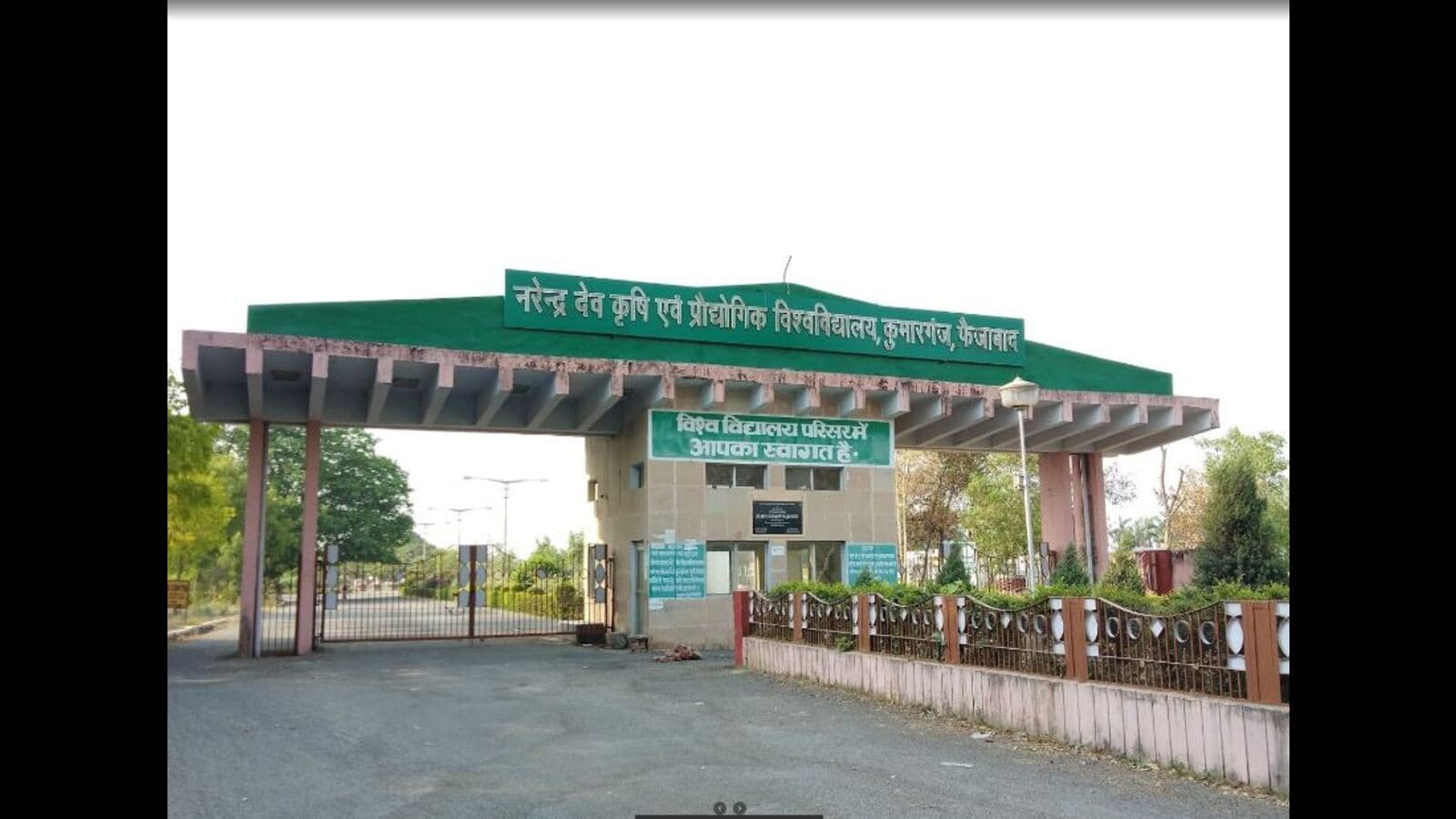
Introduction about Ph.D. in Radiology & Imaging Technology at Narendra Deo University
The Doctor of Philosophy (Ph.D.) in Radiology & Imaging Technology offered by Narendra Deo University is a research‑intensive program designed for professionals who aspire to become pioneers in diagnostic imaging, interventional radiology, and medical imaging informatics. The curriculum blends advanced theoretical knowledge with hands‑on laboratory work, enabling candidates to contribute original research that shapes the future of patient care, medical device innovation, and health‑technology policy. With state‑of‑the‑art imaging labs, collaborations with leading hospitals, and access to high‑performance computing resources, the university provides an ideal ecosystem for scholars seeking to push the boundaries of radiological science.
Eligibility Criteria for Ph.D. in Radiology & Imaging Technology at Narendra Deo University
- Master’s degree (M.Sc., M.Tech., M.Pharm. or equivalent) with a minimum of 55% aggregate marks from a recognized university.
- Qualified candidates must possess a background in Biomedical Engineering, Physics, Medicine, or related life‑science disciplines.
- Valid GATE/NET score in Engineering/Science subjects is preferred but not mandatory.
- Applicants must demonstrate English proficiency (IELTS/TOEFL) if the medium of instruction during prior studies was not English.
- For working professionals, a minimum of two years of relevant industry or clinical experience is an added advantage.
Entrance Exam for Ph.D. in Radiology & Imaging Technology at Narendra Deo University
The university conducts a comprehensive entrance examination to evaluate candidates’ analytical, research, and technical abilities. The exam comprises three sections:
- General Aptitude – Logical reasoning, quantitative ability, and verbal comprehension.
- Subject Knowledge – Fundamentals of radiology, imaging physics, and biomedical instrumentation.
- Research Proposal Evaluation – Candidates submit a concise research proposal (≤ 1500 words) that is assessed for originality, feasibility, and alignment with the university’s research priorities.
Candidates who clear the written test are invited for a personal interview with the department’s Ph.D. selection committee. The interview focuses on research intent, methodological rigor, and long‑term academic goals.
Fee Structure for Ph.D. in Radiology & Imaging Technology at Narendra Deo University
| Component | Annual Fee (INR) | Notes |
|---|---|---|
| Tuition Fee | 80,000 | Applicable for the first two years (core coursework) |
| Lab & Equipment Charges | 25,000 | Includes access to MRI, CT, PET, and ultrasonography suites |
| Research Publication & Conference Allowance | 15,000 | Supports paper submission fees and travel grants |
| Administrative & Examination Charges | 10,000 | One‑time fee at admission |
| Total Approximate Cost (per year) | 1,30,000 | Costs may vary based on scholarships and fellowships |
Admission Process for Ph.D. in Radiology & Imaging Technology at Narendra Deo University
- Online Application – Fill out the digital application form on the university portal and upload required documents.
- Entrance Examination – Appear for the written test at designated test centers.
- Interview & Proposal Review – Qualified candidates attend an interview and present their research proposal.
- Final Selection – The selection committee releases merit lists based on academic record, entrance scores, and interview performance.
- Enrollment & Fee Payment – Successful candidates confirm admission by paying the initial fee and completing the registration formalities.
Ph.D. Subjects and Specializations in Radiology & Imaging Technology at Narendra Deo University
Students may choose from a spectrum of specializations that align with emerging trends and industry demands:
- Advanced MRI Physics and Sequence Development
- Computed Tomography (CT) Image Reconstruction Algorithms
- Positron Emission Tomography (PET) and Hybrid Imaging
- Ultrasound Elastography and Therapeutic Ultrasound
- Radiomics, Artificial Intelligence, and Machine Learning in Imaging
- Radiation Dosimetry and Safety Management
- Interventional Radiology Techniques and Device Innovation
Research Areas in Radiology & Imaging Technology at Narendra Deo University
The university’s research ecosystem encourages interdisciplinary collaboration. Key research domains include:
- AI‑Driven Diagnostic Tools: Development of deep‑learning models for automated lesion detection and classification.
- Quantitative Imaging Biomarkers: Validation of imaging parameters as prognostic and predictive markers in oncology.
- Low‑Dose Imaging Techniques: Strategies to minimize radiation exposure while preserving image quality.
- Hybrid Imaging Systems: Integration of PET/MRI and CT/MRI platforms for comprehensive disease assessment.
- Portable Imaging Devices: Design of low‑cost, point‑of‑care imaging solutions for remote healthcare settings.
- Clinical Translation & Regulatory Science: Pathways to bring innovative imaging technologies from bench to bedside.
Documents Required for Ph.D. in Radiology & Imaging Technology at Narendra Deo University
| Document | Details |
|---|---|
| Academic Transcript | Certified copies of all graduate‑level marksheets and degree certificates. |
| Research Proposal | 1500‑word synopsis outlining objectives, methodology, and expected outcomes. |
| Entrance Exam Scorecard | Official result of the university’s Ph.D. entrance test or accepted national exam. |
| Letter of Recommendation | Two academic or professional references attesting to research potential. |
| Curriculum Vitae (CV) | Detailed CV highlighting publications, projects, and professional experience. |
| Proof of Identity | Aadhar card, passport, or driving license copy. |
| English Proficiency Certificate | IELTS/TOEFL score (if applicable). |
Narendra Deo University Ph.D. Syllabus for Radiology & Imaging Technology
The doctoral syllabus is divided into three phases:
- Core Coursework (Year 1–2) – Advanced modules in Imaging Physics, Biomedical Signal Processing, Clinical Radiology, and Research Methodology.
- Comprehensive Examination (End of Year 2) – Written and oral assessments to evaluate mastery of core concepts.
- Dissertation Research (Year 3–5) – Original research work culminating in a peer‑reviewed thesis, followed by a public defense.
How To Apply for Ph.D. in Radiology & Imaging Technology at Narendra Deo University
Prospective candidates should follow these steps:
- Visit the official university portal and click on the Ph.D. Admissions section.
- Register using a valid email address and create a secure password.
- Complete the online application form, ensuring that all fields are accurately filled.
- Upload scanned copies of the required documents (refer to the Documents Required table).
- Pay the non‑refundable application fee via the integrated payment gateway.
- Submit the application and note the generated application ID for future correspondence.
- Keep an eye on the official notification portal for entrance exam dates and interview schedules.
Career Scope and Job Opportunities After Ph.D. in Radiology & Imaging Technology from Narendra Deo University
Graduates of this program enjoy a diverse array of career pathways:
- Academic Positions: Assistant Professor, Associate Professor, or Research Fellow at premier medical colleges and universities.
- Industry Roles: R&D Scientist, Imaging Solutions Architect, or Product Manager in medical‑device companies (e.g., Siemens Healthineers, GE Healthcare).
- Clinical Leadership: Senior Radiologist, Imaging Department Head, or Clinical Trials Coordinator in tertiary hospitals.
- Government & Regulatory Bodies: Policy Advisor, Radiation Safety Officer, or Inspector with the Atomic Energy Regulatory Board (AERB).
- Entrepreneurship: Founder of startups focused on AI‑enabled imaging analytics or low‑cost portable scanners.
The demand for experts who can blend clinical insight with technical innovation is rising rapidly, making a Ph.D. in this field a lucrative and impactful investment.
Scholarship for Ph.D. in Radiology & Imaging Technology at Narendra Deo University
The university provides several merit‑based and need‑based financial aids:
- University Merit Scholarship: Covers up to 50% of tuition for top‑ranked candidates.
- Research Assistantship: Stipends ranging from INR 15,000 to 25,000 per month for students engaged in funded projects.
- External Fellowships: Opportunities to apply for CSIR, UGC, and AICTE doctoral fellowships.
- Industry Sponsored Grants: Collaborative projects with leading imaging firms often include full tuition waivers and project allowances.
Applicants are encouraged to explore these options early, as many scholarships are awarded on a first‑come, first‑served basis.
FAQs Regarding Ph.D. in Radiology & Imaging Technology at Narendra Deo University
- What is the minimum duration to complete the Ph.D.?
- Typically 3 years for full‑time scholars; part‑time candidates may take up to 5 years.
- Can I pursue the Ph.D. while working in a hospital?
- Yes. The university offers a flexible part‑time mode and acknowledges professional experience as part of the research credit.
- Is there a requirement for publishing research papers? <








