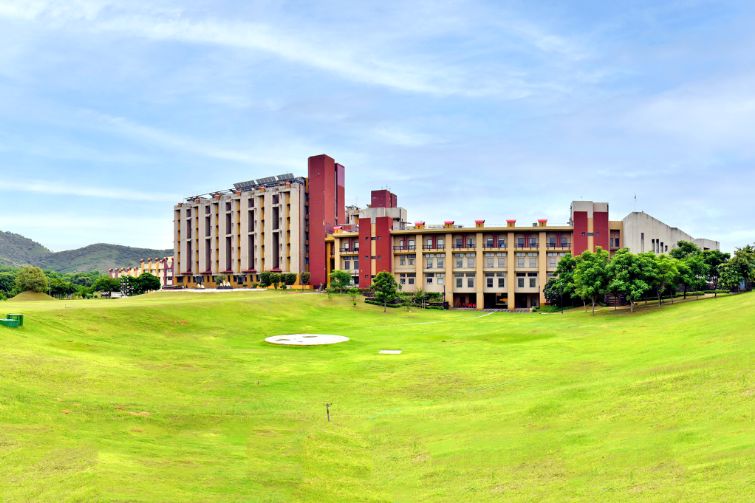
Introduction about Ph.D. in Radiology & Imaging Technology at NIIT University
In the rapidly evolving landscape of modern medicine, the role of diagnostic imaging has ascended to a position of paramount importance. Pursuing a Ph.D. in Radiology & Imaging Technology at NIIT University is more than just an academic milestone; it is an invitation to stand at the forefront of medical innovation. NIIT University, renowned for its industry-linked and research-driven curriculum, provides an ecosystem where curiosity meets cutting-edge technology. This doctoral program is designed for visionary professionals who aspire to transform healthcare delivery through advanced research in MRI, CT, Ultrasound, and Molecular Imaging. By integrating computational intelligence with radiological sciences, NIIT University empowers scholars to solve complex clinical challenges, paving the way for non-invasive diagnostic breakthroughs that save lives and redefine patient care standards globally.
Ph.D Admission 2026-2027 & Writing Support Services by Shiksha Research
This journey at NIIT University isn?t merely about obtaining a degree; it is about becoming a pioneer in a field that bridges the gap between engineering and clinical excellence. As a researcher here, you will be encouraged to explore the intersections of Artificial Intelligence, Machine Learning, and Diagnostic Radiography, ensuring your work has a tangible impact on the healthcare industry.
Eligibility Criteria for Ph.D. in Radiology & Imaging Technology at NIIT University
To embark on this elite research path, candidates must meet rigorous academic standards that reflect the complexity of the discipline. The eligibility criteria at NIIT University ensure that only the most dedicated and prepared minds enter the program:
- Academic Background: Prospective candidates must hold a Master?s Degree (M.Sc, M.Tech, or M.RIT) in Radiology, Medical Imaging Technology, Physics, or a closely related Allied Health Science field from a recognized university.
- Minimum Marks: A minimum aggregate of 55% marks (or an equivalent grade point average) at the postgraduate level is mandatory. A relaxation of 5% is typically granted to candidates belonging to SC/ST/OBC (non-creamy layer) or differently-abled categories.
- Professional Experience: While not always mandatory, professionals with significant clinical or industrial experience in imaging departments are highly encouraged to apply, as their practical insights add immense value to longitudinal research.
- Qualifying Exams: Preference is often given to those who have cleared national-level fellowships or eligibility tests.
Entrance Exam for Ph.D. in Radiology & Imaging Technology at NIIT University
Admission into the doctoral program is competitive and merit-based. NIIT University conducts its own entrance examination, often referred to as the NU Ph.D. Entrance Test. The examination is structured to evaluate a candidate?s aptitude for high-level research and their fundamental knowledge of radiological sciences.
The entrance test generally consists of two parts:
- Research Methodology: Testing logical reasoning, data interpretation, and the ability to formulate scientific hypotheses.
- Subject-Specific Knowledge: Covering core areas such as Radiation Physics, Advanced Anatomy, Pathology, and current trends in Imaging Technology.
Candidates who have successfully cleared UGC-NET, CSIR-NET, GATE, or JRF are often exempted from the written entrance exam and may proceed directly to the personal interview stage, though they must still fulfill university registration requirements.
Fee Structure for Ph.D. in Radiology & Imaging Technology at NIIT University
Understanding the financial commitment is essential for long-term planning. NIIT University offers a transparent fee structure designed to support sustainable research activities.
| Fee Category | Description | Approximate Amount (INR) |
|---|---|---|
| Admission Fee | One-time payment at the time of admission | ?25,000 - ?35,000 |
| Tuition Fee | Annual research and academic supervision fee | ?1,50,000 - ?2,00,000 per year |
| Examination Fee | Payable during coursework and thesis submission | ?10,000 - ?15,000 |
| Caution Money | Refundable security deposit | ?10,000 |
| Development Fee | Maintenance of lab and research facilities | ?20,000 per year |
Note: The fee structure is subject to change as per university norms. Scholars are advised to check the official university website for the most recent updates.
Admission Process for Ph.D. in Radiology & Imaging Technology at NIIT University
The admission journey is a meticulous process designed to identify individuals with the potential to contribute original knowledge to the field of medical imaging. The steps include:
- Online Registration: Submission of the application form via the official NIIT University portal.
- Written Entrance Test: Achievement of the qualifying cutoff in the NU Entrance Exam.
- Research Proposal Submission: Candidates must submit a preliminary research proposal outlining their intended area of study. For those needing professional guidance in structuring their academic documents, seeking Thesis and Dissertation Writing Services can be immensely beneficial to ensure high standards.
- Personal Interview: Shortlisted candidates appear before a Research Committee to discuss their proposal, technical expertise, and motivation for research.
- Selection and Enrollment: Final selection is based on the cumulative performance in the entrance test, interview, and academic history.
Ph.D. Subjects and Specializations in Radiology & Imaging Technology at NIIT University
The program offers a multi-disciplinary approach, allowing scholars to specialize in niches that align with global healthcare trends. Key subjects involve:
- Advanced Radiation Physics: Deep dive into the interaction of radiation with biological matter.
- Digital Image Processing: Algorithmic approaches to improving image quality and diagnostic accuracy.
- Magnetic Resonance Imaging (MRI): Physics, sequence development, and functional MRI (fMRI) studies.
- Nuclear Medicine: Radiopharmaceutical research and PET/SPECT imaging techniques.
- Interventional Radiology: Research into minimally invasive procedures guided by imaging.
- AI and Deep Learning: Developing automated diagnostic tools for radiologist support.
Research Areas in Radiology & Imaging Technology at NIIT University
Research at NIIT University is focused on addressing real-world clinical gaps. Scholars are encouraged to push the boundaries of conventional imaging. Potential research domains include:
Scholars often engage in cross-disciplinary projects involving tele-radiology and remote diagnostic tools. During the initial phases of field studies, researchers often require precision in Questionnaire Design and Development to gather data from clinicians and patients regarding the efficacy of new imaging protocols.
- Developing low-dose CT protocols for pediatric imaging.
- Using texture analysis and radiomics for early cancer detection.
- Evaluating the biological effects of non-ionizing radiation.
- Advancements in Contrast Media and Hybrid Imaging.
Documents Required for Ph.D. in Radiology & Imaging Technology at NIIT University
Ensuring all documentation is in order is vital for a seamless admission process. The following table highlights the essential requirements:
| Document Type | Necessity |
|---|---|
| PG Degree Certificate & Marksheets | Mandatory |
| UG Degree Certificate & Marksheets | Mandatory |
| Identity Proof (Aadhar/Passport) | Mandatory |
| Research Proposal (SOP) | Mandatory |
| Experience Certificates (if any) | Optional but recommended |
| Letters of Recommendation (LoR) | Minimum of 2 |
| No Objection Certificate (NOC) | Required for working professionals |
| Caste Certificate | Required for reservation benefits |
NIIT University Ph.D. Syllabus for Radiology & Imaging Technology
The Ph.D. coursework is strategically divided to provide a foundation in research ethics before transitioning into specialized inquiry. The syllabus typically covers:
- Unit I: Research Methodology: Ethics in research, scientific writing, and literature review techniques.
- Unit II: Advanced Biostatistics: Practical application of statistical tools for medical data. Scholars often utilize professional Research Data Analysis Services to manage the complex quantitative data generated during large-scale imaging trials.
- Unit III: Core Imaging Technology: Recent advances in hybrid imaging (PET-CT, PET-MRI) and molecular imaging.
- Unit IV: Regulatory and Safety Standards: AERB guidelines, radiation protection, and quality assurance in imaging departments.
How To Apply for Ph.D. in Radiology & Imaging Technology at NIIT University
Applying to NIIT University is a streamlined digital process. Follow these steps to secure your candidacy:
- Visit the official NIIT University website and navigate to the ?Admissions? section.
- Select the Ph.D. program and register with an active email ID and mobile number.
- Fill in the academic details and upload scanned copies of the required documents.
- Pay the application fee through the secure online payment gateway.
- Download the admit card for the entrance exam once it is released.
- Prepare your research statement meticulously to stand out during the interview round.
Career Scope and Job Opportunities After Ph.D. in Radiology & Imaging Technology from NIIT University
The prestige of a Ph.D. from NIIT University opens doors to leadership roles in both academia and the healthcare industry. As a doctorate holder, your ability to innovate makes you an invaluable asset. Career paths include:
- Academic Leadership: Professors or Heads of Department in prestigious medical universities.
- Research Scientist: Leading R&D divisions in multi-national imaging companies like Siemens, GE Healthcare, or Philips.
- Clinical Consultant: Specializing in advanced diagnostic protocols for tertiary care hospitals.
- Radiology Administrator: Managing large-scale imaging departments with a focus on quality control and optimization.
To establish authority in these roles, publishing high-impact work is essential. Many scholars utilize Research Paper Writing Services to ensure their findings are published in indexed, peer-reviewed international journals, thereby enhancing their global professional profile.
Scholarship for Ph.D. in Radiology & Imaging Technology at NIIT University
NIIT University is committed to fostering talent and ensuring that financial constraints do not hinder groundbreaking research. Several scholarship opportunities are available:
- University Research Fellowship: Stipends provided to full-time scholars to cover living and research expenses.
- Merit-based Scholarships: Awarded to candidates with exceptional academic records or high scores in the entrance test.
- Industry-sponsored Fellowships: Collaborations with healthcare corporations that fund specific research projects in medical imaging.
- Contingency Grants: Financial aid for attending international conferences and purchasing specialized software or research materials.
FAQs Regarding Ph.D. in Radiology & Imaging Technology at NIIT University
Q1: Is the Ph.D. program at NIIT University full-time or part-time?
A1: NIIT University offers both full-time and part-time (External) Ph.D. options to accommodate working professionals and dedicated researchers.
Q2: Can I apply if my Master's degree is from a different country?
A2: Yes, provided the degree is recognized by the Association of Indian Universities (AIU) or equivalent bodies as being on par with an Indian Master?s degree.
Q3: What is the duration of the Ph.D. program?
A3: The program typically lasts between 3 to 5 years, depending on the speed of research and thesis completion.
Q4: Does NIIT University assist in patenting research work?
A4: Yes, the university has an Intellectual Property Rights (IPR) cell that guides scholars through the process of patenting original innovations and technologies.








