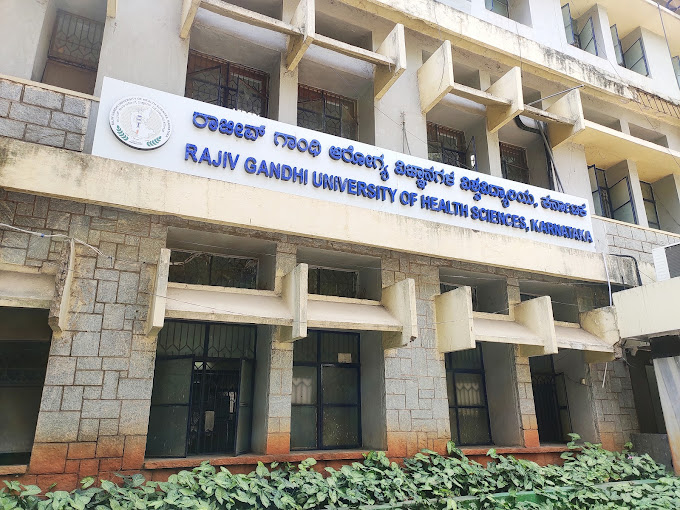
Ph.D. in Radiology & Imaging Technology from Rajiv Gandhi University of Health Sciences
Introduction about Ph.D. in Radiology & Imaging Technology at Rajiv Gandhi University of Health Sciences
The Doctor of Philosophy in Radiology & Imaging Technology offered by Rajiv Gandhi University of Health Sciences (RGUHS) is a premier research programme designed for healthcare professionals and scientists who aspire to lead innovations in medical imaging, diagnostic radiology, and therapeutic technologies. The curriculum blends advanced theoretical knowledge with cutting‑edge laboratory work, preparing scholars for academic, clinical, and industry‑driven research careers.
RGUHS’s state‑of‑the‑art imaging labs, collaborations with leading hospitals, and a faculty of internationally recognised experts create an inspiring environment that fuels scientific discovery and translational research.
Ph.D Admission 2026-2027 & Writing Support Services by Shiksha Research
Eligibility Criteria for Ph.D. in Radiology & Imaging Technology at Rajiv Gandhi University of Health Sciences
- Master’s degree (M.Sc., M.Tech., M.Pharm., or equivalent) in Radiology, Medical Imaging, Biomedical Engineering, Physics, or a closely related discipline.
- Minimum of 55% aggregate marks (or an equivalent CGPA of 6.5/10) in the qualifying postgraduate programme.
- Eligibility for Indian nationals, NRIs, and foreign candidates as per UGC regulations.
- Applicants must have a valid score in the university‑conducted entrance examination or possess a national eligibility test (NET) in the relevant subject.
Entrance Exam for Ph.D. in Radiology & Imaging Technology at Rajiv Gandhi University of Health Sciences
RGUHS conducts a comprehensive written test followed by a personal interview. The written exam evaluates:
- Fundamentals of Radiology and Imaging Physics.
- Advanced imaging modalities (MRI, CT, PET, Ultrasound).
- Research methodology, statistics, and scientific writing.
- Ethical aspects of clinical research.
Candidates qualifying the written test are shortlisted for a face‑to‑face interview where research aptitude, communication skills, and alignment with faculty interests are assessed.
Fee Structure for Ph.D. in Radiology & Imaging Technology at Rajiv Gandhi University of Health Sciences
| Component | Annual Fee (INR) | Notes |
|---|---|---|
| Tuition & Examination Charges | 35,000 | Inclusive of lab access and software licences. |
| Library & Resource Fees | 5,000 | Access to e‑journals, databases, and inter‑library loans. |
| Annual Maintenance Charge | 10,000 | Campus facilities and student support services. |
| Miscellaneous (Printing, Certification) | 2,000 | Variable based on usage. |
| Total Approximate Cost | 52,000 | Subject to revisions each academic year. |
Scholarships, stipends, and research grants can significantly offset these costs.
Admission Process for Ph.D. in Radiology & Imaging Technology at Rajiv Gandhi University of Health Sciences
- Online application submission through the RGUHS portal.
- Upload scanned copies of academic transcripts, CV, and research proposal.
- Pay the non‑refundable application fee.
- Appear for the entrance examination on the scheduled date.
- Successful candidates are invited for a personal interview.
- Final admission letter is issued after verification of documents and fee payment.
Detailed instructions and deadlines are announced annually on the university’s official website.
Ph.D. Subjects and Specializations in Radiology & Imaging Technology at Rajiv Gandhi University of Health Sciences
- Advanced Magnetic Resonance Imaging (MRI) Physics
- Computed Tomography (CT) and Dose Optimization
- Ultrasound Imaging & Elastography
- Positron Emission Tomography (PET) & Molecular Imaging
- Radiation Oncology and Therapeutic Planning
- Artificial Intelligence in Medical Imaging
- Image Guided Interventions
Research Areas in Radiology & Imaging Technology at Rajiv Gandhi University of Health Sciences
Faculty members lead projects in the following high‑impact domains:
- Development of low‑dose CT protocols for pediatric imaging.
- AI‑driven lesion detection and segmentation in MRI.
- Hybrid imaging techniques combining PET‑CT/MRI.
- Quantitative imaging biomarkers for oncologic response assessment.
- Design of portable ultrasound devices for remote diagnostics.
- Radiomics and radiogenomics for precision medicine.
Documents Required for Ph.D. in Radiology & Imaging Technology at Rajiv Gandhi University of Health Sciences
| Document | Details |
|---|---|
| Academic Transcripts | Original mark sheets of B.Sc. & M.Sc./M.Tech. (certified copy) |
| Degree Certificates | Original certificates with attested photocopies |
| Entrance Exam Score Card | RGUHS Ph.D. test or UGC‑NET result |
| Curriculum Vitae (CV) | Professional experience, publications, and projects |
| Research Proposal | 1500‑word summary outlining objectives and methodology |
| Identity Proof | Aadhaar / Passport (for Indian and foreign candidates) |
| Letter of Recommendation | Two academic references on university letterhead |
Rajiv Gandhi University of Health Sciences Ph.D. Syllabus for Radiology & Imaging Technology
The syllabus is structured into three phases:
- Core Coursework (Year 1) – Advanced imaging physics, research methodology, biostatistics, ethics in clinical research, and a specialization elective.
- Comprehensive Exam (End of Year 1) – Written and oral examinations evaluating mastery of core concepts.
- Thesis Research (Years 2‑4) – Original research project, periodic progress reviews, manuscript preparation, and final defense.
Each phase is aligned with UGC guidelines and RGUHS academic standards.
How To Apply for Ph.D. in Radiology & Imaging Technology at Rajiv Gandhi University of Health Sciences
Prospective scholars can follow these steps to submit a successful application:
- Visit the official RGUHS admissions portal and create a user account.
- Fill in personal details, academic history, and upload required documents.
- Enter your chosen research area and attach a concise research proposal.
- Pay the application fee via net banking or credit card.
- Submit the form and note the application reference number for future correspondence.
For assistance with proposal drafting, editing, and proof‑reading, consider professional services such as Editing and Proofreading Services or PhD Topic Selection and Proposal Assistance. If you need guidance through the entire admission journey, PhD Admission Assistance can be invaluable.
Career Scope and Job Opportunities After Ph.D. in Radiology & Imaging Technology from Rajiv Gandhi University of Health Sciences
Graduates enjoy a broad spectrum of career pathways:
- Assistant/Associate Professor in medical colleges and universities.
- Senior Research Scientist in national research institutes (e.g., ICMR, CSIR).
- Clinical Imaging Specialist or Director of Imaging Services in tertiary hospitals.
- Product Development Lead in medical device and imaging software companies.
- Consultant for AI‑based imaging analytics firms.
- Policy advisor for health ministries and regulatory bodies.
The demand for expertise in advanced imaging, AI integration, and radiomics ensures strong employment prospects both in India and globally.
Scholarship for Ph.D. in Radiology & Imaging Technology at Rajiv Gandhi University of Health Sciences
Several funding options are available:
- UGC Junior Research Fellowship (JRF) – Monthly stipend, travel allowance, and contingency grant.
- RGUHS Merit‑Based Scholarship – Full tuition waiver for top 10% candidates.
- Industry Sponsored Projects – Funding from imaging equipment manufacturers.
- International Exchange Fellowships – Collaborative research grants with partner universities.
Students can also explore project‑based funding through the university’s research office. For publication‑related support, consider Research Publication Support, and for intellectual property guidance, explore Patent Filing and Support Services.
FAQs Regarding Ph.D. in Radiology & Imaging Technology at Rajiv Gandhi University of Health Sciences
- 1. What is the minimum duration to complete the Ph.D.?
- The programme is normally 4 years, but it can be completed in 3 years for candidates who clear the comprehensive exam early and maintain consistent research progress.
- 2. Is a NET qualification mandatory?
- NET is not mandatory if the candidate qualifies the RGUHS entrance exam with the required cut‑off marks. However, NET qualification provides additional eligibility benefits.
- 3. Can working professionals enroll part‑time?
- Yes, RGUHS offers a part‑time mode for qualified professionals who can attend scheduled seminars and submit research work within an extended timeline.
- 4. Are there opportunities for interdisciplinary research?
- Absolutely. The university encourages








