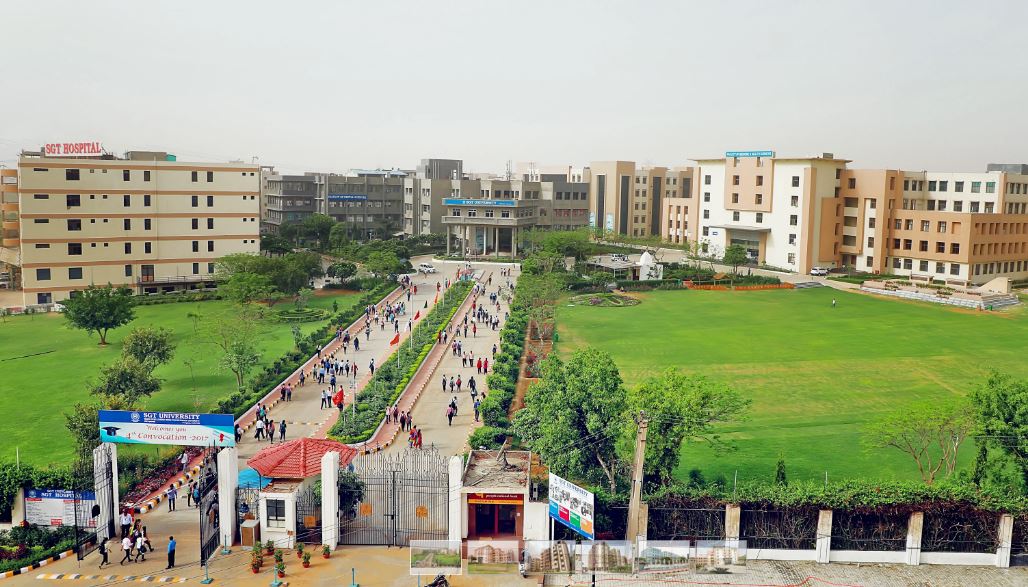
Ph.D. in Radiology & Imaging Technology at Shree Guru Gobind Singh Tricentenary University
Introduction about Ph.D. in Radiology & Imaging Technology at Shree Guru Gobind Singh Tricentenary University
Embarking on a doctoral journey in Radiology & Imaging Technology at Shree Guru Gobind Singh Tricentenary University equips visionary professionals with the expertise to lead cutting?edge research, innovate diagnostic solutions, and transform patient care. The program blends rigorous academic coursework with immersive research, fostering an environment where scientific curiosity meets real?world impact.
Eligibility Criteria for Ph.D. in Radiology & Imaging Technology at Shree Guru Gobind Singh Tricentenary University
Prospective candidates must fulfill the following baseline requirements:
- Master?s degree (M.Sc., M.Tech., or equivalent) in Radiology, Medical Imaging, Biomedical Engineering, or a closely related discipline with a minimum aggregate of 55%.
- Valid GATE, NET, or university?conducted entrance test score; candidates with a first class with distinction may be exempted.
- Demonstrated research aptitude through published papers, conference presentations, or project work.
- English language proficiency (IELTS ? 6.5 or TOEFL ? 80) for international applicants.
Entrance Exam for Ph.D. in Radiology & Imaging Technology at Shree Guru Gobind Singh Tricentenary University
The university conducts a comprehensive entrance examination that evaluates:
- Fundamental concepts in anatomy, physics of imaging, and radiological safety.
- Advanced topics such as MRI physics, CT algorithms, and nuclear imaging.
- Research methodology, statistics, and critical analysis skills.
Candidates may also be considered based on GATE/NET scores, subject to a minimum qualifying percentile.
Fee Structure for Ph.D. in Radiology & Imaging Technology at Shree Guru Gobind Singh Tricentenary University
| Component | Annual Fee (INR) | One?Time Charges |
|---|---|---|
| Tuition & Laboratory Access | 1,40,000 | ? |
| Research Materials & Software Licenses | 50,000 | ? |
| Library & Digital Resources | 20,000 | ? |
| Admission Processing Fee | ? | 10,000 |
| Annual Examination & Evaluation | 15,000 | ? |
| Total (Approx.) | 2,25,000 | 10,000 |
Admission Process for Ph.D. in Radiology & Imaging Technology at Shree Guru Gobind Singh Tricentenary University
The admission pathway follows a streamlined five?step protocol:
- Online Application: Submit the completed form via the university portal, attaching academic transcripts, a statement of purpose, and two referee letters.
- Document Verification: The admissions office validates authenticity and eligibility criteria.
- Entrance Examination: Appear for the university?conducted test or submit a valid GATE/NET score.
- Interview: Shortlisted candidates are invited for a panel interview assessing research vision and technical competence.
- Final Offer & Enrollment: Successful applicants receive an admission letter and instructions for fee payment.
Ph.D. Subjects and Specializations in Radiology & Imaging Technology at Shree Guru Gobind Singh Tricentenary University
Students can tailor their doctoral research across a spectrum of specializations, including:
- Advanced Magnetic Resonance Imaging (MRI) Techniques
- Computed Tomography (CT) Optimization and Dose Reduction
- Ultrasound Elastography and Molecular Imaging
- Artificial Intelligence in Diagnostic Radiology
- Radiation Oncology Physics
- Pediatric Imaging and Radiation Safety
- Interventional Radiology Innovations
Research Areas in Radiology & Imaging Technology at Shree Guru Gobind Singh Tricentenary University
Driven by state?of?the?art facilities, research pursuits span:
- Deep learning algorithms for image segmentation and disease prediction.
- Contrast agent development for functional imaging.
- Low?dose imaging protocols and patient dose management.
- Hybrid imaging modalities (PET/CT, PET/MRI) for oncologic assessments.
- Quantitative imaging biomarkers for chronic disease monitoring.
Our faculty collaborates with leading hospitals and industry partners, ensuring translational impact of every dissertation.
Documents Required for Ph.D. in Radiology & Imaging Technology at Shree Guru Gobind Singh Tricentenary University
| Document | Format | Remarks |
|---|---|---|
| Academic Transcripts & Degree Certificates | PDF (Scanned) | All prior qualifications |
| Statement of Purpose (SOP) | Maximum 1000 words | |
| Two Letters of Recommendation | From academic or professional supervisors | |
| Entrance Exam Scorecard (GATE/NET) | If applicable | |
| English Proficiency Certificate | IELTS/TOEFL for foreign candidates |
Shree Guru Gobind Singh Tricentenary University Ph.D. Syllabus for Radiology & Imaging Technology
The doctoral syllabus is structured into three progressive phases:
- Phase I ? Core Fundamentals (Year 1): Advanced Radiological Physics, Biomedical Imaging Modalities, Research Methodology, and Ethics.
- Phase II ? Specialized Coursework (Year 2): Electives aligned with chosen specialization, Advanced Statistics, AI in Imaging, and Clinical Internship.
- Phase III ? Research & Dissertation (Years 3?5): Original research project, publication of at least two peer?reviewed papers, and defense of the doctoral thesis.
How To Apply for Ph.D. in Radiology & Imaging Technology at Shree Guru Gobind Singh Tricentenary University
Follow these precise steps to submit a successful application:
- Visit the official university portal and create a user account.
- Complete the online application form, ensuring all mandatory fields are filled.
- Upload the required documents in PDF format (see ?Documents Required? table).
- Pay the non?refundable application fee through the secure payment gateway.
- Submit the form and note the generated application ID for future correspondence.
For international applicants, additional visa and immigration guidelines are available on the university?s International Office webpage.
Career Scope and Job Opportunities After Ph.D. in Radiology & Imaging Technology from Shree Guru Gobind Singh Tricentenary University
Graduates emerge as thought leaders capable of influencing both academia and industry. Typical career trajectories include:
- Assistant/Associate Professor or Research Scientist in premier medical universities.
- Lead Imaging Scientist in hospitals, diagnostic centers, or radiology equipment manufacturers.
- AI & Machine Learning Engineer specializing in medical image analysis.
- Consultant for healthcare policy, radiation safety, and technology assessment.
- Entrepreneurial ventures developing innovative imaging solutions.
The demand for specialized imaging experts continues to rise, with projected growth rates exceeding 12% annually across the Asia?Pacific region.
Scholarship for Ph.D. in Radiology & Imaging Technology at Shree Guru Gobind Singh Tricentenary University
To nurture talent, the university offers a suite of merit?based scholarships:
- University Excellence Scholarship: Covers 100% tuition for top 5% of applicants.
- Research Grant Fellowship: Provides a monthly stipend of INR 25,000 for the duration of the research phase.
- Industry Sponsored Scholarships: Partnerships with leading imaging firms offer








