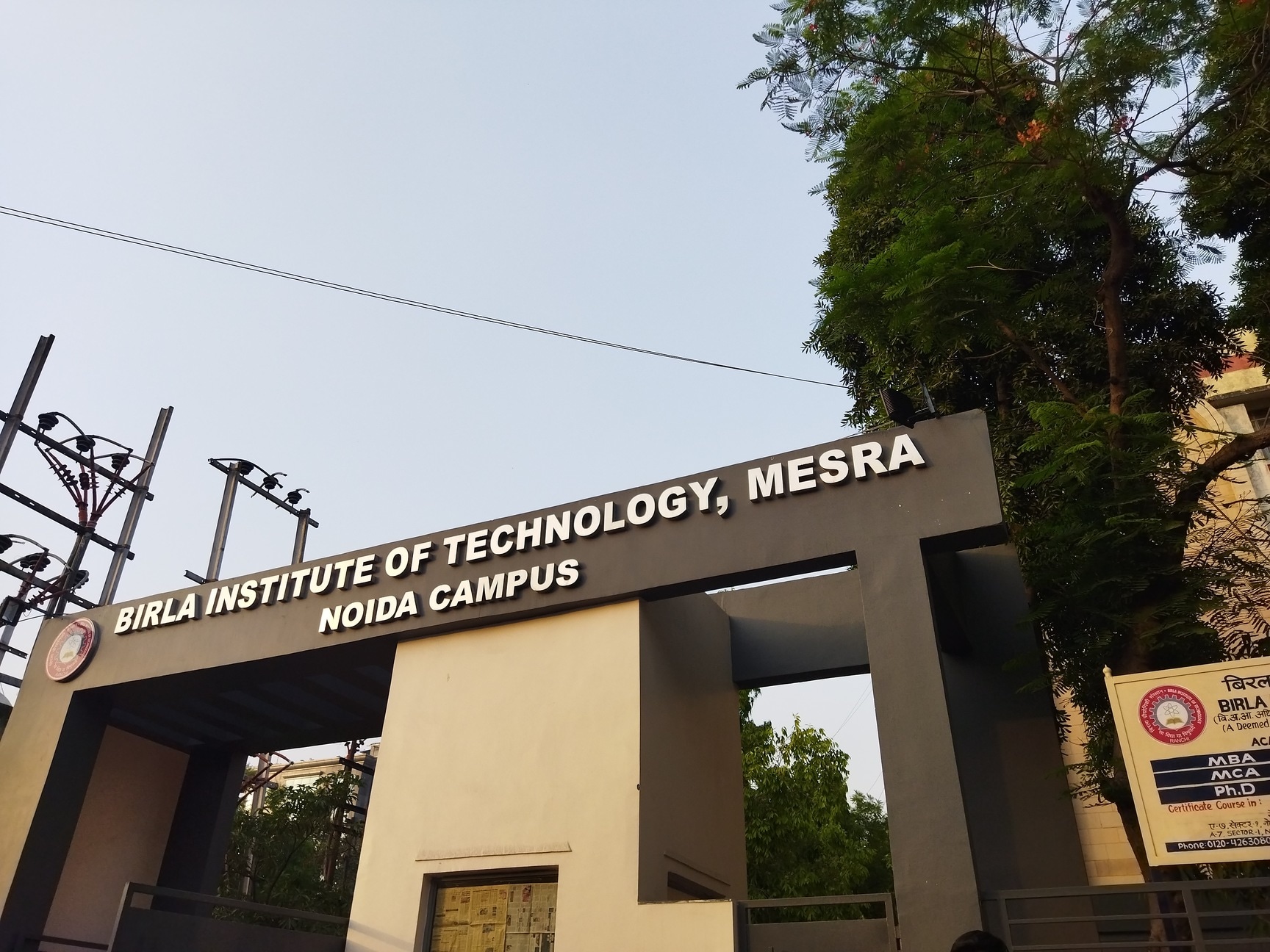
Introduction about Ph.D. in Remote Sensing & GIS Applications at Birla Institute of Technology
The Birla Institute of Technology (BIT) has emerged as a premier hub for advanced research in geospatial sciences. Its Ph.D. program in Remote Sensing & GIS Applications empowers professionals to delve deep into satellite imaging, spatial analysis, and decision‑support systems that shape urban planning, environmental monitoring, and disaster management. With state‑of‑the‑art laboratories, collaborative projects with industry leaders, and a faculty renowned for high‑impact publications, BIT offers an inspirational pathway for scholars eager to transform raw geospatial data into actionable intelligence.
Eligibility Criteria for Ph.D. in Remote Sensing & GIS Applications at Birla Institute of Technology
Prospective candidates must possess a Master’s degree (or equivalent) in Remote Sensing, Geographic Information Systems, Geoinformatics, Earth Sciences, Computer Science, or a closely related discipline with a minimum aggregate of 55% (or CGPA 6.0 on a 10‑point scale). Candidates holding a Ph.D. in a related field may also apply for a direct entry based on research experience and publications. A valid GATE score in Geography, Engineering, or Science disciplines is advantageous but not mandatory; BIT conducts its own entrance assessment to gauge research aptitude.
Entrance Exam for Ph.D. in Remote Sensing & GIS Applications at Birla Institute of Technology
The BIT entrance examination evaluates candidates on three core areas: (1) Fundamental concepts of Remote Sensing and GIS, (2) Research methodology and statistics, and (3) Academic English proficiency. The test comprises multiple‑choice questions, short answer sections, and a research proposal presentation. Successful aspirants receive an invitation for a personal interview, where the panel assesses motivation, prior research exposure, and alignment with BIT’s research thrusts.
Fee Structure for Ph.D. in Remote Sensing & GIS Applications at Birla Institute of Technology
| Component | Amount (INR) | Notes |
|---|---|---|
| Application Processing Fee | 2,500 | One‑time, non‑refundable |
| Annual Tuition & Lab Fees | 45,000 | Includes access to remote sensing labs and GIS software licences |
| Research Material & Fieldwork Support | 15,000 | Allocated per semester |
| Development & Thesis Submission Fee | 10,000 | Payable at the end of the final semester |
| Total Approximate Cost (3‑Year Programme) | 1,84,500 | Excluding scholarships and external funding |
Admission Process for Ph.D. in Remote Sensing & GIS Applications at Birla Institute of Technology
The admission workflow is streamlined into four phases: Online Application, Entrance Examination, Interview & Proposal Evaluation, and Final Offer Letter. Applicants must upload scanned copies of academic transcripts, a detailed research proposal (max 1500 words), and two letters of recommendation. Once the entrance test results are declared, shortlisted candidates receive an invitation for the interview, after which the admissions committee issues a formal admission letter outlining the scholarship eligibility and fee waiver options.
Ph.D. Subjects and Specializations in Remote Sensing & GIS Applications at Birla Institute of Technology
BIT’s doctoral curriculum embraces interdisciplinary specializations, allowing scholars to tailor their research trajectory. Core subjects include:
• Advanced Remote Sensing Techniques
• Spatial Data Mining and Big Data Analytics
• GIS‑Based Urban Planning and Smart Cities
• Environmental Modelling and Climate Change
• Precision Agriculture and Crop Monitoring
• Disaster Risk Reduction using Geospatial Intelligence
Elective modules such as Machine Learning for Image Classification, UAV‑Based Data Acquisition, and Oceanographic Remote Sensing further enrich the academic experience.
Research Areas in Remote Sensing & GIS Applications at Birla Institute of Technology
The institute’s research clusters focus on high‑impact societal challenges:
- Climate Change Monitoring: Leveraging satellite time‑series to detect temperature anomalies and sea‑level rise.
- Urban Growth Modelling: Using GIS to simulate land‑use dynamics and infrastructure demands.
- Water Resource Management: Remote sensing of surface water extent, groundwater recharge, and flood mapping.
- Natural Hazard Assessment: Earthquake, landslide, and tsunami risk estimation through multi‑sensor data fusion.
- Renewable Energy Site Selection: GIS‑driven suitability analysis for solar and wind farms.
- Biodiversity Conservation: Habitat mapping and species distribution modelling using high‑resolution imagery.
Students are encouraged to collaborate with national agencies such as ISRO, NRSC, and international research consortia, thereby enhancing the real‑world relevance of their dissertations.
Documents Required for Ph.D. in Remote Sensing & GIS Applications at Birla Institute of Technology
| Document | Details |
|---|---|
| Academic Transcripts | Original mark sheets of Bachelor’s and Master’s degrees |
| Research Proposal | Maximum 1500 words, outlining objectives, methodology, and expected outcomes |
| Letters of Recommendation | Two academic or professional references (PDF, signed) |
| Curriculum Vitae (CV) | Detailed CV highlighting publications, projects, and technical skills |
| Proof of Identity | Aadhaar, Passport, or Driving License (scanned copy) |
| Entrance Exam Scorecard | BIT entrance test result or valid GATE score |
Birla Institute of Technology Ph.D. Syllabus for Remote Sensing & GIS Applications
The doctoral syllabus is structured around three pillars: Foundations, Methodology, and Specialization. Core modules cover Remote Sensing Physics, GIS Database Management, Spatial Statistics, and Research Ethics. Methodology courses include Advanced Geostatistics, Machine Learning for Geospatial Data, and High‑Performance Computing. Specialization tracks are selected in the second year based on the candidate’s research proposal, allowing focused coursework and laboratory work that directly support the dissertation objectives.
How To Apply for Ph.D. in Remote Sensing & GIS Applications at Birla Institute of Technology
Applicants must follow these steps:
1. Create an account on the BIT admissions portal.
2. Fill in personal and academic details, upload required documents, and pay the INR 2,500 application fee.
3. Submit the research proposal and await the entrance examination schedule.
4. Appear for the written test and subsequent interview.
5. Accept the admission offer and register for the semester.
All communications are sent via the registered email; candidates should regularly check for updates and adhere to stipulated deadlines.
Career Scope and Job Opportunities After Ph.D. in Remote Sensing & GIS Applications from Birla Institute of Technology
Graduates enjoy a diverse spectrum of career pathways. Academic positions such as Assistant Professor or Research Fellow are common, especially in premier universities and research institutes. Industry roles include GIS Analyst, Remote Sensing Scientist, Geospatial Data Engineer, and Environmental Consultant in multinational corporations, governmental agencies, and NGOs. The burgeoning demand for geospatial intelligence in sectors like defense, agriculture, smart city planning, and climate research ensures high employability and attractive salary packages ranging from INR 12‑20 lakhs per annum for entry‑level positions, scaling up significantly with experience and expertise.
Scholarship for Ph.D. in Remote Sensing & GIS Applications at Birla Institute of Technology
BIT offers merit‑based scholarships covering up to 75% of tuition fees for candidates with a minimum 70% aggregate in their postgraduate studies. Additionally, research grants from agencies such as ISRO, Ministry of Science & Technology, and private industry partners may fund project‑specific expenses, fieldwork, and conference participation. International scholars may apply for the Fulbright-Nehru and DAAD scholarships, which provide full stipends and living allowances.
FAQs Regarding Ph.D. in Remote Sensing & GIS Applications at Birla Institute of Technology
- What is the typical duration of the Ph.D. program? The programme is designed for a minimum of three years and a maximum of five years, subject to satisfactory progress.
- Can I pursue the Ph.D. part‑time while working? Yes, BIT offers a flexible part‑time option for industry professionals, with adjusted timelines and online coursework components.
- Is there an age limit for admission? There is no upper age restriction; candidates of any age meeting the academic criteria are eligible.
- Do I need to publish papers before enrollment? Prior publications are not mandatory, but a strong research proposal and any published work enhance the admission chances.
- What support is available for fieldwork? The institute provides funding through its research grants and access to UAVs, high‑resolution satellite data, and collaboration with national laboratories.
For scholars seeking comprehensive assistance in dissertation writing, data analysis, or questionnaire design, professional services such as Thesis and Dissertation Writing Services and Research Data Analysis Services can be invaluable. Additionally, candidates may consider Research Paper Writing Services or <a href="https://sh








