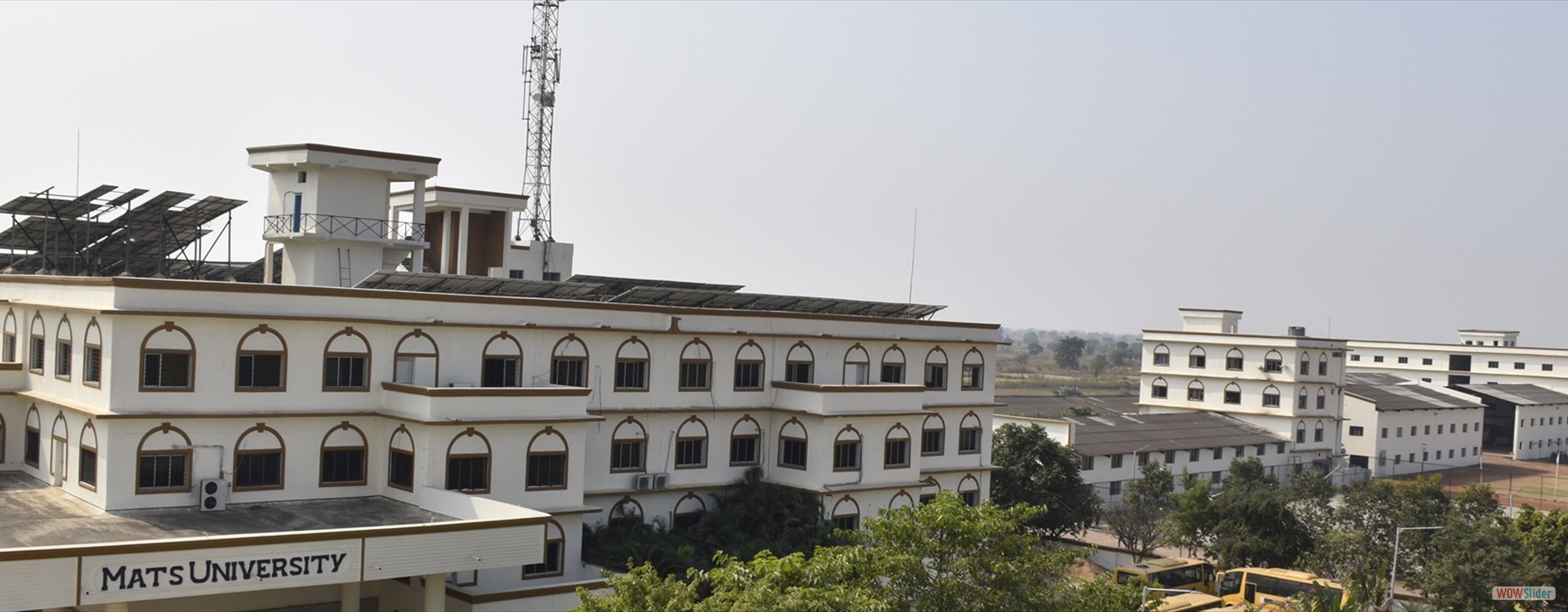
Introduction about Ph.D. in Renewable and Alternate Energy at MATS University
In an era defined by the critical need for sustainable development, the Ph.D. in Renewable and Alternate Energy at MATS University stands as a beacon for professionals and scholars dedicated to revolutionizing the global energy landscape. This doctoral program is meticulously designed for those who aspire to lead the transition from fossil fuel dependency to a world powered by clean, inexhaustible resources. MATS University provides a robust intellectual ecosystem where rigorous academic inquiry meets practical industrial application. By pursuing this doctorate, scholars are not merely earning a degree; they are embarking on a transformative journey to solve the most pressing environmental challenges of the 21st century. The curriculum emphasizes innovation, resilience, and the scalability of green technologies, ensuring that graduates emerge as pioneers capable of influencing energy policies and technological breakthroughs worldwide.
Ph.D Admission 2026-2027 & Writing Support Services by Shiksha Research
The program fosters a culture of excellence, encouraging researchers to push the boundaries of current scientific knowledge. With state-of-the-art laboratory facilities and a faculty comprised of distinguished experts, MATS University offers an unparalleled platform for high-impact research. For those seeking to refine their academic output, utilizing professional Editing and Proofreading Services can be a pivotal step in ensuring that their dissertation meets international standards of excellence. Whether your interest lies in solar photovoltaics, wind energy harvesting, or the complexities of the hydrogen economy, this Ph.D. program equips you with the analytical tools and the visionary mindset required to lead the charge toward a carbon-neutral future.
Eligibility Criteria for Ph.D. in Renewable and Alternate Energy at MATS University
Entry into this prestigious doctoral program is reserved for individuals demonstrating high academic potential and a deep-seated commitment to energy research. To be considered for the Ph.D. in Renewable and Alternate Energy at MATS University, candidates must fulfill the following criteria:
- Master?s Degree: Candidates must hold a Master?s degree (M.E., M.Tech, M.Sc., or an equivalent professional degree) in a relevant field such as Energy Engineering, Physics, Electrical Engineering, Environmental Science, or Mechanical Engineering.
- Minimum Marks: A minimum of 55% aggregate marks (or an equivalent grade point average) from a recognized university is mandatory. A relaxation of 5% is typically provided to candidates from reserved categories as per government norms.
- Professional Experience: While not mandatory, significant industry experience in the renewable energy sector provides a distinct advantage during the selection process.
- Research Aptitude: Applicants must demonstrate a strong aptitude for independent research, analytical thinking, and a clear vision of their intended research contribution.
Entrance Exam for Ph.D. in Renewable and Alternate Energy at MATS University
The selection process at MATS University is designed to identify the most visionary minds. The university conducts its own entrance examination, often referred to as the MATS Entrance Test (MET) for Ph.D. admissions. This exam evaluates the candidate?s mastery over Research Methodology and core subjects within Renewable Energy. Candidates who have successfully cleared national-level examinations such as UGC-NET (including JRF), CSIR-NET (including JRF), SLET, GATE, or hold a teacher fellowship are often exempted from the entrance test but must participate in the subsequent interview process.
The interview is a critical component where candidates discuss their research interests and demonstrate their depth of knowledge. Preparing a compelling research plan is essential, and many candidates find that securing PhD Topic Selection and Proposal Assistance helps them present a refined and feasible research direction to the selection committee.
Fee Structure for Ph.D. in Renewable and Alternate Energy at MATS University
Investing in a Ph.D. is an investment in your future leadership within the energy sector. MATS University maintains a transparent and competitive fee structure, designed to support prolonged research activities. Below is an indicative breakdown of the financial commitments involved:
| Fee Component | Particulars | Estimated Amount (INR) |
|---|---|---|
| Registration Fee | One-time payment at the time of admission | ?10,000 - ?15,000 |
| Tuition Fee | Payable per semester/year | ?60,000 - ?80,000 per annum |
| Course Work Exam Fee | Payment before the Ph.D. coursework exams | ?5,000 |
| Thesis Submission Fee | One-time fee at the final stage of submission | ?20,000 - ?25,000 |
| Caution Deposit | Refundable after completion or withdrawal | ?10,000 |
Note: Fee structures are subject to revision by the university management. Candidates are encouraged to check the official university portal for the latest updates.
Admission Process for Ph.D. in Renewable and Alternate Energy at MATS University
The journey toward becoming a doctor of philosophy at MATS University follows a structured and merit-based pathway. Understanding the admission workflow is crucial for a smooth enrollment experience. To streamline this journey, applicants can seek PhD Admission Assistance to ensure all procedural requirements are met precisely.
- Online Application: Interested candidates must register through the MATS University official website, providing accurate academic and professional details.
- Entrance Testing: Eligible candidates will be called for the Ph.D. Entrance Test (unless exempted via national qualification).
- Research Proposal Submission: Shortlisted candidates must submit a detailed research proposal highlighting the problem statement, objectives, and methodology.
- Personal Interview: Candidates will defend their research proposal before a Departmental Research Committee (DRC).
- Final Selection: Based on the combined score of the entrance test and interview, a final list of selected candidates is published.
- Document Verification & Enrollment: Finalized candidates proceed to verify their original documents and pay the admission fees.
Ph.D. Subjects and Specializations in Renewable and Alternate Energy at MATS University
MATS University offers an interdisciplinary curriculum that allows scholars to delve deep into specialized areas of green energy. While the foundational subjects provide theoretical depth, specializations allow for targeted innovation. Some professionals who have contributed vastly to the industry but lack a formal doctorate may also explore Honorary Doctorate Programs as a recognition of their lifelong professional achievements in these fields.
- Solar Photovoltaics and Thermal Systems: Advanced study of solar cell efficiency and solar thermal storage.
- Wind Energy Conversion: Fluid dynamics and structural engineering of modern wind turbines.
- Bio-energy and Waste-to-Energy: Conversion technologies for biomass, biogas, and municipal solid waste.
- Hydrogen Energy and Fuel Cells: Production, storage, and application of clean hydrogen.
- Smart Grids and Energy Management: Integration of renewable sources into the power grid using AI and IoT.
- Policy and Economics of Energy: Socio-economic impacts of renewable energy adoption and global policy frameworks.
Research Areas in Renewable and Alternate Energy at MATS University
Research at MATS University is characterized by its forward-looking perspective. Scholars are encouraged to tackle real-world problems through empirical and experimental research. The university prioritizes areas that have high societal impact and industrial relevance. Significant emphasis is placed on Research Publication Support to help scholars disseminate their findings in high-impact journals indexed in Scopus or Web of Science.
Key focus areas include the development of next-generation perovskite solar cells, ocean thermal energy conversion (OTEC), and the optimization of hybrid energy systems. Researchers also investigate the life cycle assessment of renewable technologies to ensure that the entire production chain remains environmentally friendly. The university also encourages scholars to look into the intellectual property aspect of their innovations, potentially utilizing Patent Filing and Support Services to protect their academic inventions.
Documents Required for Ph.D. in Renewable and Alternate Energy at MATS University
A successful application requires the submission of a comprehensive set of documents. Ensure all scans are of high quality and original copies are available for verification:
- SSLC/10th Grade Marksheet and Certificate
- Higher Secondary/12th Grade Marksheet and Certificate
- UG Degree Marksheets and Passing Certificate
- PG Degree Marksheets and Degree Certificate
- Valid National Level Test Scorecards (NET/SLET/GATE, if applicable)
- Transfer and Migration Certificates
- Experience Certificate (if applying as a professional)
- Passport-size Photographs
- Identification Proof (Aadhar Card/Passport/Voter ID)
- Caste Certificate (if claiming reservation)
- A well-drafted Statement of Purpose (SOP) and Research Proposal
MATS University Ph.D. Syllabus for Renewable and Alternate Energy
The Ph.D. syllabus is divided into a mandatory coursework phase and the subsequent research phase. This ensures that every scholar possesses a strong foundation in research ethics and technical methodologies before commencing their primary study.
- Module I: Research Methodology - Techniques of gathering data, statistical analysis, software tools for research, and ethical considerations.
- Module II: Advanced Energy Engineering - Thermodynamic analysis of energy systems, modeling, and simulation of renewable energy plants.
- Module III: Elective Specialization - Detailed study of the scholar?s chosen area (e.g., Solar, Wind, or Bioenergy).
- Module IV: Literature Review - Critical analysis of existing research to identify gaps and define the specific research problem.
- Module V: Experimental Design and Lab Work - Hands-on training in the university's advanced energy laboratories.
How To Apply for Ph.D. in Renewable and Alternate Energy at MATS University
Applying to MATS University is a straightforward digital process. Follow these steps to secure your place in the upcoming cohort:
- Visit the official MATS University website and navigate to the 'Research' or 'Admissions' section.
- Create a portal account using a valid email address and phone number.
- Fill out the application form with precision, ensuring that the research interest matches the department's focus.
- Upload the required documents in the prescribed format (usually PDF or JPEG).
- Pay the application fee via the secure online payment gateway.
- Download and save the application summary and fee receipt for future reference.
- Wait for the official notification regarding the entrance test or interview schedule.
Career Scope and Job Opportunities After Ph.D. in Renewable and Alternate Energy from MATS University
The global demand for energy experts is skyrocketing. A Doctorate from MATS University opens doors to high-level strategic roles across various sectors. Professionals can aspire to the following career paths:
- Research Scientist: Leading R&D wings in multinational energy corporations or national laboratories.
- Professor/Academician: Shaping the next generation of engineers in prestigious universities worldwide.
- Chief Sustainability Officer (CSO): Driving the green transition within corporate structures.
- Policy Advisor: Working with government bodies or international organizations like the International Renewable Energy Agency (IRENA) to draft energy laws.
- Renewable Energy Consultant: Providing expert advice on large-scale project feasibility and implementation.
- Entrepreneur: Launching green-tech startups focused on energy storage or carbon capture.
Scholarship for Ph.D. in Renewable and Alternate Energy at MATS University
MATS University is committed to ensuring that financial barriers do not hinder academic excellence. Several scholarship opportunities are available for deserving candidates:
- University Research Fellowships: Awarded to top-ranking students in the entrance examination.
- Merit Scholarships: Provided to candidates with exceptional academic records throughout their education.
- Government Fellowships: Scholars are encouraged and assisted in applying for UGC/CSIR fellowships, Maulana Azad National Fellowship, and other state-sponsored schemes.
- Industry-sponsored Fellowships: Some research projects may be funded by corporate partners, offering stipends to full-time researchers.
FAQs Regarding Ph.D. in Renewable and Alternate Energy at MATS University
1. Can I pursue this Ph.D. part-time while working?
Yes, MATS University offers a part-time Ph.D. mode specifically designed for working professionals, provided they can attend scheduled coursework and meet research milestones.
2. What is the minimum duration to complete the Ph.D.?
The minimum duration is typically three years, including coursework, while the maximum duration can extend up to six years.
3. Does MATS University assist with publication in Scopus journals?
Yes, the university provides mentorship and guidance to help scholars publish their research in reputed indexed journals.
4. Is there an age limit for applying?
There is generally no upper age limit for Ph.D. admissions at MATS University, encouraging lifelong learning for professionals.
5. Is the Ph.D. from MATS University UGC recognized?
Yes, MATS University is a recognized institution, and its Ph.D. programs are conducted in accordance with UGC guidelines.








