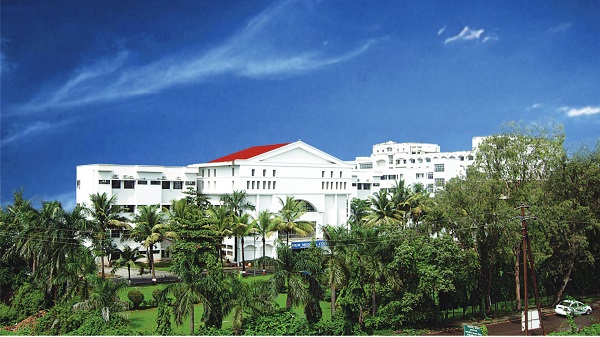
Ph.D. in Respiratory Medicine at MGM Institute of Health Sciences
Introduction about Ph.D. in Respiratory Medicine at MGM Institute of Health Sciences
Embarking on a Doctor of Philosophy in Respiratory Medicine at MGM Institute of Health Sciences is a transformative journey for clinicians, researchers, and health scientists eager to pioneer breakthroughs in lung health. This advanced program blends rigorous scientific inquiry with clinical relevance, empowering scholars to address global challenges such as chronic obstructive pulmonary disease, asthma, interstitial lung diseases, and emerging respiratory infections. With state‑of‑the‑art laboratories, interdisciplinary mentorship, and a thriving research ecosystem, MGM Institute stands as a beacon for aspirants who wish to shape the future of respiratory care.
Eligibility Criteria for Ph.D. in Respiratory Medicine at MGM Institute of Health Sciences
Prospective candidates must meet the following baseline requirements:
- Hold a Master’s degree (M.Sc., M.D., or equivalent) in Medicine, Pulmonology, Biomedical Sciences, or a related discipline with a minimum aggregate of 55% (or 5.0 CGPA on a 10‑point scale).
- Possess a valid GATE, NEET‑PG, or institute‑specific entrance qualification. Candidates without a qualifying exam score may be considered based on a research proposal and interview performance.
- Demonstrated proficiency in English (IELTS ≥ 6.5 or TOEFL ≥ 80) for international applicants.
- Eligibility for research supervision by a faculty member with a minimum of five publications in peer‑reviewed journals.
Entrance Exam for Ph.D. in Respiratory Medicine at MGM Institute of Health Sciences
The institute conducts a two‑stage selection process:
- Written Test: A 100‑question paper assessing knowledge in anatomy, physiology, pathology, pharmacology, and recent advances in respiratory medicine. The test lasts 2 hours and includes multiple‑choice, short‑answer, and case‑based questions.
- Interview & Research Proposal Evaluation: Shortlisted candidates present a 15‑minute research proposal followed by a panel interview to gauge analytical skills, originality, and alignment with the institute’s research priorities.
Fee Structure for Ph.D. in Respiratory Medicine at MGM Institute of Health Sciences
| Fee Component | Indian Residents (INR) | International Residents (USD) |
|---|---|---|
| Application & Processing Fee | 2,500 | 150 |
| Annual Tuition Fee | 75,000 | 2,200 |
| Laboratory & Equipment Charges | 15,000 | 450 |
| Library & Digital Resources | 5,000 | 150 |
| Miscellaneous (Health Insurance, etc.) | 10,000 | 300 |
| Total Approximate Cost per Year | 107,500 | 3,250 |
Note: The program typically spans 3–5 years. Scholarships, fellowships, and research grants can substantially reduce the financial burden.
Admission Process for Ph.D. in Respiratory Medicine at MGM Institute of Health Sciences
The admission workflow is streamlined to ensure transparency:
- Online application submission through the institute’s portal.
- Upload of academic transcripts, degree certificates, and proof of English proficiency.
- Payment of the non‑refundable processing fee.
- Qualifying entrance exam (or submission of valid GATE/NEET‑PG scores).
- Shortlisting based on scores and academic merit.
- Invitation for interview and research proposal presentation.
- Final admission offer sent via email, followed by enrollment and fee payment.
Ph.D. Subjects and Specializations in Respiratory Medicine at MGM Institute of Health Sciences
Students can tailor their doctoral research across several sub‑domains:
- Advanced Pulmonary Pathophysiology
- Respiratory Pharmacology and Therapeutics
- Sleep‑Disordered Breathing and Chronic Hypoxia
- Environmental and Occupational Lung Diseases
- Immunology of Airway Inflammation
- Critical Care Ventilation Strategies
- Novel Imaging Techniques for Lung Diagnostics
Research Areas in Respiratory Medicine at MGM Institute of Health Sciences
The institute encourages interdisciplinary projects that push the boundaries of knowledge. Prominent research themes include:
- Genomic and proteomic profiling of COPD phenotypes.
- Development of nanocarrier drug delivery systems for inhaled therapies.
- Machine‑learning models for early detection of pulmonary fibrosis.
- Impact of air pollution on pediatric asthma prevalence.
- Innovations in non‑invasive ventilation and oxygenation support.
- Long‑term outcomes of lung transplantation recipients.
Documents Required for Ph.D. in Respiratory Medicine at MGM Institute of Health Sciences
| Document | Details |
|---|---|
| Academic Transcripts | Official mark sheets of all postgraduate qualifications. |
| Degree Certificate | Original degree certificate with notarized copy. |
| Entrance Exam Scorecard | GATE/NEET‑PG or institute‑conducted test result. |
| Research Proposal | 2‑page synopsis outlining objectives, methodology, and expected impact. |
| Curriculum Vitae (CV) | Detailed academic and professional history (max 2 pages). |
| Letters of Recommendation | Two referees familiar with the candidate’s research potential. |
| English Proficiency Certificate | IELTS/TOEFL scores for non‑native speakers. |
| Passport Size Photograph | Recent color photograph (3.5 cm × 4.5 cm). |
MGM Institute of Health Sciences Ph.D. Syllabus for Respiratory Medicine
The curriculum integrates coursework, lab rotations, and dissertation work:
- Core Modules (Year 1): Advanced Respiratory Physiology, Clinical Epidemiology, Research Methodology, Biostatistics, Ethical Issues in Clinical Research.
- Elective Modules (Year 2‑3): Molecular Mechanisms of Lung Disease, Advanced Imaging, Pulmonary Rehabilitation, Health Policy & Economics.
- Laboratory Rotations: Pulmonary Function Testing Lab, Animal Models of Airway Disease, Cellular & Molecular Biology Facility.
- Dissertation: Original research project leading to at least three peer‑reviewed publications.
How To Apply for Ph.D. in Respiratory Medicine at MGM Institute of Health Sciences
Follow these steps to submit a successful application:
- Visit the official MGM Institute Ph.D. portal and create an account.
- Complete the online application form, ensuring that all mandatory fields are filled accurately.
- Upload scanned copies of the required documents (see Documents Required section).
- Pay the processing fee through the secure payment gateway.
- Submit your research proposal and await confirmation for the entrance examination.
- Prepare for the written test and interview by reviewing recent journal articles and clinical guidelines.
- Upon receipt of the admission letter, register for courses, and finalize your research supervisor.
Career Scope and Job Opportunities After Ph.D. in Respiratory Medicine from MGM Institute of Health Sciences
A doctoral degree opens a spectrum of high‑impact career paths:
- Academic positions: Assistant/Associate Professor, Department Head, or Research Director at medical universities.
- Clinical research leadership in pharmaceutical or biotech firms focusing on respiratory therapeutics.
- Policy advisory roles within governmental health agencies and WHO working groups.
- Consultancy for hospitals and pulmonary care centers on evidence‑based practice.
- Entrepreneurship: founding startups that develop diagnostic devices or digital health platforms for lung disease management.
- Senior scientist positions in national research laboratories and international consortia.
Graduates also benefit from a robust alumni network that facilitates collaborations across academia, industry, and public health sectors.
Scholarship for Ph.D. in Respiratory Medicine at MGM Institute of Health Sciences
Financial assistance is available through multiple channels:
- MGM Merit‑Based Fellowship: Covers 100% tuition and a monthly stipend of INR 25,000 for the first two years.
- Government Research Grants: Includes the National Medical Research Council (NMRC) scholarship and Ministry of Health & Family Welfare fellowships.
- Industry‑Sponsored Scholarships: Partnerships with leading pharmaceutical companies offer project‑specific funding.
- International Exchange Grants: For collaborative research with overseas institutions, covering travel and accommodation.
Applicants are encouraged to explore these options early, as many scholarships require separate applications and adherence to specific eligibility criteria.








