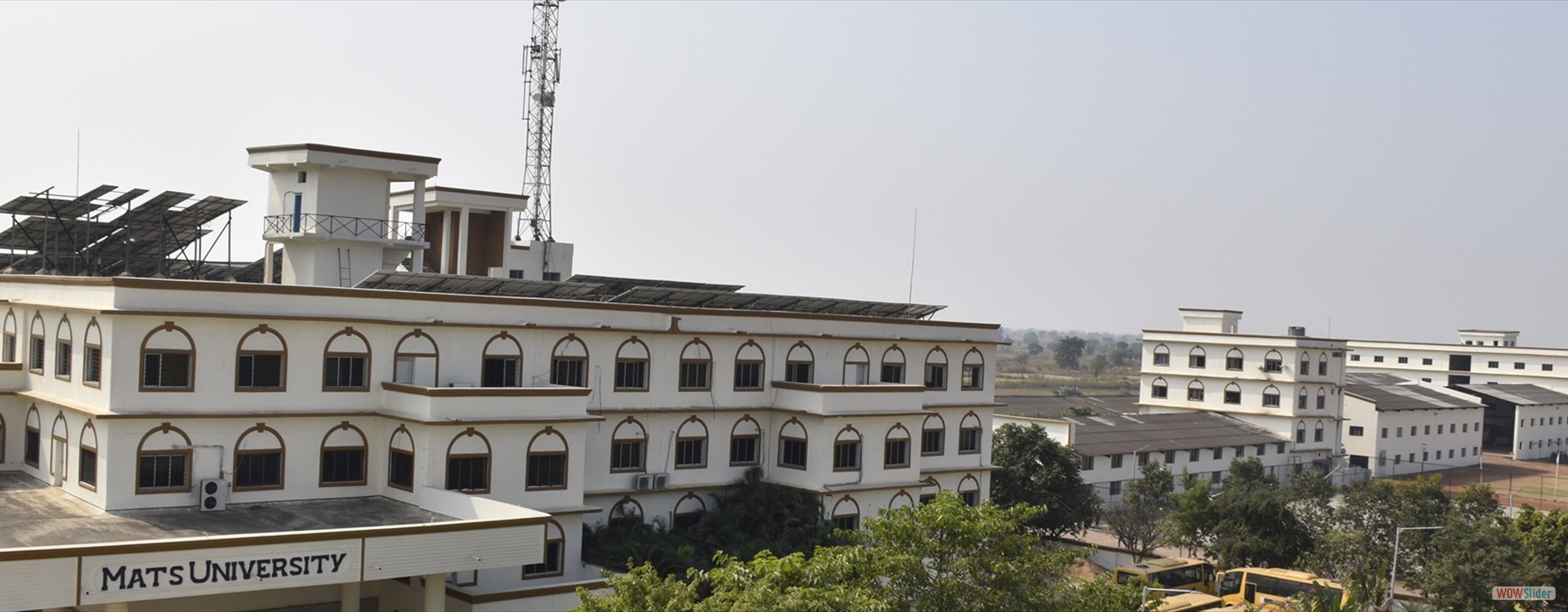
Introduction about Ph.D. in Rural Development at MATS University
The Ph.D. in Rural Development offered by MATS University is a research‑intensive programme designed for professionals who aspire to become thought leaders in agrarian policy, community empowerment, and sustainable livelihoods. With a curriculum anchored in interdisciplinary theory and field‑based investigations, the doctorate equips scholars to address complex challenges faced by rural economies worldwide. Whether you aim to influence government policy, lead non‑profit initiatives, or contribute to academic knowledge, this programme provides the scholarly foundation and practical exposure needed for transformative impact.
Eligibility Criteria for Ph.D. in Rural Development at MATS University
Candidates must meet the following minimum requirements:
- Master’s degree (M.A., M.Sc., M.Com., etc.) in Rural Development, Agriculture, Sociology, Economics, or a related discipline with at least 55% aggregate (or 5.0 CGPA on a 10‑point scale).
- For candidates holding a Ph.D. in a different discipline, a minimum of two years of relevant research or professional experience is mandatory.
- Candidates should have a valid National Eligibility Test (NET) qualification or a recognized university’s research aptitude test score.
- English proficiency (minimum IELTS 6.0 or TOEFL 80) for international applicants.
Entrance Exam for Ph.D. in Rural Development at MATS University
MATS University conducts a two‑stage entrance process:
- Written Test – 100 multiple‑choice questions covering research methodology, rural economics, development theories, and quantitative techniques.
- Personal Interview / Viva‑voce – Assessment of research proposal, motivation, and alignment with faculty expertise.
The written exam is scheduled twice a year (January & July) and can be taken online or at designated test centres. Successful candidates receive a merit‑based eligibility certificate for the subsequent admission formalities.
Fee Structure for Ph.D. in Rural Development at MATS University
The fee schedule is transparent and includes tuition, laboratory, and administrative components. All amounts are in Indian Rupees (INR).
| Component | Annual Fee (INR) | Notes |
|---|---|---|
| Tuition Fee | 1,20,000 | Payable at the beginning of each academic year. |
| Research Lab & Field Work Charges | 30,000 | Includes data collection, software licences, and lab consumables. |
| Registration & Examination Fee | 15,000 | Covers enrollment, thesis submission, and evaluation. |
| Library & Digital Resource Access | 10,000 | Unlimited access to e‑journals and inter‑library loan services. |
| Total Approx. Per Year | 1,75,000 | Subject to annual revision by the university finance committee. |
Admission Process for Ph.D. in Rural Development at MATS University
The streamlined admission workflow ensures clarity and timeliness:
- Online Application – Fill the web‑based form, upload academic transcripts, NET score, and a 500‑word research statement.
- Document Verification – The admissions office reviews uploaded documents and issues a provisional ID.
- Entrance Examination – Appear for the written test and subsequent interview.
- Admission Offer – Successful candidates receive an official offer letter with a unique enrolment number.
- Fee Payment & Registration – Pay the first year’s fees through the university portal and complete the registration formalities.
- Orientation & Allocation of Supervisor – Attend a one‑day orientation, followed by assignment of a faculty supervisor aligned with your research interests.
Ph.D. Subjects and Specializations in Rural Development at MATS University
The programme offers a range of focused specializations to match emerging research trends:
- Rural Entrepreneurship & Micro‑Enterprise Development
- Agri‑Food Systems & Value Chain Management
- Sustainable Agriculture & Climate‑Smart Practices
- Community Health and Rural Public Policy
- Land Reform, Tenure Security & Rural Governance
- Technology Transfer and Rural Innovation
Each specialization is supported by dedicated faculty, field stations, and partnership networks with NGOs and government agencies.
Research Areas in Rural Development at MATS University
Faculty and doctoral scholars collaborate on cutting‑edge research themes, including:
- Impact assessment of agricultural subsidies on smallholder livelihoods.
- Digital inclusion strategies for remote villages.
- Gender‑responsive rural development policies.
- Climate resilience modelling for rain‑fed agriculture.
- Evaluation of rural financial institutions and micro‑credit schemes.
- Participatory planning for rural infrastructure and sanitation.
Prospective students are encouraged to align their dissertation proposals with these priority areas to access faculty mentorship and funding opportunities.
Documents Required for Ph.D. in Rural Development at MATS University
A well‑organized document pack accelerates the verification stage. The following list is exhaustive:
| Document | Format | Remarks |
|---|---|---|
| Academic Transcripts (Post‑Graduate) | PDF (Scanned) | Original plus certified copy. |
| Degree Certificate (M.A./M.Sc.) | Stamp‑certified. | |
| NET / CSIR / State Eligibility Certificate | Valid at the time of application. | |
| Research Proposal (max 1500 words) | DOCX or PDF | Include objectives, methodology, and anticipated outcomes. |
| Curriculum Vitae (CV) | Highlight publications, conferences, and work experience. | |
| Proof of Identity (Aadhaar / Passport) | Government‑issued photo ID. | |
| Passport‑Size Photograph | JPEG | 150 × 200 pixels, white background. |
MATS University Ph.D. Syllabus for Rural Development
The syllabus is structured into three phases:
- Core Coursework (Year 1) – Research methodology, statistics for social sciences, development economics, and rural policy analysis.
- Specialization Modules (Year 2) – Choose two electives aligned with your focus area (e.g., Climate‑Smart Agriculture, Rural Finance).
- Dissertation & Publication (Years 3‑5) – Conduct original research, present at the annual symposium, and submit at least two peer‑reviewed articles.
Detailed module titles, credit hours, and assessment criteria are available on the university’s official portal.
How To Apply for Ph.D. in Rural Development at MATS University
Follow these step‑by‑step instructions to submit a successful application:
- Visit the official MATS University admissions page and click on “Apply for Ph.D.”
- Create a user account using a valid email address.
- Complete the online form, ensuring all mandatory fields (personal details, academic background, research interests) are filled.
- Upload the required documents (see the Documents Required table).
- Pay the non‑refundable application fee of INR 2,000 via net‑banking or credit card.
- Submit the application and note the reference number for future correspondence.
- Prepare for the entrance exam and keep the calendar alerts for interview dates.
After you receive the provisional admission letter, you can access the university’s Thesis and Dissertation Writing Services for guidance on drafting your proposal.
Career Scope and Job Opportunities After Ph.D. in Rural Development from MATS University
Graduates enjoy a diverse portfolio of career paths:
- Academia – Lecturer, Assistant Professor, or Research Fellow at universities and colleges.
- Policy & Planning – Senior Analyst or Programme Manager in ministries of agriculture, rural development, and planning commissions.
- International Development Agencies – Project Officer, Monitoring & Evaluation Specialist for UNDP, World Bank, or ADB.
- Non‑Governmental Organisations – Program Director, Research Coordinator, or Advocacy Lead for NGOs focused on poverty alleviation.
- Private Sector – Rural Business Development Manager, Agribusiness Consultant, or Corporate Social Responsibility (CSR) Strategist.
- Entrepreneurship – Founder of social enterprises delivering technology and finance solutions to farmers.
The Ph.D. also opens doors to post‑doctoral fellowships and research grants, especially when paired with the university’s Research Data Analysis Services.
Scholarship for Ph.D. in Rural Development at MATS University
Several merit‑based and need








