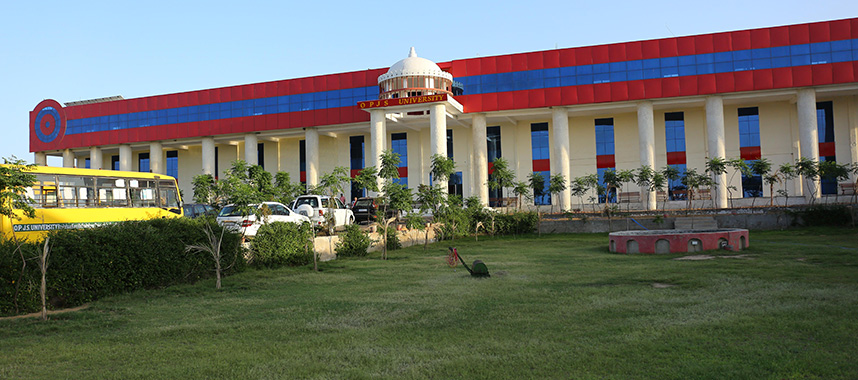
Ph.D. in Rural Development at OPJS University: Eligibility, Entrance Exam, Fee Structure, Admission Process, Subjects, Research Areas, Syllabus, Scholarship & Career Scope
Introduction about Ph.D. in Rural Development at OPJS University
Embark on a transformative journey that blends scholarly rigor with real‑world impact by pursuing a Ph.D. in Rural Development at OPJS University. Designed for seasoned professionals, policy makers, and change‑agents, this doctoral program equips you with advanced analytical tools, interdisciplinary knowledge, and research expertise required to drive sustainable development in rural landscapes worldwide. With cutting‑edge laboratories, a vibrant academic community, and collaborations with government and NGOs, OPJS University offers a fertile ground for innovative research that can reshape agrarian economies, uplift marginalized communities, and influence national development agendas.
Eligibility Criteria for Ph.D. in Rural Development at OPJS University
- Master’s degree (M.A./M.Sc./M.Com) in Rural Development, Agriculture, Sociology, Economics, or a closely related discipline with a minimum of 55% aggregate (or 5.0 CGPA on a 10‑point scale).
- OR an equivalent professional qualification (e.g., M.Phil., PG Diploma) recognized by the University.
- Valid GATE/NET/CSIR or any other national level research aptitude test score is preferred but not mandatory.
- Applicants must have a demonstrable research interest and a clear statement of purpose.
- Age limit: No upper age restriction; however, candidates should possess the requisite academic and professional maturity.
Entrance Exam for Ph.D. in Rural Development at OPJS University
OPJS University conducts a two‑stage selection process:
- Written Test: Consists of 100 multiple‑choice questions covering research methodology, statistics, rural economics, and development theory. The test duration is 2 hours.
- Interview & Presentation: Shortlisted candidates present a research proposal and undergo a viva‑voce to assess analytical depth, originality, and feasibility of the proposed study.
Fee Structure for Ph.D. in Rural Development at OPJS University
| Component | Annual Cost (INR) | Notes |
|---|---|---|
| Tuition Fee | ₹ 68,000 | Applicable for the first two years; subsequent years are payable as per progress review. |
| Laboratory & Fieldwork Charges | ₹ 12,000 | Includes access to research labs, data collection tools, and travel subsidies. |
| Library & Digital Resources | ₹ 3,500 | Unlimited access to e‑journals, databases, and inter‑library loans. |
| Miscellaneous (Administration, Exams, etc.) | ₹ 6,500 | One‑time registration and examination processing fee. |
| Total Approx. Annual Fee | ₹ 90,000 |
Admission Process for Ph.D. in Rural Development at OPJS University
- Online Application: Submit the application form through the university portal along with scanned copies of academic certificates.
- Payment of Application Fee: ₹ 2,500 (non‑refundable) via net banking or credit card.
- Document Verification: Upload the required documents (see “Documents Required” section).
- Entrance Examination: Receive an admit card, appear for the written test, and secure the minimum qualifying score.
- Interview & Proposal Presentation: Successful candidates are invited for a personal interview and a 10‑minute research proposal presentation.
- Final Admission Offer: Admission letters are issued electronically. Candidates must confirm acceptance and pay the initial tuition instalment within 15 days.
Ph.D. Subjects and Specializations in Rural Development at OPJS University
The doctoral program offers a spectrum of specializations, allowing candidates to align their research with global development priorities:
- Rural Agrarian Economics
- Community Development & Participatory Planning
- Agricultural Extension & Innovation Systems
- Rural Health & Sanitation Management
- Gender, Poverty & Social Inclusion in Rural Settings
- Climate‑Smart Agriculture and Sustainable Livelihoods
- Policy Analysis & Rural Governance
Research Areas in Rural Development at OPJS University
Faculty mentors actively pursue research in the following domains, many of which are funded by national and international agencies:
- Impact assessment of micro‑finance and self‑help groups.
- Digital agriculture and precision farming solutions.
- Renewable energy adoption in off‑grid villages.
- Food security, nutrition transition, and value‑chain integration.
- Indigenous knowledge systems and climate resilience.
- Rural entrepreneurship and skill development.
- Public‑private partnerships for infrastructure development.
Documents Required for Ph.D. in Rural Development at OPJS University
| Document | Format | Remarks |
|---|---|---|
| Academic Transcripts (Post‑graduate) | PDF (Scanned) | Must be attested by the issuing university. |
| Research Proposal (2,000‑3,000 words) | DOCX or PDF | Outline objectives, methodology, and expected outcomes. |
| Curriculum Vitae (CV) | Highlight publications, conferences, and professional experience. | |
| Identity Proof (Aadhaar / Passport) | Valid government‑issued photo ID. | |
| Letters of Recommendation (2) | From academicians or senior professionals. |
OPJS University Ph.D. Syllabus for Rural Development
The syllabus is modular, blending core coursework with extensive research work:
- Research Methodology & Statistics (Quantitative & Qualitative)
- Advanced Rural Development Theory
- Economic Modelling for Rural Economies
- Policy Evaluation Techniques
- Data Management & GIS Applications
- Thesis Writing and Publication Ethics
- Seminar Series: Guest Lectures from International Experts
Throughout the program, candidates are encouraged to seek expert assistance such as Thesis and Dissertation Writing Services and Research Data Analysis Services to ensure high‑quality outputs.
How To Apply for Ph.D. in Rural Development at OPJS University
Follow these straightforward steps to initiate your application:
- Visit the official OPJS University Ph.D. Rural Development portal and click “Apply Now”.
- Register using a valid email address and create a secure password.
- Complete the online application form, uploading all required documents.
- Pay the non‑refundable application fee through the integrated payment gateway.
- Submit the form and retain the acknowledgement receipt for future reference.
- Monitor your email for the admit card, examination schedule, and further instructions.
Career Scope and Job Opportunities After Ph.D. in Rural Development from OPJS University
Graduates emerge as thought leaders capable of influencing policy, driving research, and leading development initiatives. Typical career trajectories include:
- Senior Research Scientist – Agricultural Research Institutes (ICAR, ICRISAT)
- Policy Analyst – Ministry of Rural Development, State Planning Boards
- University Faculty – Associate Professor/Professor positions in Development Studies
- Program Manager – International NGOs (World Bank, UNDP, Oxfam)
- Consultant – Rural Development Consulting Firms, Think Tanks
- Entrepreneur – Agritech start‑ups focusing on sustainability and inclusion.
To augment your research profile, consider leveraging Research Paper Writing Services and Questionnaire Design and Development for high‑impact publications.
Scholarship for Ph.D. in Rural Development at OPJS University
OPJS University offers merit‑based scholarships and financial assistance:
- Merit Scholarship: 50% tuition waiver for candidates securing >75% in the entrance test.
- Research Grant: Up to ₹ 2,00,000 per annum for field‑based projects approved by the Research Board.
- Government Fellowships: Eligibility for UGC‑JRF, CSIR‑NET, and ICAR‑IFS fellowships.
- Industry Sponsored Stipends: Partnerships with agribusiness firms provide project‑based stipends.








