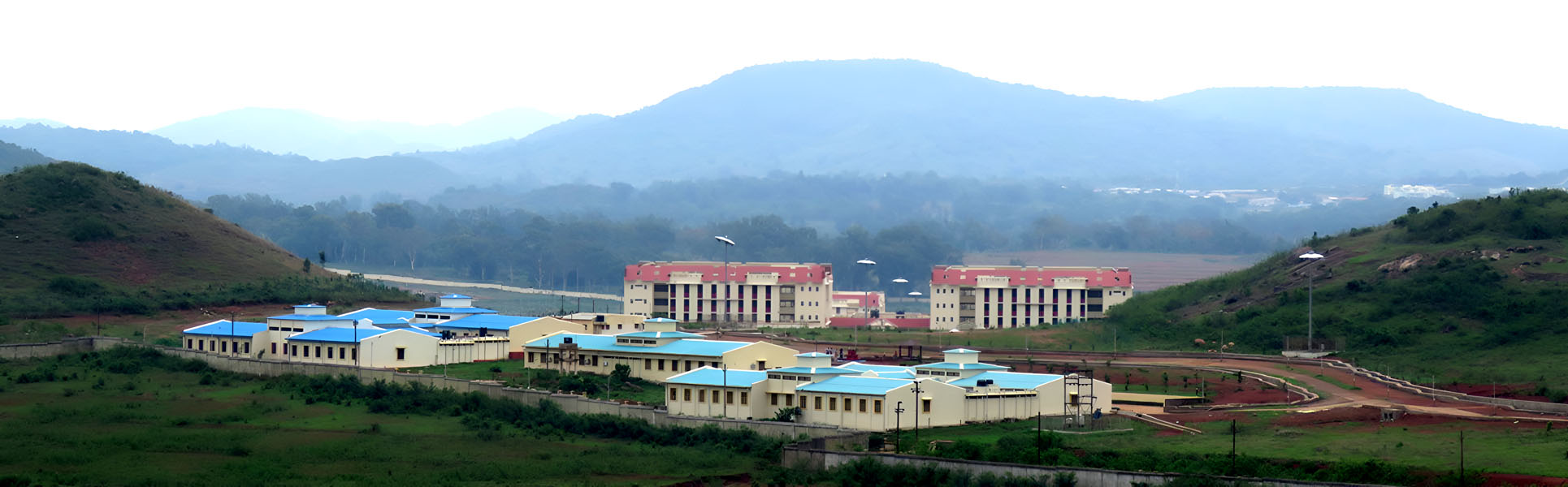
Ph.D. in Sociology from Central University of Orissa: Eligibility, Entrance Exam, Fee Structure, Admission Process, Subjects, Research Areas, Syllabus, Scholarship & Career Scope
Introduction about Ph.D. in Sociology at Central University of Orissa
Central University of Orissa (CUO) stands as a beacon of academic excellence in eastern India, offering a rigorous Ph.D. in Sociology that empowers scholars to dissect social structures, cultural dynamics, and policy impacts. The programme blends theoretical depth with empirical research, preparing professionals to become thought leaders, policy analysts, and university educators. Whether you aim to influence public policy, lead community development initiatives, or contribute to scholarly discourse, CUO’s doctoral pathway provides the intellectual toolkit and mentorship required for transformative impact.
Eligibility Criteria for Ph.D. in Sociology at Central University of Orissa
Prospective candidates must meet the following minimum requirements:
- Master’s degree in Sociology or a related discipline (e.g., Anthropology, Social Work, Human Geography) with at least 55% aggregate (or 5.5 CGPA) for general category; 5% relaxation for SC/ST/PH.
- Valid GATE or UGC NET score recognized by the university, or satisfy the internal eligibility test conducted by CUO.
- Demonstrated research aptitude through a research proposal (max 1,500 words) and a statement of purpose.
- English language proficiency (minimum TOEFL iBT 70 or IELTS 6.0) for international applicants.
Entrance Exam for Ph.D. in Sociology at Central University of Orissa
The university conducts a two‑stage selection process:
- Written Test: A 2‑hour objective‑descriptive paper covering research methodology, sociological theory, and contemporary social issues.
- Interview & Presentation: Shortlisted candidates present their research proposal and answer a panel of senior faculty members.
Candidates with a valid UGC NET or GATE score are exempted from the written test but must appear for the interview.
Fee Structure for Ph.D. in Sociology at Central University of Orissa
| Component | Amount (INR) | Notes |
|---|---|---|
| Admission Deposit (Non‑Refundable) | 15,000 | Paid at the time of registration |
| Annual Tuition Fee | 25,000 | Payable in two installments each academic year |
| Library & Laboratory Charges | 3,000 | Inclusive of digital resource access |
| Miscellaneous (Printing, Examination) | 2,000 | Estimated per year |
| Total Approx. Cost for 3‑Year Programme | 120,000 | Excluding scholarships and stipends |
Admission Process for Ph.D. in Sociology at Central University of Orissa
The admission cycle follows a systematic timeline:
- Online Application: Submit the application form with scanned copies of academic transcripts, research proposal, and identification proof.
- Document Verification: University officials verify credentials; shortlisted candidates receive a provisional ID.
- Entrance Examination & Interview: As described in the previous section.
- Final Selection & Offer Letter: Successful candidates receive an official admission letter and fee payment instructions.
- Enrollment & Orientation: Registration, allocation of research supervisor, and participation in a mandatory research methodology workshop.
For assistance with research design or data collection, many doctoral scholars benefit from Research Data Analysis Services provided by specialized academic support units.
Ph.D. Subjects and Specializations in Sociology at Central University of Orissa
CUO offers a flexible curriculum enabling specialization in the following thematic areas:
- Social Stratification and Inequality
- Rural and Urban Development Studies
- Gender, Sexuality, and Identity
- Political Sociology and Governance
- Culture, Media, and Communication
- Environmental Sociology and Climate Change
- Health and Medical Sociology
Students can combine two or more sub‑fields to design an interdisciplinary dissertation that aligns with global research trends.
Research Areas in Sociology at Central University of Orissa
Faculty expertise drives the research agenda at CUO. Current priority areas include:
- Impact of Digital Media on Rural Youth Employment
- Socio‑Economic Dimensions of Migration in Eastern India
- Intersectionality in Caste and Gender Disparities
- Policy Evaluation of Decentralized Governance Models
- Community Resilience to Climate‑Induced Disasters
- Social Determinants of Health in Tribal Populations
To strengthen empirical work, scholars often engage with Thesis and Dissertation Writing Services for professional editing and formatting support.
Documents Required for Ph.D. in Sociology at Central University of Orissa
| Document | Format | Remarks |
|---|---|---|
| Application Form (online) | Filled and signed electronically | |
| Academic Transcripts (M.A. and B.A.) | PDF/Scanned JPEG | Certified copies |
| UGC NET / GATE Scorecard | Original scorecard required | |
| Research Proposal (max 1,500 words) | DOCX or PDF | Include objectives, methodology, and bibliography |
| Statement of Purpose | Explain career goals and fit with CUO | |
| Identity Proof (Aadhar/Passport) | For Indian nationals and foreign students |
Central University of Orissa Ph.D. Syllabus for Sociology
The doctoral syllabus is structured into three phases:
- Coursework (Year 1): Core modules such as Advanced Sociological Theory, Research Methods, Statistical Analysis, and Ethics in Social Research.
- Comprehensive Examination (End of Year 1): Written and oral tests to assess mastery of coursework.
- Dissertation Phase (Years 2‑3): Original research, regular progress seminars, and a final viva‑voce.
Students may complement their study with optional workshops on qualitative software (NVivo, ATLAS.ti) and quantitative packages (SPSS, Stata).
How To Apply for Ph.D. in Sociology at Central University of Orissa
Follow these steps to submit a successful application:
- Visit the official CUO website and navigate to the “Post‑Graduate Admissions” portal.
- Create a user account and fill in personal, academic, and contact details.
- Upload all mandatory documents (see the Documents Required table).
- Pay the non‑refundable admission deposit through the integrated payment gateway.
- Submit the online application before the deadline (typically early June).
- Monitor email for admission test schedule, interview invitation, and final admission decision.
Career Scope and Job Opportunities After Ph.D. in Sociology from Central University of Orissa
Graduates are equipped for a spectrum of high‑impact careers:
- Academia: Lecturer, Assistant Professor, or Research Fellow in Indian and international universities.
- Research Institutes: Senior Researcher at think‑tanks (e.g., CSDS, IIPS) and policy analysis centres.
- Government & Public Policy: Advisory roles in ministries, state planning commissions, and social welfare departments.
- International Development Agencies: Programme Manager or Monitoring & Evaluation specialist for UNDP, World Bank, NGOs.
- Corporate Social Responsibility (CSR): Strategist for multinational firms focusing on community engagement.
- Media & Journalism: Analyst or columnist on social issues for leading publications.
Enhance your publication record and research visibility by collaborating with Research Paper Writing Services that specialize in sociology journals.
Scholarship for Ph.D. in Sociology at Central University of Orissa
Multiple financial aid options are available:
- University Merit Scholarship: Covers 50% of tuition for students with ≥ 75% in their master’s degree.
- UGC‑JRF / SRF Stipend: Monthly stipend of INR 31,000 plus contingency allowance.
- External Fellowships: Options such as the Commonwealth Scholarship, ICHR Junior Research Fellowship, and Fulbright-Nehru Doctoral Fellowships.
- Research Project Grants: Faculty‑supervised projects that provide additional stipends for data collection and travel.
FAQs Regarding Ph.D. in Sociology at Central University of Orissa
- Q1: Can I pursue a Ph.D. in Sociology if I have a background in Anthropology?
- A: Yes, interdisciplinary candidates with a master’s in Anthropology are eligible provided they meet the minimum 55% criterion and submit a relevant research proposal.
- Q2: Is there a minimum age limit for admission?
- A: No specific age limit is imposed. However,








