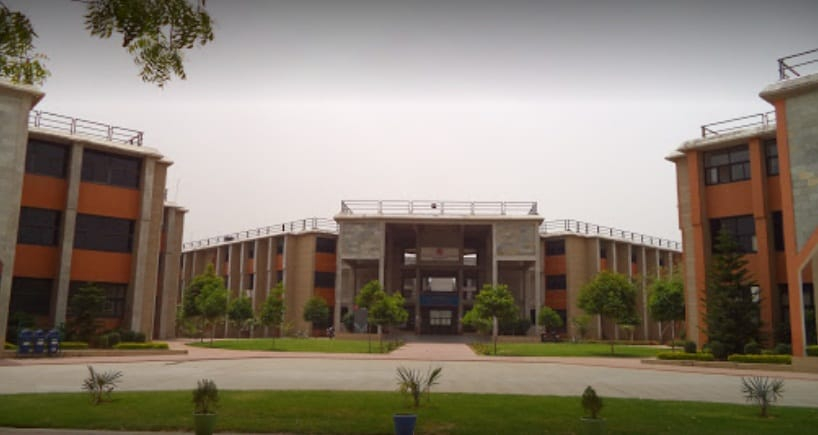
Introduction about Ph.D. in Soil and Water Conservation Engineering at Ganpat University
The Ph.D. program in Soil and Water Conservation Engineering at Ganpat University is designed for aspiring researchers and industry professionals who aim to lead innovative projects in sustainable land and water resource management. This doctoral degree blends rigorous theoretical coursework with hands‑on research, empowering candidates to develop solutions that address climate change, soil erosion, and water scarcity challenges. With state‑of‑the‑art laboratories, collaborative industry tie‑ups, and a faculty renowned for interdisciplinary expertise, Ganpat University offers a fertile environment for scholarly excellence and impactful discoveries.
Eligibility Criteria for Ph.D. in Soil and Water Conservation Engineering at Ganpat University
- Master’s degree (M.Tech/M.Sc.) in Soil Science, Civil Engineering, Environmental Engineering, Agricultural Engineering, Water Resources Engineering or a closely related discipline with a minimum of 55% aggregate (or 5.0 CGPA on a 10‑point scale).
- Candidates who have cleared the National Eligibility Test (NET) or GATE in a relevant subject are exempted from the entrance examination.
- Foreign nationals must possess a recognized equivalent postgraduate qualification and meet the language proficiency requirements (IELTS/TOEFL).
- Minimum age requirement: 21 years (no upper age limit).
Entrance Exam for Ph.D. in Soil and Water Conservation Engineering at Ganpat University
Applicants who do not hold a valid NET/GATE score are required to appear for the university’s Ph.D. entrance test, which evaluates the following components:
- General Aptitude – Logical reasoning, quantitative ability, and verbal communication.
- Subject Knowledge – Core concepts of soil mechanics, hydrology, irrigation engineering, and environmental impact assessment.
- Viva‑voce – An interview to assess research aptitude, motivation, and alignment with faculty interests.
The entrance exam is conducted in offline mode twice a year (June and December). Candidates can download the detailed syllabus and sample papers from the university’s official portal.
Fee Structure for Ph.D. in Soil and Water Conservation Engineering at Ganpat University
| Component | Annual Fee (INR) | Notes |
|---|---|---|
| Tuition & Examination Fees | 45,000 | Charged per academic year; includes library and lab access. |
| Laboratory & Research Material Charges | 20,000 | Varies with the nature of experiments and fieldwork. |
| Student Development & Placement Fund | 5,000 | Utilized for workshops, seminars, and career counseling. |
| Hostel & Mess (Optional) | 30,000 | Based on single occupancy; shared facilities available at lower cost. |
| Total Approximate Cost (3‑Year Program) | 225,000 | Excluding scholarships and external funding. |
Admission Process for Ph.D. in Soil and Water Conservation Engineering at Ganpat University
- Online Application – Submit the application form through the university’s admission portal along with scanned copies of academic transcripts.
- Document Verification – Upload the required documents (listed below) for preliminary scrutiny.
- Entrance Test / NET/GATE Validation – Appear for the entrance exam if applicable, or upload the NET/GATE scorecard.
- Interview & Research Proposal Review – Present a concise research proposal to the department’s faculty panel.
- Final Selection & Offer Letter – Receive the admission offer via email, followed by fee payment and enrollment.
Ph.D. Subjects and Specializations in Soil and Water Conservation Engineering at Ganpat University
The doctoral program offers the following thematic specializations:
- Soil Erosion Modeling and Control
- Integrated Watershed Management
- Advanced Irrigation and Drainage Systems
- Groundwater Recharge and Sustainable Extraction
- Climate‑Smart Agriculture and Soil Health
- Remote Sensing and GIS Applications in Conservation Engineering
Research Areas in Soil and Water Conservation Engineering at Ganpat University
Faculty members are actively engaged in cutting‑edge research across a wide spectrum of topics, including:
- Development of bio‑engineered soil stabilizers.
- Design of low‑cost, community‑based rainwater harvesting structures.
- Simulation of sediment transport under varying climatic scenarios.
- Assessment of the impact of land‑use change on hydrological cycles.
- Optimization of water‑use efficiency in arid and semi‑arid regions.
- Policy modelling for sustainable water governance.
Documents Required for Ph.D. in Soil and Water Conservation Engineering at Ganpat University
| Document | Details / Format | Remarks |
|---|---|---|
| Application Form | Online submission (PDF) | Filled in all mandatory fields. |
| Academic Transcripts | Mark sheets of B.Tech/M.Sc. and M.Tech/M.Sc. | Attested copies required. |
| Research Proposal | Maximum 1500 words, structured format. | Should align with department’s research thrust. |
| NET/GATE Scorecard | Valid for the current academic year. | If applicable. |
| Identity Proof | Aadhaar / Passport / Driving License. | Original and photocopy. |
| Experience Certificate (if any) | Letter from employer on company letterhead. | Optional but advantageous. |
Ganpat University Ph.D. Syllabus for Soil and Water Conservation Engineering
The syllabus is divided into two phases: Coursework (first 12 months) and Research (subsequent period).
Coursework (Core Modules)
- Advanced Soil Mechanics and Geotechnical Engineering
- Hydrology and Water Resources Planning
- Environmental Impact Assessment and Mitigation
- GIS, Remote Sensing, and Spatial Data Analysis
- Statistical Methods for Engineering Research
- Research Methodology and Academic Writing
Research Component
- Literature Review and Gap Analysis
- Experimental Design and Data Acquisition
- Model Development and Validation
- Thesis Writing, Publication in Peer‑Reviewed Journals
- Annual Progress Evaluation and Defense Preparation
How To Apply for Ph.D. in Soil and Water Conservation Engineering at Ganpat University
- Visit the official Ganpat University Ph.D. admission portal and click on “Apply Now”.
- Register using a valid email address and create a secure password.
- Complete the online application form, upload all required documents, and pay the non‑refundable application fee of INR 2,000.
- Submit the research proposal in PDF format (max 2 MB).
- Track the application status through the portal. Once shortlisted, you will receive an email with the entrance exam schedule or interview invitation.
- After clearing the assessment, accept the admission offer, pay the first semester fee, and complete the enrollment formalities.
Career Scope and Job Opportunities After Ph.D. in Soil and Water Conservation Engineering from Ganpat University
Graduates are equipped to assume high‑impact roles in academia, industry, and government agencies. Typical career pathways include:
- Assistant/Associate Professor in engineering colleges and research institutes.
- Senior Research Scientist at national laboratories (e.g., CSIR, ICRISAT) or international research centers.
- Project Manager for large‑scale watershed development projects funded by NGOs or multilateral agencies.
- Policy Analyst specializing in water resource legislation for state and central government bodies.
- Consultant for engineering firms focusing on soil stabilization, erosion control, and sustainable irrigation design.
- Entrepreneur launching start‑ups that provide innovative soil health monitoring and water‑saving technologies.
Average salary packages range from INR 8–12 lakh per annum for entry‑level academic positions to INR 20+ lakh for senior industry roles, with significant growth potential as expertise deepens.
Scholarship for Ph.D. in Soil and Water Conservation Engineering at Ganpat University
Ganpat University offers several financial assistance schemes to support deserving scholars:
- <strong








