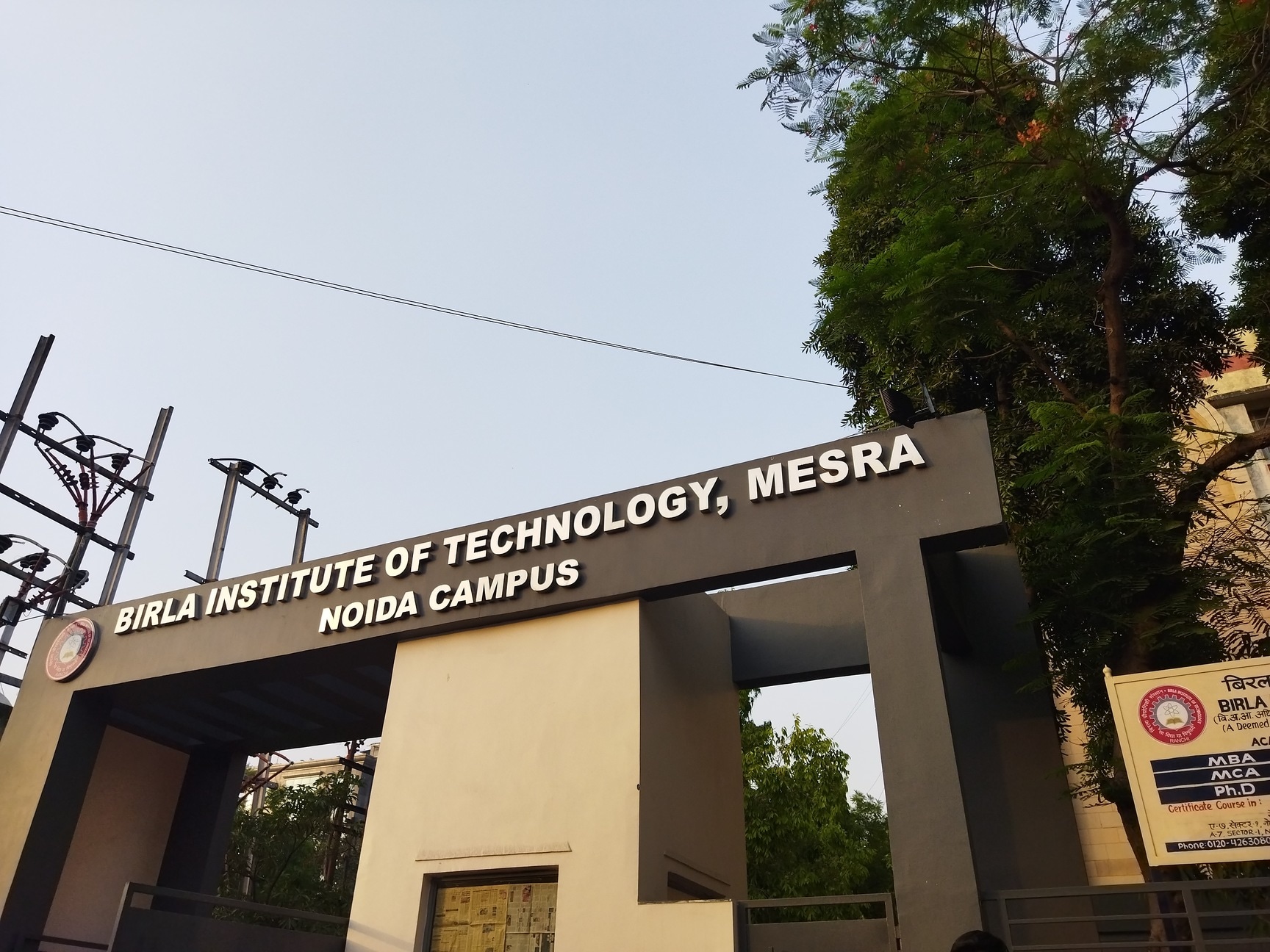
Ph.D. in Space Engineering and Rocketry from Birla Institute of Technology
Birla Institute of Technology (BIT) has emerged as a leading hub for advanced research in aerospace technologies. The Ph.D. in Space Engineering and Rocketry program blends cutting‑edge theory with hands‑on experimentation, enabling professionals to pioneer innovations in satellite design, propulsion systems, and orbital mechanics. Whether you aspire to lead a research team at a space agency or develop next‑generation launch vehicles, BIT offers a rigorous curriculum, world‑class laboratories, and a collaborative ecosystem that nurtures scientific excellence.
Eligibility Criteria for Ph.D. in Space Engineering and Rocketry at Birla Institute of Technology
- Master’s degree (M.Tech, M.Sc., or equivalent) in Space Engineering, Mechanical Engineering, Aerospace Engineering, Electrical Engineering, or a related discipline with a minimum of 55% aggregate (or CGPA 6.0/10).
- Candidates with a Bachelor’s degree (B.E./B.Tech) are also considered if they have secured a minimum of 70% aggregate and have published at least one peer‑reviewed research paper.
- Qualified in national level exams such as GATE (subject code 2A02), JEST, or UGC‑NET in Engineering/Science.
- English proficiency (IELTS/TOEFL) is not mandatory for Indian nationals but recommended for international candidates.
Entrance Exam for Ph.D. in Space Engineering and Rocketry at Birla Institute of Technology
The admission process includes a two‑stage evaluation:
- Written Test: 60 multiple‑choice questions covering advanced topics in orbital dynamics, propulsion, structural analysis, and control systems. The test is conducted online and lasts for 2 hours.
- Interview & Proposal Presentation: Shortlisted candidates must present a research proposal (maximum 15 minutes) followed by a technical interview with the faculty panel.
GATE/NET qualified candidates receive a 25% relaxation in the written test marks.
Fee Structure for Ph.D. in Space Engineering and Rocketry at Birla Institute of Technology
| Component | Annual Cost (INR) | Notes |
|---|---|---|
| Tuition Fee | 85,000 | Payable at the beginning of each academic year. |
| Laboratory & Facility Charges | 30,000 | Includes access to wind tunnels, rocket test beds, and high‑performance computing clusters. |
| Library & Digital Resources | 10,000 | Unlimited access to IEEE Xplore, Springer, and space‑technology databases. |
| Miscellaneous (Health, Sports, Activities) | 5,000 | Standard campus fee. |
| Total Approx. per Year | 1,30,000 | Subject to revision each academic session. |
Admission Process for Ph.D. in Space Engineering and Rocketry at Birla Institute of Technology
- Online Application: Fill the application form on the BIT admission portal and upload academic transcripts, GATE/NET scores, and a concise research proposal.
- Document Verification: The admissions office verifies uploaded documents and shortlists candidates for the entrance test.
- Written Test & Interview: Eligible candidates appear for the written test followed by the interview.
- Final Selection & Offer Letter: Successful candidates receive an admission offer through email, along with details of fee payment and scholarship eligibility.
- Enrollment: Pay the first year’s fees and complete campus registration to start the research journey.
Ph.D. Subjects and Specializations in Space Engineering and Rocketry at Birla Institute of Technology
Students can select from the following thematic areas, each guided by renowned faculty members:
- Orbital Mechanics & Space Trajectory Optimization
- Rocket Propulsion Systems (Liquid, Solid, Hybrid)
- Satellite Communication and Payload Design
- Spacecraft Thermal Management
- Structural Dynamics of Launch Vehicles
- Navigation, Guidance, and Control (NGC) Algorithms
- Space Debris Modeling and Mitigation Strategies
Research Areas in Space Engineering and Rocketry at Birla Institute of Technology
BIT’s state‑of‑the‑art research labs focus on transformative projects such as:
- Development of low‑cost, high‑performance liquid rocket engines.
- CubeSat design, testing, and deployment for Earth observation.
- AI‑driven autonomous navigation for interplanetary missions.
- Hybrid propulsion concepts integrating electric and chemical thrust.
- Advanced materials for thermal protection systems.
- Space situational awareness using radar and optical sensors.
Documents Required for Ph.D. in Space Engineering and Rocketry at Birla Institute of Technology
| Document | Format | Remarks |
|---|---|---|
| Academic Transcripts (10+2, B.E./B.Tech, M.Tech/M.Sc.) | PDF (Scanned) | Must be attested. |
| GATE/NET Scorecard | Only if applicable. | |
| Research Proposal (2,000‑2,500 words) | DOCX or PDF | Include objectives, methodology, and expected outcomes. |
| Curriculum Vitae | Highlight publications, patents, and projects. | |
| Letter of Recommendation (2) | From academic supervisors or industry mentors. | |
| Identity Proof (Aadhaar / Passport) | Valid government ID. |
Birla Institute of Technology Ph.D. Syllabus for Space Engineering and Rocketry
The syllabus is structured into core modules, elective courses, and research milestones:
- Core Modules: Advanced Orbital Mechanics, Propulsion Thermodynamics, Flight Dynamics, Spacecraft Systems Engineering.
- Electives (choose any two): Spacecraft Structures, Satellite Signal Processing, Plasma Physics, Advanced Materials for Aerospace.
- Research Milestones: Literature Survey, Methodology Development, Experimental Validation, Thesis Writing, Publication in refereed journals.
How To Apply for Ph.D. in Space Engineering and Rocketry at Birla Institute of Technology
Follow these steps to submit a successful application:
- Visit the official BIT admissions portal and create a user account.
- Complete the online application form, selecting “Space Engineering and Rocketry – Ph.D.” as the program.
- Upload all required documents (as listed above) and the research proposal.
- Pay the non‑refundable application fee of INR 2,500 via net banking or credit card.
- Submit the application and note the generated application ID for future reference.
- Monitor the email registered for updates regarding the entrance test schedule and interview invitations.
Career Scope and Job Opportunities After Ph.D. in Space Engineering and Rocketry from Birla Institute of Technology
Graduates enjoy a broad spectrum of high‑impact roles, including:
- Senior Research Scientist – ISRO, NASA, ESA, or private space enterprises.
- Lead Propulsion Engineer – leading design of launch vehicle engines.
- Academia – Assistant/Associate Professor in aerospace departments.
- Technical Director – overseeing satellite development programs.
- Consultant – providing expert advice on aerospace policy and technology transfer.
Average starting salaries range from INR 12‑18 lakhs per annum in India, with international opportunities offering significantly higher remuneration.
Scholarship for Ph.D. in Space Engineering and Rocketry at Birla Institute of Technology
BIT offers merit‑based and need‑based scholarships:
- Merit Scholarship: INR 30,000 per annum for top 10% of GATE/NET rankers.
- Research Assistantship: Stipend of INR 25,000 per month attached to funded projects.
- ISRO Fellowship: Fully funded Ph.D. with a monthly stipend of INR 35,000 and travel allowance for conferences.
- Need‑Based Grant: Financial aid up to INR 2,00,000 per year based on family income.
FAQs Regarding Ph.D. in Space Engineering and Rocketry at Birla Institute of Technology
- 1. Can a candidate with a B.E. degree directly enroll in the Ph.D. program?
- Yes, if the candidate has secured at least 70% aggregate and has published a peer‑reviewed research paper.
- 2. Is there a provision for part‑time Ph.D. registration?
- BIT offers a part‑time mode for working professionals, with a flexible timeline of up to 8 years.
- 3. How many publications are required for the final thesis submission?
- At least two papers must be published in SCI/SCOPUS indexed journals before the final viva‑voce.
- 4. What are the language requirements for foreign nationals?
- Proof of English proficiency (IELTS ≥ 6.5 or TOEFL ≥ 80) is mandatory for all non‑Indian applicants.
- 5. Are industry collaborations available during the Ph.D.?
- Yes, BIT has MoUs with ISRO, DRDO, and leading aerospace firms, offering joint research projects and internships.








