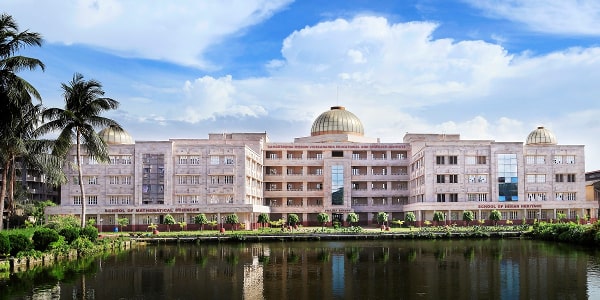
Ph.D. in Special Education and Rehabilitation Science at Ramakrishna Mission Vivekananda Educational and Research Institute
The Ph.D. in Special Education and Rehabilitation Science offered by the Ramakrishna Mission Vivekananda Educational and Research Institute (RMV Institute) stands as a beacon for scholars aspiring to transform inclusive education and rehabilitation practices. Grounded in a legacy of service, research excellence, and holistic development, this doctoral program equips professionals with the analytical rigor and ethical grounding required to lead innovative interventions, policy reforms, and scholarly discourse worldwide.
Eligibility Criteria for Ph.D. in Special Education and Rehabilitation Science at Ramakrishna Mission Vivekananda Educational and Research Institute
Prospective candidates must meet the following academic and professional benchmarks:
- A master’s degree (M.Ed., M.A., M.Sc., M.Phil.) in Special Education, Rehabilitation Science, Psychology, Sociology, or a related discipline from a recognized university.
- Minimum aggregate of 55% (or equivalent CGPA) in the qualifying postgraduate program.
- Qualifying national-level entrance test scores (e.g., UGC NET, CSIR NET, GATE) or RMV Institute’s own written test.
- For research-oriented candidates, a strong research proposal aligned with the institute’s focus areas is essential.
- Candidates holding a Ph.D. in a different discipline may apply for a supplementary research module, subject to approval.
Entrance Exam for Ph.D. in Special Education and Rehabilitation Science at Ramakrishna Mission Vivekananda Educational and Research Institute
The entrance evaluation comprises two stages:
- Written Test (75 marks) – Objective and descriptive questions covering research methodology, statistics, foundational concepts of special education, and rehabilitation science.
- Interview & Proposal Presentation (25 marks) – Assessment of research aptitude, clarity of the proposed study, and alignment with faculty expertise.
Candidates possessing a valid UGC NET or CSIR NET qualification are exempted from the written test but must appear for the interview.
Fee Structure for Ph.D. in Special Education and Rehabilitation Science at Ramakrishna Mission Vivekananda Educational and Research Institute
| Fee Component | Amount (INR) | Remarks |
|---|---|---|
| Application Processing Fee | 2,500 | Non‑refundable, payable online |
| Admission Fee (One‑time) | 15,000 | Includes registration and library access |
| Annual Tuition & Lab Charges | 30,000 | Payable at the start of each academic year |
| Examination & Evaluation Fee | 5,000 | Per semester |
| Miscellaneous (Cultural, Sports, etc.) | 3,000 | Estimated per year |
| Total Approximate Cost (3‑Year Programme) | 1,20,000 | Excluding scholarships and waivers |
Admission Process for Ph.D. in Special Education and Rehabilitation Science at Ramakrishna Mission Vivekananda Educational and Research Institute
- Online Application – Submit the application form through the official portal, upload scanned copies of academic certificates, and pay the processing fee.
- Document Verification – The admissions committee validates eligibility, marksheets, and research proposal.
- Entrance Examination – Eligible candidates appear for the written test (if required) on the scheduled date.
- Interview & Proposal Defense – Shortlisted candidates present their research ideas before a panel of faculty experts.
- Final Selection & Offer Letter – Successful candidates receive an admission letter, fee payment instructions, and orientation schedule.
- Enrollment – Pay the admission fee, complete registration, and receive access to the university’s digital library and research labs.
Ph.D. Subjects and Specializations in Special Education and Rehabilitation Science at Ramakrishna Mission Vivekananda Educational and Research Institute
Students can tailor their research across several interdisciplinary domains, including:
- Inclusive Curriculum Design
- Assistive Technology Development
- Neurodevelopmental Disorders
- Behavioural Intervention Strategies
- Policy & Governance in Special Education
- Community‑Based Rehabilitation Models
- Psychometrics and Assessment Tools
Research Areas in Special Education and Rehabilitation Science at Ramakrishna Mission Vivekananda Educational and Research Institute
The institute’s research agenda is driven by societal impact and scientific novelty. Core research clusters include:
- Early Intervention & Lifespan Development – Longitudinal studies on early detection of learning disabilities.
- Technology‑Enhanced Learning – Development of AR/VR platforms for skill acquisition among children with special needs.
- Evidence‑Based Clinical Practices – Trials evaluating physiotherapy and occupational therapy protocols.
- Policy Analysis & Advocacy – Comparative studies of inclusive education policies across Indian states.
- Cross‑Cultural Rehabilitation – Adaptation of global best practices to rural Indian contexts.
Documents Required for Ph.D. in Special Education and Rehabilitation Science at Ramakrishna Mission Vivekananda Educational and Research Institute
| Document | Details | Format |
|---|---|---|
| Completed Application Form | Online submission with a unique Application ID | |
| Academic Transcripts | Mark sheets of all semesters (UG & PG) | PDF (attested) |
| Degree Certificates | Graduation & Post‑graduation degrees | PDF (attested) |
| Entrance Exam Scorecard | UGC NET / CSIR NET / GATE (if applicable) | |
| Research Proposal | 1500‑2000 word proposal with objectives & methodology | DOCX/PDF |
| Curriculum Vitae | Professional experience, publications, conferences | DOCX/PDF |
| Two Academic References | Letters from professors or research supervisors | PDF (signed) |
| Photographs | Recent passport‑size (white background) | JPEG/PNG |
Ramakrishna Mission Vivekananda Educational and Research Institute Ph.D. Syllabus for Special Education and Rehabilitation Science
The doctoral syllabus is structured to blend rigorous coursework with extensive research exposure:
- Year 1 – Foundations (30 credits)
- Research Methodology & Design
- Advanced Statistics for Education & Health Sciences
- Theories of Inclusive Education
- Ethics in Rehabilitation Practice
- Seminar: Current Trends in Special Education
- Year 2 – Specialization (24 credits)
- Assistive Technology Innovation
- Neuropsychology of Learning Disabilities
- Policy Development & Implementation
- Qualitative & Mixed‑Methods Approaches
- Teaching Practicum / Fieldwork
- Year 3 – Research & Dissertation
- Data Collection & Analysis Workshops
- Publication & Academic Writing
- Dissertation Proposal Review
- Thesis Submission & Defense








