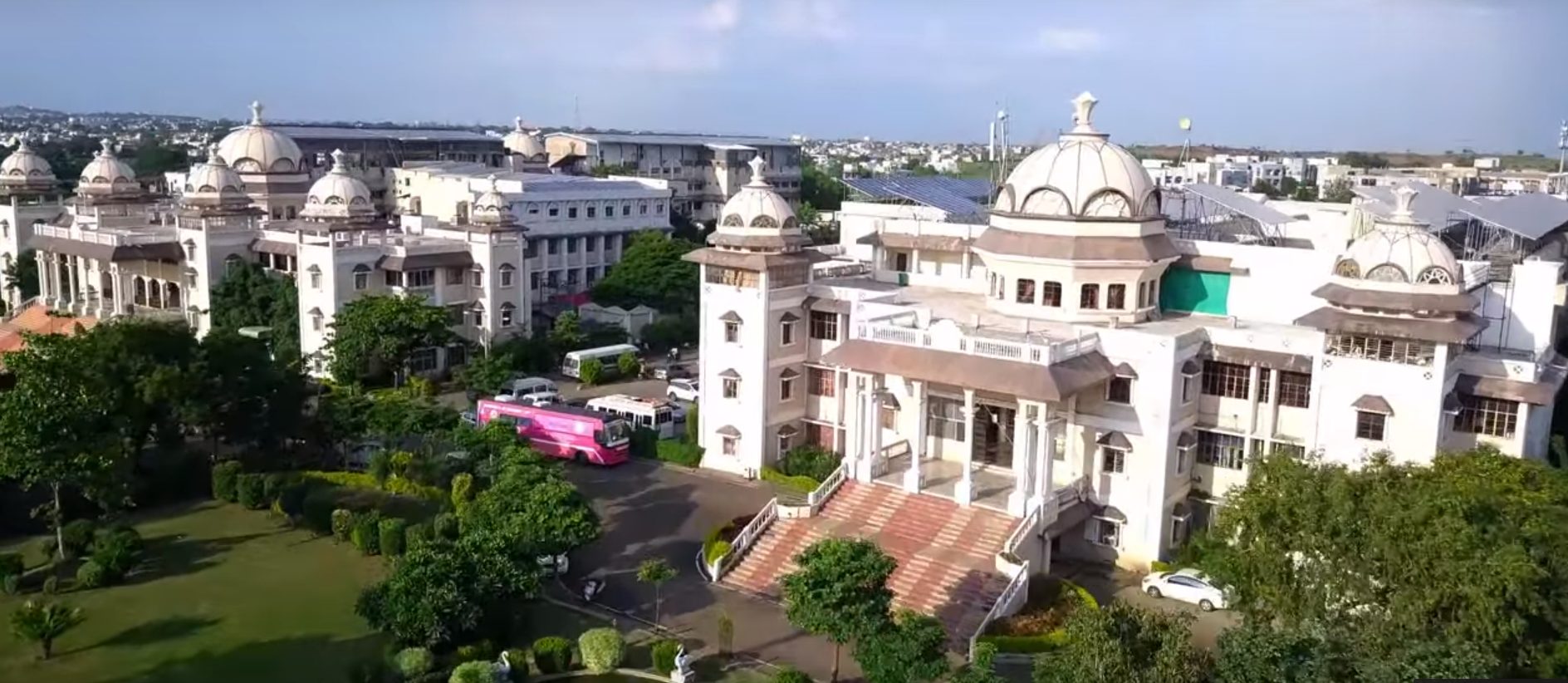
Ph.D. in Toxicology at Datta Meghe Institute of Medical Sciences: Eligibility, Entrance Exam, Fee Structure, Admission Process, Subjects, Research Areas, Syllabus, Scholarship & Career Scope
The Doctor of Philosophy (Ph.D.) in Toxicology at Datta Meghe Institute of Medical Sciences (DMIMS) is designed for professionals who aspire to become thought leaders in environmental health, pharmaceutical safety, and clinical toxicology. With a curriculum that blends rigorous research methodology, cutting‑edge laboratory techniques, and interdisciplinary collaboration, the program equips scholars to address complex toxicological challenges that impact public health worldwide.
Eligibility Criteria for Ph.D. in Toxicology at Datta Meghe Institute of Medical Sciences
Prospective candidates must meet the following minimum requirements:
- A Master’s degree (M.Sc., M.Pharma, M.D., or equivalent) in Toxicology, Pharmacology, Biochemistry, Biotechnology, Environmental Science, or a closely related discipline.
- Minimum aggregate of 55 % (or 5.5 CGPA on a 10‑point scale) in the qualifying postgraduate program.
- Valid GATE, NET, or DMIMS’s own entrance examination score (if applicable).
- Demonstrated research aptitude via a statement of purpose, academic transcripts, and at least two academic references.
- For candidates with a Ph.D. in a non‑toxicology field, a supplementary coursework of 12 credits in core toxicology subjects is mandatory.
Entrance Exam for Ph.D. in Toxicology at Datta Meghe Institute of Medical Sciences
The entrance evaluation consists of two stages:
- Written Test: A 100‑minute objective‑type examination covering fundamentals of toxicology, biostatistics, research methodology, and analytical techniques. The test is conducted online and scored out of 100 marks.
- Personal Interview & Research Proposal Presentation: Shortlisted candidates present a concise research proposal (≤15 minutes) followed by a viva‑voce with a panel of senior faculty members.
Successful candidates are required to achieve a minimum aggregate of 60 % in the combined evaluation.
Fee Structure for Ph.D. in Toxicology at Datta Meghe Institute of Medical Sciences
| Component | Annual Fee (INR) | Notes |
|---|---|---|
| Tuition & Academic Fees | 45,000 | Includes lectures, seminars, and access to research facilities. |
| Laboratory & Consumables | 30,000 | Charges for chemicals, reagents, and instrument usage. |
| Library & Digital Resources | 8,000 | E‑journal subscriptions, databases, and inter‑library loans. |
| Miscellaneous (Student Services, Sports, Health) | 7,000 | Campus facilities and student welfare. |
| Total Approx. Annual Cost | 90,000 | Subject to revision based on Government policies. |
Admission Process for Ph.D. in Toxicology at Datta Meghe Institute of Medical Sciences
The admission cycle follows a streamlined three‑step process:
- Online Application Submission: Candidates fill the DMIMS portal, upload academic documents, and pay the non‑refundable application fee of INR 1,500.
- Entrance Examination & Interview: As described above, candidates appearing for the written test and subsequent interview are evaluated.
- Final Offer & Registration: Successful applicants receive an admission letter, after which they must confirm enrollment by paying the first year’s tuition within 15 days.
Ph.D. Subjects and Specializations in Toxicology at Datta Meghe Institute of Medical Sciences
Students can specialize in one of the following research streams:
- Environmental Toxicology & Pollution Control
- Pharmaceutical Toxicology & Drug Safety
- Clinical Toxicology & Antidote Development
- Industrial Toxicology & Occupational Health
- Computational Toxicology & In‑silico Modeling
Research Areas in Toxicology at Datta Meghe Institute of Medical Sciences
DMIMS boasts state‑of‑the‑art labs and collaborative projects across multiple domains, including:
- Heavy metal bio‑accumulation and remediation strategies.
- Nanoparticle toxicity and safe nanomedicine design.
- Endocrine disruptors and their impact on reproductive health.
- High‑throughput screening of drug metabolites for adverse effects.
- Predictive toxicology using machine learning algorithms.
Documents Required for Ph.D. in Toxicology at Datta Meghe Institute of Medical Sciences
| Document | Specification |
|---|---|
| Academic Transcripts & Degree Certificates | Original & notarized photocopy of all qualifying degrees. |
| GATE/NET Scorecard (if applicable) | Valid scorecard issued within the last 3 years. |
| Research Proposal | Maximum 1500 words, outlining objectives, methodology, and expected outcomes. |
| Curriculum Vitae (CV) | Detailed academic and professional background, including publications. |
| Two Recommendation Letters | From academicians or industry experts familiar with candidate’s work. |
| Identity Proof | Aadhaar card, passport, or voter ID. |
Datta Meghe Institute of Medical Sciences Ph.D. Syllabus for Toxicology
The comprehensive syllabus is divided into core modules and elective clusters:
- Core Modules (30 credits): Advanced Toxicokinetics, Molecular Toxicology, Biostatistics, Research Methodology, Ethics in Biomedical Research.
- Elective Clusters (12 credits): Choose any two – Environmental Hazard Assessment, Clinical Case Studies, Drug Metabolism, Computational Modeling, Occupational Safety.
- Thesis Work (48 credits): Original research project, literature review, data analysis, manuscript preparation, and defense.
How To Apply for Ph.D. in Toxicology at Datta Meghe Institute of Medical Sciences
- Visit the official DMIMS website and navigate to the “Postgraduate Admissions” portal.
- Create a user account and fill in personal, academic, and contact details.
- Upload scanned copies of the required documents (as listed above).
- Pay the application fee via net banking, credit/debit card, or UPI.
- Submit the application and note the registration number for future correspondence.
- Monitor the email and portal for admit card issuance and examination schedule.
Career Scope and Job Opportunities After Ph.D. in Toxicology from Datta Meghe Institute of Medical Sciences
A doctorate in toxicology opens pathways to high‑impact roles such as:
- Senior Research Scientist – Pharmaceutical companies (e.g., Cipla, Dr. Reddy’s).
- Regulatory Affairs Manager – Central Drugs Standard Control Organization (CDSCO).
- Environmental Consultant – NGOs, governmental agencies, and multinational corporations.
- Academic Faculty – Universities and research institutes across India and abroad.
- Chief Toxicologist – Clinical laboratories and hospitals dealing with poisoning cases.
- Data Scientist – Specialized in toxicology data analytics and predictive modeling.
Graduates also have strong prospects for post‑doctoral fellowships, patent authorship, and leadership positions in policy formulation.
Scholarship for Ph.D. in Toxicology at Datta Meghe Institute of Medical Sciences
DMIMS offers several financial assistance schemes:
- DMIMS Merit Scholarship: Full tuition waiver and a monthly stipend of INR 15,000 for top‑ranked candidates.
- UGC‑CSIR Junior Research Fellowship (JRF): Up to INR 31,000 monthly, renewable upon satisfactory progress.
- Industry‑Sponsored Fellowships: Partnerships with biotech firms providing research grants and project‑based stipends.
- Need‑Based Assistance: Partial fee waivers for economically disadvantaged scholars.
FAQs Regarding Ph.D. in Toxicology at Datta Meghe Institute of Medical Sciences
- 1. What is the typical duration of the Ph.D. program?
- Full‑time research is generally completed within 3‑4 years, depending on the thesis progress.
- 2. Can a candidate enroll part‑time while working?
- Yes, DMIMS permits part‑time enrollment for professionals with a minimum of 20 hours per week dedicated to research.
- 3. Are there opportunities for international collaborations?
- Absolutely. The institute has MOUs with universities in the USA, UK, and Australia facilitating joint projects and exchange programmes.
- 4. How many papers should I aim to publish before thesis submission?
- While there is no strict quota, a minimum of two peer‑reviewed articles in reputable journals is strongly recommended.
- 5. Is there support for conference travel?
- Yes, the institute allocates an annual research travel fund for eligible students presenting at national or international conferences.
For additional academic support, consider exploring the following professional services:








