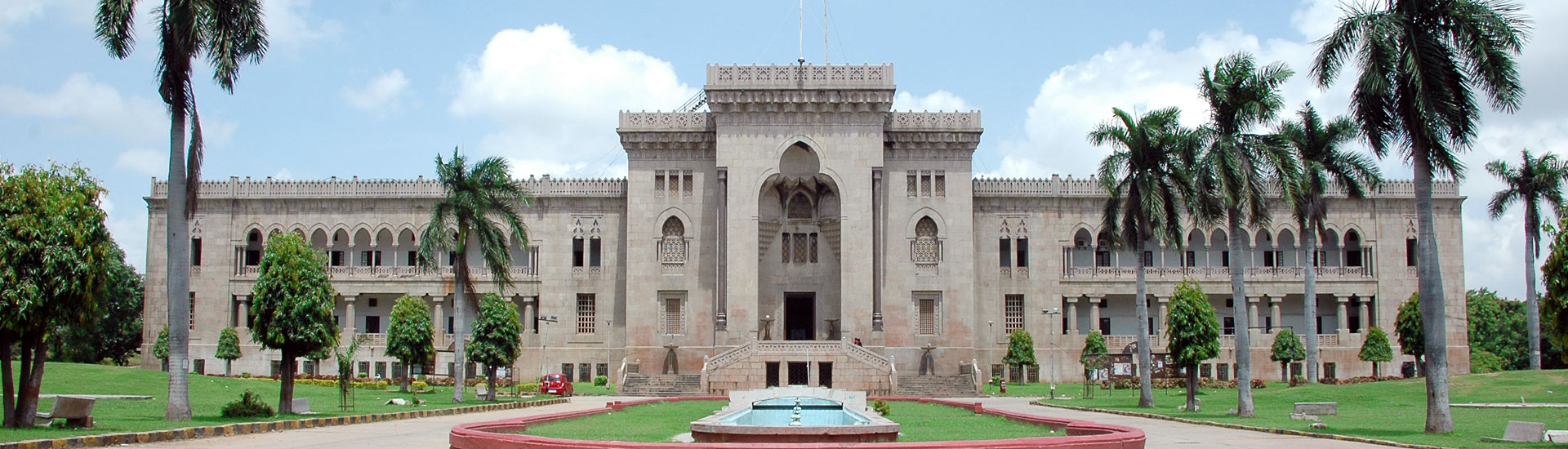
Introduction about Ph.D. in Urdu at Osmania University
Embarking on a Ph.D. in Urdu at Osmania University is more than just an academic pursuit; it is a journey into the heart of one of India's most poetic and historically rich languages. Osmania University, located in the vibrant city of Hyderabad, stands as a beacon of Urdu literature and Deccani culture. Established over a century ago, the Department of Urdu has been a pioneer in higher education, fostering scholars who have shaped the linguistic landscape of the Indian subcontinent. For professionals looking to deepen their expertise, this program offers a rigorous intellectual environment where tradition meets modern research methodologies. Whether you are an educator, a writer, or a language enthusiast, this doctorate signifies a pinnacle of mastery. In some cases, distinguished professionals who have contributed significantly to the arts might also explore Honorary Doctorate Programs to recognize their lifelong dedication to the field.
Ph.D Admission 2026-2027 & Writing Support Services by Shiksha Research
Eligibility Criteria for Ph.D. in Urdu at Osmania University
To join the ranks of esteemed researchers at Osmania University, candidates must fulfill specific eligibility requirements designed to ensure a high standard of academic excellence. The fundamental requirement is a Master?s degree in Urdu (M.A. in Urdu) from a recognized university. Candidates must have secured at least 55% aggregate marks in their postgraduate studies. However, in line with government regulations and to promote inclusivity, a 5% relaxation is provided to candidates belonging to SC, ST, BC, and PWD categories, bringing their minimum requirement to 50%.
Furthermore, candidates who have already cleared national or state-level eligibility tests such as UGC-NET, CSIR-NET, or SET (Telangana State) are often given preference. Those with an M.Phil. in Urdu (regular mode) are also eligible to apply. Demonstrating a strong command of the Urdu script and a profound understanding of classical and modern literature is essential for successfully navigating the rigorous screening process of this prestigious institution.
Entrance Exam for Ph.D. in Urdu at Osmania University
The gateway to the doctoral program is the Osmania University Ph.D. Entrance Test. This examination is designed to test the candidate?s depth of knowledge in Urdu literature, linguistics, and research aptitude. The question paper typically consists of two parts: one focusing on research methodology and the other on core Urdu subjects including poetry, prose, and the history of the language. While the entrance exam is mandatory for most, candidates who have qualified for the UGC-NET with Junior Research Fellowship (JRF) are generally exempted from the written test, though they must still participate in the interview process. Navigating these requirements can be complex, which is why many candidates seek professional PhD Admission Assistance to ensure they meet all institutional benchmarks and deadlines.
Fee Structure for Ph.D. in Urdu at Osmania University
Osmania University, being a premier state university, offers a highly affordable fee structure compared to private institutions, making it an attractive destination for dedicated scholars. The fee structure for the Ph.D. program in Urdu is categorized into registration, tuition, and development fees. Below is an approximate breakdown of the costs involved:
| Fee Category | Approximate Amount (INR) | Frequency |
|---|---|---|
| Registration Fee | ?2,000 - ?5,000 | One-time |
| Annual Tuition Fee | ?5,000 - ?10,000 | Per Annum |
| Library and Lab Fees | ?1,500 - ?3,000 | Per Annum |
| Examination/Thesis Submission Fee | ?10,000 - ?15,000 | At the time of submission |
| Caution Deposit (Refundable) | ?2,000 | One-time |
Note: The fees mentioned are subject to change as per university norms. Scholars are advised to check the official university website for the most recent updates.
Admission Process for Ph.D. in Urdu at Osmania University
The admission process at Osmania University is transparent but competitive. It begins with a public notification issued by the university, inviting applications for the Ph.D. program. Following the entrance test, eligible candidates are shortlisted for an interview or viva voce conducted by the Departmental Research Committee (DRC). During this interview, the candidate must present their research vision. Having a well-structured proposal is vital at this stage, and many students utilize PhD Topic Selection and Proposal Assistance to refine their research questions and methodology. The final selection is based on the cumulative performance in the entrance exam (or NET/JRF score), the interview, and the academic track record. Once selected, the scholar is allotted a supervisor and must undergo a mandatory six-month coursework period to build foundational research skills.
Ph.D. Subjects and Specializations in Urdu at Osmania University
The Urdu department at Osmania University offers a diverse range of specializations that allow scholars to delve into specific niches of the language. Research is not limited to just poetry; it spans across various literary movements and linguistic developments. Major subjects and specializations include:
- Classical Urdu Poetry (Ghazal, Nazm, Qasida, Marsiya)
- Evolution of Urdu Prose and Fiction
- Deccani Language and Literature (A specialized focus of the Hyderabad region)
- Comparative Literature (Urdu and other Indian/Foreign languages)
- Linguistics and Philology of Urdu
- Urdu Criticism and Aesthetics
- The Role of Urdu in the Freedom Movement
- Modernism and Post-Modernism in Urdu Literature
Research Areas in Urdu at Osmania University
The research landscape at Osmania University is vast and deeply connected to the cultural heritage of the Deccan. Scholars are encouraged to explore untapped areas of literary history or apply modern critical theories to classical texts. Current research areas include the digitalization of Urdu manuscripts, the sociological impact of Urdu media, and the influence of Sufism on Urdu literature. To ensure that your research reaches the global academic community, leveraging Research Publication Support is essential for getting your findings published in high-impact, peer-reviewed journals and indexed databases.
Documents Required for Ph.D. in Urdu at Osmania University
Maintaining a complete set of documentation is critical for a smooth admission process. Candidates should prepare the following documents:
- S.S.C. (10th) and Intermediate (12th) Marksheets
- Bachelor?s and Master?s Degree Certificates
- Consolidated Marksheets of M.A. in Urdu
- UGC-NET/JRF or SET Qualification Certificates (if applicable)
- Transfer Certificate (TC) and Migration Certificate
- Caste/Category Certificate for Reserved Category applicants
- Research Proposal (Synopsis)
- Recent Passport-size Photographs
- NOC (No Objection Certificate) from the employer (for working professionals)
Osmania University Ph.D. Syllabus for Urdu
The Ph.D. syllabus is divided into two main phases: Coursework and Thesis Research. The coursework phase typically lasts six months and concludes with an examination. The syllabus for the coursework includes:
- Paper I: Research Methodology: This covers the techniques of literary research, bibliography citation styles, manuscriptology, and the use of technology in Urdu research.
- Paper II: Advanced Study of Urdu Literature: This involves deep analysis of specific literary periods, critical schools of thought, and linguistic theories.
- Thesis Work: After clearing the coursework, the candidate focuses entirely on their chosen research topic, culminating in the submission of a comprehensive dissertation. During the drafting phase, professional Editing and Proofreading Services can play a pivotal role in ensuring the thesis is free from linguistic errors and adheres to academic standards.
How To Apply for Ph.D. in Urdu at Osmania University
The application process is primarily online. Interested candidates should visit the official Osmania University website during the admission cycle.
1. **Online Account Creation:** Register on the OU admission portal.
2. **Form Completion:** Fill in personal, academic, and professional details.
3. **Document Upload:** Scan and upload the required certificates and research synopsis.
4. **Fee Payment:** Pay the application fee through the integrated payment gateway.
5. **Submission:** Review the application and submit. Keep a printed copy for future reference.
6. **Hall Ticket:** Download the hall ticket for the entrance exam once it is released.
Career Scope and Job Opportunities After Ph.D. in Urdu from Osmania University
A Ph.D. in Urdu opens doors to various prestigious career paths. It is not just about teaching; it is about becoming a guardian of a global language. Scholars often find rewarding careers in:
- Academia: Professors, lecturers, and researchers in universities and colleges worldwide.
- Civil Services: Urdu is a popular optional subject in UPSC and State PSC exams; a Ph.D. provides an unmatched edge.
- Media and Journalism: Editors, scriptwriters, and anchors for Urdu news channels and newspapers.
- Translation and Interpretation: High-level roles in international organizations, embassies, and government agencies.
- Content Creation: Specialized roles in digital media, publishing houses, and literary archives.
For those who innovate in the field of linguistics or develop unique Urdu-based teaching technologies, seeking Patent Filing and Support Services can help in protecting intellectual property and academic inventions.
Scholarship for Ph.D. in Urdu at Osmania University
Osmania University supports its researchers through various financial aid schemes. Meritorious students who have qualified for the JRF receive a monthly stipend from the UGC. Additionally, the Maulana Azad National Fellowship (MANF) and the Rajiv Gandhi National Fellowship are available for minority or reserved category students. The Telangana State government also provides scholarships for eligible local students. Various departmental medals and grants are often available for scholars exhibiting exceptional research potential.
FAQs Regarding Ph.D. in Urdu at Osmania University
1. What is the duration of the Ph.D. program?
The minimum duration is three years, including coursework, and the maximum is usually six years.
2. Can I pursue a Ph.D. in Urdu part-time?
Osmania University primarily offers full-time Ph.D. programs, but there are provisions for part-time research for internal employees or professionals under specific conditions as per the university's Ph.D. regulations.
3. Is there an age limit for Urdu Ph.D. admissions?
Generally, there is no upper age limit for applying for a Ph.D., though scholarship eligibility may have age restrictions.
4. How many research papers need to be published during the Ph.D.?
As per current UGC guidelines adopted by Osmania University, a scholar must publish at least two research papers in peer-reviewed or UGC-listed journals before thesis submission.
5. Can international students apply?
Yes, international students can apply through the University's Foreign Relations Office (UFRO) subject to eligibility and visa requirements.








