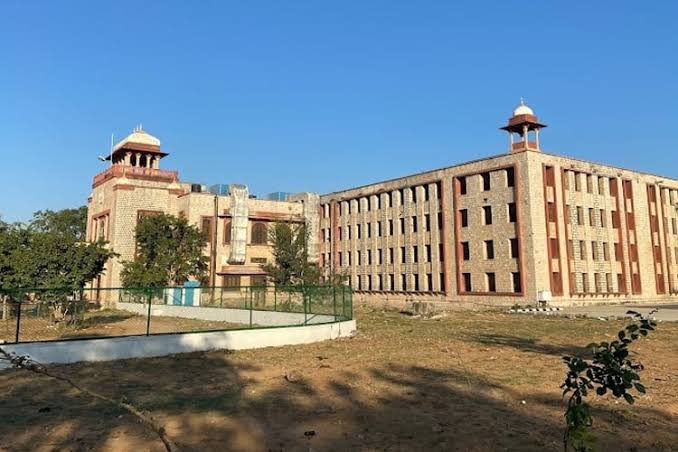
Introduction about Ph.D. in Urdu at Rajasthan University
Rajasthan University has emerged as a beacon for scholars seeking advanced research in the rich tapestry of Urdu literature, linguistics, and cultural studies. The Ph.D. program in Urdu is meticulously crafted to blend traditional scholarship with contemporary methodologies, empowering professionals to contribute original research that shapes academic discourse and societal narratives. Whether you aim to become a distinguished academic, a policy analyst, or a cultural strategist, this doctoral journey offers a robust platform for intellectual growth and meaningful impact.
Eligibility Criteria for Ph.D. in Urdu at Rajasthan University
Prospective candidates must satisfy the following baseline requirements:
- A master’s degree (M.A.) in Urdu or a closely related discipline with a minimum aggregate of 55% (or an equivalent CGPA of 6.0/10).
- Qualifying score in the university‑conducted entrance test or any recognized national-level Ph.D. entrance examination (e.g., UGC‑NET, CSIR‑NET, JNU‑NET).
- For candidates holding a Master of Philosophy (M.Phil.), the minimum aggregate requirement is relaxed to 50%.
- English proficiency is not mandatory, but a working knowledge of academic English enhances research dissemination.
Entrance Exam for Ph.D. in Urdu at Rajasthan University
The entrance exam assesses the candidate’s depth of knowledge in Urdu literature, linguistic theory, research methodology, and critical analysis. The test pattern typically includes:
- Written examination (objective & descriptive) – 100 marks.
- Interview & presentation of research proposal – 30 marks.
- Subject‑specific essay writing – 20 marks.
Candidates who have qualified for UGC‑NET (Urdu) are exempted from the written portion but must appear for the interview.
Fee Structure for Ph.D. in Urdu at Rajasthan University
| Component | Amount (INR) | Notes |
|---|---|---|
| Application Fee (Online) | 1,500 | Non‑refundable, payable at time of submission. |
| Annual Tuition Fee | 12,000 | Payable at the beginning of each academic year. |
| Lab & Library Access Fee | 2,000 | Includes digital resources and archival access. |
| Examination & Evaluation Charges | 3,500 | Charged per semester. |
| Miscellaneous (Printing, Certification) | 1,000 | Estimated per year. |
| Total Approximate Cost (3‑Year Program) | 45,000 | Excluding scholarships and waivers. |
Financial assistance is available via university scholarships, government fellowships, and research grants. For personalized guidance on fee waivers, consider our PhD Admission Assistance service.
Admission Process for Ph.D. in Urdu at Rajasthan University
The admission workflow is streamlined into six clear steps:
- Online Registration: Create an account on the university portal and fill the Ph.D. application form.
- Document Upload: Submit scanned copies of academic transcripts, mark sheets, and identity proof.
- Entrance Examination: Appear for the written test or upload UGC‑NET scorecard for exemption.
- Research Proposal Submission: Provide a concise proposal (max 1500 words) outlining objectives, literature review, and methodology.
- Interview & Presentation: Defend your proposal before the selection committee.
- Final Admission Offer: Receive an official admission letter and fee payment instructions.
Ph.D. Subjects and Specializations in Urdu at Rajasthan University
The program offers a diverse range of specializations to align with your research passion:
- Classical Urdu Poetry and Prosody
- Modern Urdu Fiction and Narrative Techniques
- Urdu Linguistics and Sociolinguistics
- Urdu Media Studies and Digital Humanities
- Comparative Literature: Urdu and Regional Languages
- Translational Studies and Intercultural Communication
Research Areas in Urdu at Rajasthan University
Faculty mentors guide candidates through cutting‑edge research avenues, including:
- Evolution of Urdu script and orthography.
- Impact of diaspora on Urdu literary forms.
- Digital preservation of rare manuscripts.
- Gender narratives in contemporary Urdu poetry.
- Urdu’s role in political discourse and identity formation.
- Computational linguistics applications for Urdu text analysis.
Our Research Publication Support can help you turn your dissertation into indexed journal articles.
Documents Required for Ph.D. in Urdu at Rajasthan University
| Document | Format | Remarks |
|---|---|---|
| Completed Online Application Form | PDF/Online | Signature required. |
| Academic Transcripts (M.A. / M.Phil.) | Scanned PDF | Originals must be produced on request. |
| UGC‑NET / JNU‑NET Score Card (if applicable) | Valid for the current academic year. | |
| Research Proposal (PDF, max 1500 words) | Include supervisor’s endorsement. | |
| Identity Proof (Aadhaar / Passport) | Scanned PDF | Copy of both front and back. |
| Two Recent Passport‑Size Photographs | JPEG/PNG | White background, 2 × 2 cm. |
Rajasthan University Ph.D. Syllabus for Urdu
The syllabus is divided into three phases, each designed to build research competence:
- Phase I – Foundations: Advanced Urdu literature, research methodology, and academic writing.
- Phase II – Specialization: Elective courses aligned with chosen specialization (e.g., linguistics, digital humanities).
- Phase III – Dissertation: Original research, regular progress reviews, and final defense.
Students are encouraged to enroll in supplementary workshops on data analysis, digital archiving, and scholarly publishing.
How To Apply for Ph.D. in Urdu at Rajasthan University
Follow this step‑by‑step guide to submit a successful application:
- Visit the official Rajasthan University Ph.D. portal and click “Apply Now”.
- Register using a valid email address and create a strong password.
- Complete the personal information section and upload the required documents (see the documents table above).
- Pay the non‑refundable application fee via net banking or UPI.
- Schedule the entrance exam date or upload your UGC‑NET scorecard.
- Draft a concise research proposal; you may seek assistance from our PhD Topic Selection and Proposal Assistance service.
- Submit the application and monitor status updates through your dashboard.
Career Scope and Job Opportunities After Ph.D. in Urdu from Rajasthan University
A doctorate in Urdu unlocks a spectrum of prestigious roles:
- Assistant/Associate Professor in leading universities and research institutes.
- Senior Research Fellow – Government cultural bodies, CSIR, and literary councils.
- Content Strategist or Editor for major publishing houses and digital media platforms.
- Policy Analyst specializing in language planning and cultural heritage preservation.
- Consultant for NGOs focusing on Urdu language promotion and literacy.
- Independent author, translator, or columnist with national recognition.
Our network of alumni and corporate partners regularly shares exclusive job openings, webinars, and mentorship programs.
Scholarship for Ph.D. in Urdu at Rajasthan University
Several scholarship schemes are available to merit‑based and financially‑eligible candidates:
- University Merit Scholarship: 50% tuition waiver for top 10% of qualifiers.
- UGC‑JRF (Junior Research Fellowship): Monthly stipend of INR 31,000 plus contingency.
- State Government Fellowship: Annual grant for research aligned with regional language development.
- External Funding: Grants from the Ministry of Culture, SAARC, and UNESCO.
For assistance with scholarship applications and documentation, you may rely on our Editing and Proofreading Services to ensure flawless submissions.
FAQs Regarding Ph.D. in Urdu at Rajasthan University
- Q1: What is the minimum duration to complete the Ph.D.?
- A: The program is designed for a minimum of three years, extendable up to six years based on research progress.
- Q2: Can working professionals enroll in a part‑time mode?
- A: Yes, Rajasthan University offers a part‑time option for candidates with verified employment, subject to faculty approval.
- Q3: Is there a provision for foreign nationals?
- A: International candidates may apply, provided they meet the academic criteria and obtain a valid study visa.
- Q4: How often are the research seminars conducted?
- A: The department organizes monthly seminars, guest lectures, and an annual research symposium.
- Q5: Are there any collaborations with other institutions?
- A: The university maintains MOUs with several Indian and foreign universities for joint research projects and exchange programs.








