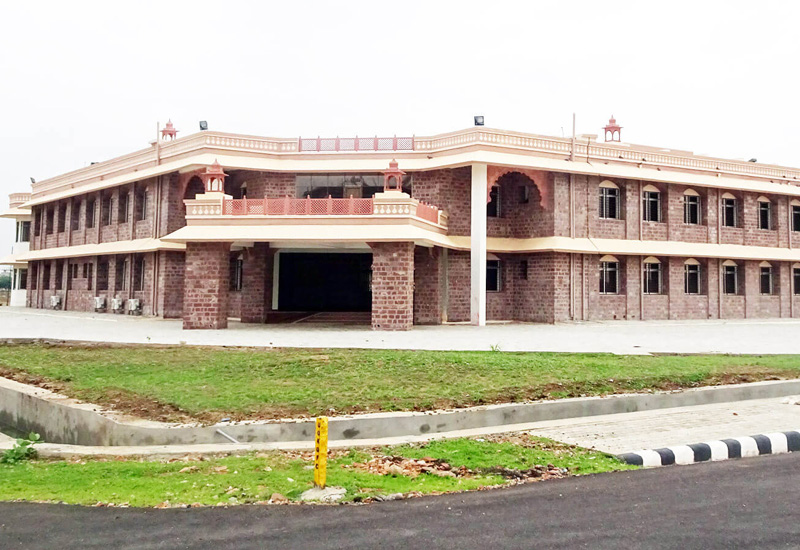
Ph.D. in Urdu from University of Kota: A Complete Professional Guide
Introduction about Ph.D. in Urdu at University of Kota
Embarking on a doctoral journey in Urdu at the prestigious University of Kota opens doors to advanced scholarship, cultural preservation, and leadership in academia and beyond. Designed for seasoned professionals and scholars, the program blends rigorous research methodology with deep literary analysis, empowering candidates to become thought‑leaders in Urdu literature, linguistics, and cultural studies.
Eligibility Criteria for Ph.D. in Urdu at University of Kota
Prospective candidates must satisfy the following minimum requirements:
- A master’s degree in Urdu, Linguistics, Literature, or a closely related field from a recognized university with at least 55% aggregate (or 5.5 CGPA on a 10‑point scale).
- Proof of research competence demonstrated through published papers, conference presentations, or a well‑crafted research proposal.
- For candidates with an equivalent foreign degree, the University of Kota requires a certified equivalence certificate from the Ministry of Education.
- Applicants must be under the age of 45 years, though age relaxations apply for SC/ST/PwD categories as per university policy.
Entrance Exam for Ph.D. in Urdu at University of Kota
The University of Kota conducts a two‑stage entrance assessment:
- Written Test – 100 multiple‑choice and short‑answer questions covering Urdu literature, linguistics, research methodology, and critical theory. The test duration is 2 hours.
- Interview & Presentation – Candidates present a 15‑minute research proposal followed by a panel interview to gauge originality, feasibility, and scholarly depth.
Preparation resources include past papers, recommended reading lists, and workshops organized by the Department of Urdu.
Fee Structure for Ph.D. in Urdu at University of Kota
The fee schedule is transparent and designed to support scholars from diverse economic backgrounds.
| Component | Amount (INR) |
|---|---|
| Application Processing Fee | 2,500 |
| Annual Tuition Fee | 22,000 |
| Laboratory & Library Access | 3,000 |
| Examination & Evaluation Charges | 1,500 |
| Miscellaneous (Printing, Certification) | 1,000 |
| Total Approx. Cost (3‑Year Program) | 84,000 |
Note: Scholarships, fellowships, and fee waivers are available for meritorious candidates and those from economically weaker sections.
Admission Process for Ph.D. in Urdu at University of Kota
The streamlined admission workflow ensures a fair and timely selection:
- Online Application – Submit the completed form on the university portal along with scanned copies of academic transcripts and a research proposal.
- Document Verification – The admissions office validates the authenticity of the submitted documents.
- Entrance Examination – Eligible candidates receive a call‑letter for the written test and interview schedule.
- Result Declaration & Counseling – Successful aspirants are invited for counseling where they finalize the research supervisor and registration formalities.
- Enrollment & Fee Payment – Candidates complete fee payment through the university’s secure portal and receive a registration number.
Ph.D. Subjects and Specializations in Urdu at University of Kota
University of Kota offers a spectrum of specialization tracks that align with contemporary scholarly demands:
- Classical Urdu Poetry and Prose
- Modern Urdu Literature and Post‑colonial Studies
- Urdu Linguistics and Sociolinguistics
- Translation Studies (Urdu ↔ English, Urdu ↔ Regional Languages)
- Digital Humanities and Urdu Textual Analysis
- Urdu Media Studies and Journalism
Research Areas in Urdu at University of Kota
Faculty mentors guide doctoral candidates across interdisciplinary research frontiers, including:
- Comparative literature between Urdu and Persian, Arabic, and South Asian languages.
- Gender studies within Urdu poetry and fiction.
- Impact of digital platforms on Urdu language preservation.
- Historical evolution of Urdu script and orthography.
- Socio‑political narratives in contemporary Urdu journalism.
- Revitalization of regional dialects through Urdu literary forms.
Documents Required for Ph.D. in Urdu at University of Kota
The following documents must be uploaded during the online application stage:
| Document | Format / Remarks |
|---|---|
| Completed Application Form | PDF, signed electronically |
| Academic Transcripts (M.A. & B.A.) | Official scanned copies, sealed |
| Research Proposal (max 2,000 words) | PDF, includes objectives, methodology, bibliography |
| Curriculum Vitae | Chronological, highlighting publications |
| Proof of Identity (Aadhaar / Passport) | Front and back copies |
| Category Certificate (if applicable) | SC/ST/PwD certificates |
| Letter of Recommendation (2) | From academic supervisors or industry experts |
University of Kota Ph.D. Syllabus for Urdu
The doctoral syllabus is structured into three phases:
- Core Modules (Year 1) – Research methodology, advanced literary theory, linguistic analysis, and ethics in scholarship.
- Specialization Courses (Year 2) – Electives aligned with chosen research area, such as Digital Textuality, Comparative Poetics, or Media Studies.
- Thesis & Publication (Year 3) – Original research, peer‑reviewed journal articles, and final dissertation defense.
Each module includes seminars, workshops, and fieldwork components to foster a holistic research environment.
How To Apply for Ph.D. in Urdu at University of Kota
Follow these step‑by‑step instructions to submit a successful application:
- Visit the official University of Kota Ph.D. admissions portal and create a new user account.
- Fill in personal, academic, and contact details accurately.
- Upload the required documents (refer to the “Documents Required” table).
- Enter a concise yet compelling research proposal – this is a critical factor for selection.
- Pay the non‑refundable application fee of INR 2,500 via the integrated payment gateway.
- Submit the form and note the generated application ID for future correspondence.
- Monitor your email for the entrance exam invitation and subsequent interview schedule.
Need professional assistance? Explore our PhD Admission Assistance service for expert guidance through every checkpoint.
Career Scope and Job Opportunities After Ph.D. in Urdu from University of Kota
A doctorate in Urdu equips you with scholarly depth and analytical prowess, opening pathways such as:
- University faculty positions (Assistant/Associate Professor, Department Head).
- Research fellowships at national and international cultural institutes.
- Editorial roles in literary journals, publishing houses, and media houses.
- Policy advisory for language preservation and cultural heritage agencies.
- Content development and translation management for global tech firms.
- Independent consultancy for NGOs focusing on literacy and cultural programs.
The demand for Urdu scholars is rising in academia, digital content creation, and government sectors, ensuring a rewarding career trajectory.
Scholarship for Ph.D. in Urdu at University of Kota
University of Kota offers a variety of merit‑based and need‑based financial support schemes:
- UGC Junior Research Fellowship (JRF) – Covers tuition, stipend, and research expenses.
- University Merit Scholarship – Full tuition waiver for candidates with a first‑class master’s degree.
- State Government Women Scholars Scheme – Additional stipend for female Ph.D. candidates.
- Corporate Sponsored Fellowships – Partnerships with cultural foundations and publishing houses.
Applicants can also benefit from our Editing and Proofreading Services to polish research manuscripts, increasing the likelihood of securing external grants.
FAQs Regarding Ph.D. in Urdu at University of Kota
- What is the minimum duration to complete the Ph.D. in Urdu?
- The program is structured for a minimum of three years, extendable up to five years based on research progress and supervisor approval.
- Can I pursue the Ph.D. part‑time while working?
- Yes, University of Kota offers a part‑time option for working professionals, with flexible class schedules and extended deadlines for coursework.
- Is prior teaching experience required?
- No, teaching experience is not mandatory, but it enhances the profile during the admission interview.
- How many publications are expected before thesis submission?
- While there is no strict quota, the university recommends at least two peer‑reviewed articles or conference papers to demonstrate research competence. <dt








