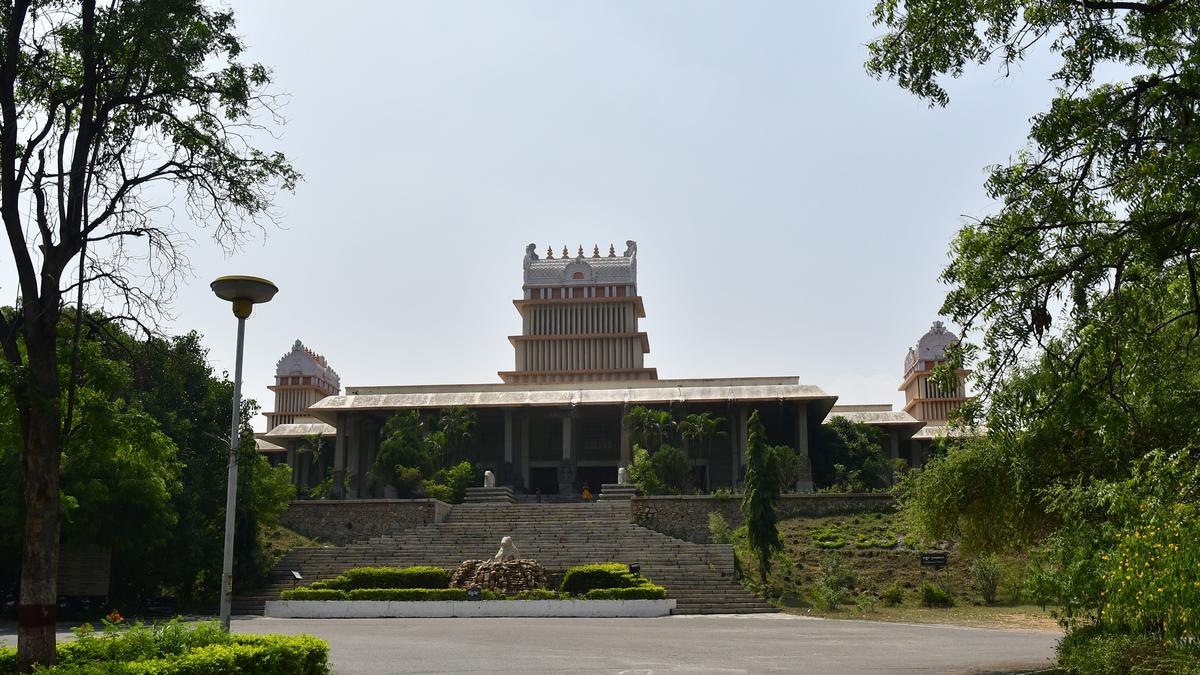
Introduction about Ph.D. in Visual Arts at Kannada University
Embarking on a doctoral journey in Visual Arts at Kannada University opens the door to cutting‑edge research, interdisciplinary collaboration, and a platform to shape the future of artistic expression. This program is meticulously designed for professionals who aspire to blend academic rigor with creative innovation, fostering leaders who can influence both academia and the cultural industry.
Ph.D Admission 2026-2027 & Writing Support Services by Shiksha Research
Eligibility Criteria for Ph.D. in Visual Arts at Kannada University
- Master’s degree (M.A./M.F.A.) in Visual Arts or a closely related discipline with a minimum of 55% aggregate.
- Cleared Karnataka Post Graduate Entrance Test (PGSET) or equivalent national level test.
- Proficiency in English and Kannada (both written and spoken) for research communication.
- Valid GATE/NET qualification may be considered for exemption from entrance exam.
Entrance Exam for Ph.D. in Visual Arts at Kannada University
The entrance assessment comprises a written test focusing on art theory, research methodology, and critical analysis, followed by a personal interview. Candidates are evaluated on:
- Conceptual clarity in visual arts.
- Research proposal relevance and feasibility.
- Academic track record and publications (if any).
Fee Structure for Ph.D. in Visual Arts at Kannada University
| Component | Annual Fee (INR) |
|---|---|
| Tuition & Laboratory Fees | 45,000 |
| Library & Resource Center Access | 5,000 |
| Examination & Evaluation Charges | 10,000 |
| Miscellaneous (Student Activities, Workshops) | 5,000 |
| Total Approximate Cost | 65,000 |
Admission Process for Ph.D. in Visual Arts at Kannada University
- Online application submission through the university portal.
- Upload of academic transcripts, research proposal, and two letters of recommendation.
- Payment of application fee (₹2,000).
- Qualifying the entrance exam and interview.
- Final selection based on merit, research potential, and interview performance.
Ph.D. Subjects and Specializations in Visual Arts at Kannada University
Students can choose from a spectrum of specializations, including:
- Contemporary Painting and Sculpture
- Digital Media & Visual Communication
- Art History and Criticism
- Traditional Crafts and Folk Art
- Performance Arts & Installation
Research Areas in Visual Arts at Kannada University
Key research domains encourage interdisciplinary exploration:
- Impact of technology on visual narratives.
- Preservation of indigenous art forms.
- Visual storytelling in social change.
- Art therapy and community well-being.
- Cross‑cultural visual aesthetics.
Documents Required for Ph.D. in Visual Arts at Kannada University
| Document | Details |
|---|---|
| Academic Transcripts | Original mark sheets of Bachelor's and Master's degrees. |
| Research Proposal | 2‑3 page outline of intended research topic. |
| Identity Proof | Aadhaar card / Passport. |
| Entrance Exam Scorecard | PGSET / GATE / NET certificate. |
| Recommendation Letters | Two letters from academic or professional referees. |
Kannada University Ph.D. Syllabus for Visual Arts
The syllabus is structured into two phases: Coursework and Research.
- Phase I – Coursework (12 months): Research methodology, advanced art theory, digital tools, ethics in research.
- Phase II – Dissertation (24‑36 months): Original research, fieldwork, data analysis, thesis writing, defense.
How To Apply for Ph.D. in Visual Arts at Kannada University
Follow these streamlined steps to submit a successful application:
- Visit the official university admissions portal.
- Register with a valid email address and create a password.
- Complete the online application form, ensuring all fields are accurately filled.
- Upload scanned copies of the required documents (see table above).
- Pay the non‑refundable application fee using net banking or credit card.
- Submit and note the application reference number for future correspondence.
Career Scope and Job Opportunities After Ph.D. in Visual Arts from Kannada University
Graduates emerge as thought leaders ready to occupy elite positions such as:
- Senior Research Fellow / Professor in universities and art institutes.
- Curator or Director in museums, galleries, and cultural foundations.
- Creative Director in advertising, media, and entertainment sectors.
- Policy Advisor for cultural ministries and NGOs.
- Independent Art Consultant and Author.
Scholarship for Ph.D. in Visual Arts at Kannada University
Merit‑based scholarships covering tuition and a monthly stipend are awarded to top 20% of candidates. Additional financial aid includes:
- Research Grants from the Karnataka Government.
- Fellowships from the Indian Council of Cultural Research (ICCR).
- Corporate sponsorships for projects aligning with industry innovation.
FAQs Regarding Ph.D. in Visual Arts at Kannada University
- What is the minimum duration to complete the Ph.D.?
- Typically 3 years, extendable up to 5 years based on research progress.
- Can I pursue the degree part‑time while working?
- Yes, the university offers a flexible part‑time mode for working professionals.
- Is prior publication mandatory?
- No, but having at least one peer‑reviewed article strengthens the application.
- Are there language requirements?
- Proficiency in English is essential; Kannada is advantageous for regional research.
- How can I get assistance with my dissertation?
- Our institute provides Editing and Proofreading Services and PhD Topic Selection and Proposal Assistance to ensure your work meets international standards.
- What support is available for admissions?
- We offer PhD Admission Assistance throughout the application cycle.
- Do you help with post‑doctoral recognition?
- Yes, explore our Honorary Doctorate Programs for distinguished contributions.
- Can you aid in publishing my research?
- Our Research Publication Support service connects you with reputed journals.
- Is patent filing an option for my artistic inventions?
- Absolutely. Benefit from our Patent Filing and Support Services for innovative visual art technologies.








