
Ph.D. in English takes approximately 5-7 years to accomplish, depending on the program and individual progress. This postgraduate degree emphasizes in-depth study of literature, language, and critical theory. Students conduct substantial research, culminating in a PhD dissertation that adds novel knowledge to the discipline. The curriculum frequently includes coursework, extensive tests, and teaching obligations. Specializations may include medieval literature, postcolonial studies, and digital humanities. Graduates get opportunities for positions in academia, publishing, and advanced research. The degree needs a solid basis in literary interpretation, exceptional writing skills, and the capacity to perform independent scholarly research.
.png)
Charotar University of Science & Technology
Charotar University of Science & Technology Admission Open

Ph.D. in Management
Ph.D. in Management typically requires 4-6 years to complete, depending on the university and the student's progress. This postgraduate degree program focuses on enhancing awareness of manageme...
Ph.D. in Management
×Ph.D. in Management typically requires 4-6 years to complete, depending on the university and the student's progress. This postgraduate degree program focuses on enhancing awareness of management theory, research methods, and organizational behavior. Students pursue demanding coursework, thorough tests, and original research, culminating in a PhD dissertation. Strategic management, leadership, organizational psychology, and advanced statistics are common themes in the curriculum. Graduates are equipped for jobs in academia, research institutions, or high-level consultancy positions. The curriculum demands a good academic background, which typically includes a master's degree, and stresses critical thinking, analytical skills, and the ability to contribute new information to the field of management.
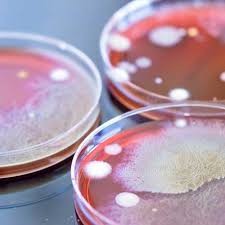
Ph.D. in Microbiology
Ph.D. in Microbiology usually takes 4-6 years to complete which involves extensive research on microorganisms, their interactions, and their impact on various ecosystems. The academic program inclu...
Ph.D. in Microbiology
×Ph.D. in Microbiology usually takes 4-6 years to complete which involves extensive research on microorganisms, their interactions, and their impact on various ecosystems. The academic program includes advanced coursework, laboratory research, and a dissertation. Students research bacterial genetics, virology, immunology, and microbial ecology. They acquire experts in cutting-edge procedures such as gene sequencing, bioinformatics, and microscopy. This degree prepares graduates for professions in academia, biotechnology, pharmaceuticals, and public health, granting them the skills they need to address global issues such as antibiotic resistance and new infectious diseases.

Ph.D. in Nursing
The Doctor of Philosophy (Ph.D.) in Nursing is the highest academic degree in the nursing sector, taking around 4-5 years to complete. This research-focused curriculum develops nurses to work in ac...
Ph.D. in Nursing
×The Doctor of Philosophy (Ph.D.) in Nursing is the highest academic degree in the nursing sector, taking around 4-5 years to complete. This research-focused curriculum develops nurses to work in academia, research, and advanced clinical practice. Nursing theory, research methodologies, statistics, and a specialized area of study are all encompassed in the coursework. Ph.D. candidates prepare an original dissertation that provides new information to the nursing field. Graduates of Ph.D. in Nursing schools are prepared to conduct nursing research, shape healthcare policy, educate future nurses, and drive clinical innovation. The degree qualifies for professions such as nurse scientist, professor, head of nursing research, and chief nursing officer.
Ph.D. in Management
Ph.D. in Management typically requires 4-6 years to complete, depending on the university and the student's progress. This postgraduate degree program focuses on enhancing awareness of manageme...
Ph.D. in Management
×Ph.D. in Management typically requires 4-6 years to complete, depending on the university and the student's progress. This postgraduate degree program focuses on enhancing awareness of management theory, research methods, and organizational behavior. Students pursue demanding coursework, thorough tests, and original research, culminating in a PhD dissertation. Strategic management, leadership, organizational psychology, and advanced statistics are common themes in the curriculum. Graduates are equipped for jobs in academia, research institutions, or high-level consultancy positions. The curriculum demands a good academic background, which typically includes a master's degree, and stresses critical thinking, analytical skills, and the ability to contribute new information to the field of management.
Ph.D. in Nanobiotechnology
Ph.D. in Nanobiotechnology typically spans 3 - 5 years and combines the principles of nanotechnology and biotechnology to explore innovative solutions for biomedical applications. This i...
Ph.D. in Nanobiotechnology
×Ph.D. in Nanobiotechnology typically spans 3 - 5 years and combines the principles of nanotechnology and biotechnology to explore innovative solutions for biomedical applications. This interdisciplinary program covers areas such as nanoscale materials, drug delivery systems, biosensors, and biomolecular engineering. Students engage in cutting-edge research, utilizing techniques like nanofabrication, imaging, and molecular biology. Coursework may include advanced topics in nanotechnology, molecular biology, and bioinformatics, alongside hands-on laboratory work. Graduates are prepared for careers in academia, research institutions, and industry sectors focused on pharmaceuticals, diagnostics, and environmental applications, contributing to advancements in healthcare and materials science.

Ph.D. in Artificial Intelligence
With an emphasis on cutting-edge research in machine learning, deep learning, natural language processing, computer vision, and robotics, a Ph.D. in Artificial Intelligence (AI) normally takes 4-6&...
Ph.D. in Artificial Intelligence
×With an emphasis on cutting-edge research in machine learning, deep learning, natural language processing, computer vision, and robotics, a Ph.D. in Artificial Intelligence (AI) normally takes 4-6 years to finish. The curriculum blends in-depth practical research with fundamental courses in AI theory, algorithms, and data science, allowing students to work on innovative projects and offer novel insights into the field. There is a thorough examination of subjects including neural networks, reinforcement learning, and ethical AI. A solid foundation in computer science, mathematics, or a similar discipline is typically required for admission. Graduates are equipped for jobs in research, academia, and executive roles in tech firms and AI-related sectors.

Ph.D. in Marketing Management
With an emphasis on advanced research in fields like consumer behavior, brand management, digital marketing, marketing strategy, and marketing analytics, a Ph.D. in marketing management normally ta...
Ph.D. in Marketing Management
×With an emphasis on advanced research in fields like consumer behavior, brand management, digital marketing, marketing strategy, and marketing analytics, a Ph.D. in marketing management normally takes 4-6 years to finish. With a focus on doing unique research for the dissertation, the curriculum blends demanding courses in statistical analysis, marketing theory, and research methodology. Students contribute to the field's academic and practical expertise while critically interacting with today's marketing concerns. Strong backgrounds in business, marketing, or allied fields are typically required for admission, and graduates are equipped for positions in academia, research, consulting, and marketing leadership.

Ph.D. in Banking Management
A Ph.D. in Banking Management is a research-oriented program that focuses on bank and financial institution management, regulation, and financial performance. The curriculum typically lasts 3-5&nbs...
Ph.D. in Banking Management
×A Ph.D. in Banking Management is a research-oriented program that focuses on bank and financial institution management, regulation, and financial performance. The curriculum typically lasts 3-5 years and covers topics like as financial markets, risk management, banking legislation, corporate governance, and banking technologies. Students do advanced research to investigate issues such as financial stability, customer behavior, and innovation in banking services. Admission typically needs a Master's degree in Business Administration, Finance, or a related subject. Graduates work in academics, financial consultancy, policymaking, and senior management positions in banks, investment firms, and regulatory agencies.

Ph.D. in Applied Mathematics
Typically lasting 4-5 years, a Ph.D. program in applied mathematics focuses on applying sophisticated mathematical methods to address practical issues. This research-intensive degree blends or...
Ph.D. in Applied Mathematics
×Typically lasting 4-5 years, a Ph.D. program in applied mathematics focuses on applying sophisticated mathematical methods to address practical issues. This research-intensive degree blends original research with demanding training in subjects including mathematical modeling, differential equations, optimization, and numerical analysis. Students frequently work in interdisciplinary teams, bringing mathematical techniques to disciplines like as economics, biology, engineering, and physics.Graduates are ready for jobs in research institutes, academia, or sectors including data science, technology, and finance. The program places a strong emphasis on computational techniques, problem-solving abilities, and the capacity to convert difficult mathematical ideas into useful applications.
Ph.D. in Applied Physics
Ph.D. in Applied Physics is a research-intensive program that teaches the practical application of physics principles to real-world problems in a variety of sectors and scientific disciplines. The...
Ph.D. in Applied Physics
×Ph.D. in Applied Physics is a research-intensive program that teaches the practical application of physics principles to real-world problems in a variety of sectors and scientific disciplines. The program typically lasts three to five years and covers advanced topics like material science, optics, nanotechnology, condensed matter physics, computational physics, quantum mechanics, and energy systems. Students do original research to create new technologies, improve existing systems, and use theoretical physics to solve real problems in fields such as electronics, telecommunications, healthcare, and energy. The program covers advanced physics topics, research technique, and culminates in a dissertation. Graduates frequently pursue positions in academia, research organizations, technological development, or industry including electronics, aerospace, and energy.

Ph.D. in Machine Learning
Ph.D. in Machine Learning is a graduate research degree that focuses on creating algorithms and models that allow computers to learn from data and make predictions or judgments. The program, which...
Ph.D. in Machine Learning
×Ph.D. in Machine Learning is a graduate research degree that focuses on creating algorithms and models that allow computers to learn from data and make predictions or judgments. The program, which typically takes 3-5 years to finish, covers advanced mathematics, statistics, data mining, neural networks, and deep learning courses, as well as considerable research. Students work on projects involving supervised and unsupervised learning, reinforcement learning, and artificial intelligence applications. Graduates frequently work in academia, research labs, or technology firms, contributing to advances in artificial intelligence, data science, and automation in fields such as healthcare, finance, and robotics.
Ph.D. in Data Science
Ph.D. in Data Science is a graduate research degree that focuses on data analysis, machine learning, artificial intelligence, and statistical methods for solving challenging real-world problems. Th...
Ph.D. in Data Science
×Ph.D. in Data Science is a graduate research degree that focuses on data analysis, machine learning, artificial intelligence, and statistical methods for solving challenging real-world problems. The program typically lasts 3-5 years and includes training in big data, data mining, predictive analytics, and programming as well as hands-on research. Students gain skills in building algorithms, managing massive datasets, and implementing data-driven solutions in fields such as healthcare, finance, and technology. The curriculum finishes with a dissertation that contributes novel research to the field. Graduates frequently work in academia, research organizations, and industry, driving advances in data science and AI technology.

Ph.D. in Cloud Computing
Ph.D. in Cloud Computing is a graduate research program that focuses on the design, development, and optimization of cloud-based systems and services. The curriculum typically lasts 3-5 years and i...
Ph.D. in Cloud Computing
×Ph.D. in Cloud Computing is a graduate research program that focuses on the design, development, and optimization of cloud-based systems and services. The curriculum typically lasts 3-5 years and includes training on distributed computing, virtualization, cloud architecture, data security, and resource management, as well as extensive research. Students examine scalable infrastructure, cloud security, data privacy, and edge computing, developing new storage, processing, and resource allocation solutions. Graduates frequently work in academia, research, or technology firms, helping to progress cloud technology by improving efficiency, scalability, and security in data management and computing services for a wide range of industries.

Ph.D. in Organic Chemistry
Ph.D. in Organic Chemistry is a 4-6 year research program that requires a bachelor's or master's degree in chemistry. It includes advanced study in organic synthesis, reaction processes, an...
Ph.D. in Organic Chemistry
×Ph.D. in Organic Chemistry is a 4-6 year research program that requires a bachelor's or master's degree in chemistry. It includes advanced study in organic synthesis, reaction processes, and spectroscopy, followed by extensive tests. The curriculum is built around unique research on themes such as drug discovery, natural product synthesis, and catalysis, which culminates in a dissertation. Students acquire practical lab experience using techniques like NMR and chromatography. Graduates frequently pursue professions in academia, pharmaceuticals, and the chemical industry as research scientists, medicinal chemists, or professors, with funding available through teaching assistantships, research grants, and fellowships.

Ph.D. in Finance and Accounting
Ph.D. in Finance and Accounting is a research-based program that aims to give advanced knowledge and skill in financial theory, accounting processes, and their applications in real-world business s...
Ph.D. in Finance and Accounting
×Ph.D. in Finance and Accounting is a research-based program that aims to give advanced knowledge and skill in financial theory, accounting processes, and their applications in real-world business settings. The program typically lasts 3-5 years and covers topics such as financial markets, corporate finance, financial modeling, accounting theory, auditing, taxation, financial reporting, and international finance. Students conduct original research on topics such as financial regulation, risk management, valuation, behavioral finance, and the role of accounting in decision-making. Graduates frequently pursue professions in academia, financial research, consulting, investment banking, corporate finance, or government regulatory agencies. Admission typically needs a Master's degree in finance, accounting, economics, or a related discipline, as well as good mathematical and research skills.

Ph.D. in Industrial Engineering
Ph.D. in Industrial Engineering is a research-focused program that delves into optimizing complex systems, processes, and organizations. The program typically spans 3 - 5 years, depending on...
Ph.D. in Industrial Engineering
×Ph.D. in Industrial Engineering is a research-focused program that delves into optimizing complex systems, processes, and organizations. The program typically spans 3 - 5 years, depending on the student's pace and research topic. It emphasizes areas such as operations research, supply chain management, manufacturing systems, human factors, and quality control. Students engage in advanced coursework, followed by independent research under the guidance of faculty experts. The goal is to contribute new knowledge to the field, often with applications in industries like manufacturing, logistics, healthcare, and technology. Graduates often pursue careers in academia, industry, or consulting.

Ph.D. in Paramedical Sciences
Ph.D. in Paramedical Sciences is a research-oriented program designed for individuals seeking to advance their knowledge and expertise in paramedical fields, such as medical laboratory technology,...
Ph.D. in Paramedical Sciences
×Ph.D. in Paramedical Sciences is a research-oriented program designed for individuals seeking to advance their knowledge and expertise in paramedical fields, such as medical laboratory technology, radiology, physiotherapy, nursing, and emergency medical services. The course duration typically spans 3 -5 years, depending on the university and research progress. The program involves in-depth studies on clinical practices, healthcare management, and the development of new medical techniques. Candidates are expected to conduct original research, contributing to advancements in healthcare delivery and paramedical education. A Ph.D. in this field opens opportunities in academia, clinical research, and healthcare leadership roles.

Ph.D. in Finance And Operations
Ph.D. in Finance and Operations is a research-focused program designed to equip students with advanced knowledge in financial management, quantitative analysis, and operational strategies. Th...
Ph.D. in Finance And Operations
×Ph.D. in Finance and Operations is a research-focused program designed to equip students with advanced knowledge in financial management, quantitative analysis, and operational strategies. The program typically spans 3-5 years, including coursework, comprehensive exams, and a dissertation. Students delve into areas such as financial theory, investment analysis, risk management, operations research, supply chain management, and optimization techniques. The curriculum emphasizes both theoretical foundations and practical applications, fostering expertise in solving complex financial and operational challenges. Graduates pursue careers in academia, finance, consulting, corporate strategy, and research, contributing to the fields of finance and operations management.

Ph.D. in Operations Management
Ph.D. in Operations management focuses on advanced study into the design, optimization, and administration of company operations, with a particular emphasis on supply chain management, manufacturin...
Ph.D. in Operations Management
×Ph.D. in Operations management focuses on advanced study into the design, optimization, and administration of company operations, with a particular emphasis on supply chain management, manufacturing processes, and logistics. The program typically lasts 3 to 5 years and integrates intensive instruction in quantitative methods, business strategy, and systems modeling with original research. Students learn about process optimization, inventory management, quality control, and operational sustainability. Graduates are prepared for employment in academia, research institutes, or consultancy, where they can help to improve operational efficiency, enhance corporate performance, and discover innovative solutions to complicated challenges in a variety of industries.

Ph.D. in VLSI System
Ph.D. in VLSI (Very-Large-Scale Integration) Systems focuses on the design, fabrication, and optimization of integrated circuits for modern electronic devices. The program typically spans 3 -...
Ph.D. in VLSI System
×Ph.D. in VLSI (Very-Large-Scale Integration) Systems focuses on the design, fabrication, and optimization of integrated circuits for modern electronic devices. The program typically spans 3 - 5 years and involves advanced research in areas like microelectronics, semiconductor technology, system-on-chip (SoC) design, digital signal processing, and circuit design methodologies. Students engage in hands-on research, developing novel techniques for improving chip performance, power efficiency, and miniaturization. The curriculum includes specialized coursework in circuit design, semiconductor physics, and VLSI fabrication processes, alongside opportunities for research collaboration with industry leaders. Graduates contribute to innovations in computing, communications, and embedded systems.

Ph.D. in Enzymology
A Ph.D. in Enzymology is typically a 4-6 year program that provides advanced training in the study of the structure, function, and applications of enzymes. Protein chemistry, catalysis, enzyme kine...
Ph.D. in Enzymology
×A Ph.D. in Enzymology is typically a 4-6 year program that provides advanced training in the study of the structure, function, and applications of enzymes. Protein chemistry, catalysis, enzyme kinetics, bioinformatics, and the engineering of enzymes for industrial, medicinal, and biotechnological applications are among the subjects covered in the curriculum. Students carry out original research to advance the scholarly understanding of enzyme mechanisms, the creation of new enzymatic processes, and the application of enzymes as industrial biocatalysts or therapeutic agents. They frequently work in conjunction with biochemistry labs, pharmaceutical companies, or biotechnology firms. Graduates of this program are equipped for professions in academia, industrial biotechnology, pharmaceutical research and development, environmental remediation, and regulatory affairs, where they can use their enzymology skills to enhance product development, expand scientific understanding, and address global challenges in areas like healthcare, sustainable manufacturing, and environmental protection.
POPULAR COURSES
(D.ED(TCH))
A.N.M.
Acharya - Navyavyakarna
Acharya - Phalita Jyotisha
Acharya - Sanskrit Sahitya
Acharya - Siddhanta Jyotisha
Adobe Photoshop
Advance Certificate Course in Beauty Therapy
Advance Certificate Course in Cosmetology
Advance Certificate Course in Hair Dressing
Advance Certificate Course in Makeup Artistry
Advance certificate Course in Nail Technology
Advance Diploma in Anesthesia Technology
Advance Diploma In Child Guidance And Counselling
Advance Diploma in Dialysis Technology
Advance Diploma in Disciples India
Advance Diploma in Fashion Design & Technology
Advance Diploma in Industrial Safety
Advance Diploma In Insurance Sales
Advance Diploma in Interior Designing
Advance Diploma in Journalism & Mass Communication
Advance Diploma in Medical Lab Technology
Advance Diploma in Operation Theatre Technology
Advance Diploma in Radiology & Imaging Technology
Advance Diploma of Proficiency in French
Advance Diploma of Proficiency in German
Advance Diploma of Proficiency in Russian
Advanced Certificate in Medical Microbiology Laboratory Technology (ACMMLT)
Advanced Certified Software Developer
Advanced Diploma in 3D Printing Technology
Advanced Diploma in Animation
Advanced Diploma in Aviation, Hospitality and Tourism
Advanced Diploma in Computer Application
Advanced Diploma in Computer Software, System Analysis & Application
Advanced Diploma in Data Science
Advanced Diploma in Hardware And Networking
Advanced Diploma in Information Technology
Advanced Diploma in Machine Learning
Advanced Diploma in Multimedia Programming
Advanced Diploma in Networking
Advanced Diploma in Sound Recording Technology
Advanced Diploma in Textile Design
Advanced Diploma in Vastu and Jyotish
Agriculture & Allied Services
Agriculture & Horticulture
Agriculture & Live Stock Production
Agriculture Technology
AHDP Diploma In Animal Husbandry Program
Arogyamitra
Artificial Intelligence And Machine Learning
Automobile Technology
B,Com. in Computer Application
B. Sc. Hons. in Anaesthesia & Operation Theatre Technology
B. Sc. Hons. in Emergency Medical Technology
B. Sc. Hons.in Medical Laboratory Technology
B. Sc. in Hospitality and Tourism Management
B. Tech. in Fisheries Engineering
B. Tech. in Leather technology
B.A. General
B.A. B.Ed.
Popular Stream
State
Andaman and Nicobar Island (UT)
Andaman and Nicobar Islands
Andhra Pradesh
Arunachal Pradesh
Assam
Bihar
Chandigarh
Chandigarh (UT)
Chhattisgarh
Dadra and Nagar
Dadra and Nagar Haveli
Dadra and Nagar Haveli (UT)
Daman and Diu
Daman and Diu (UT)
Delhi
Delhi (NCT)
Donets'k
Goa
Gujarat
Gujarat
Haryana
Himachal Pradesh
Jammu and Kashmir
Jammu and Kashmir(UT)
Jharkhand
jjj
Karnataka
Kerala
Ladakh(UT)
Lakshadweep
LAKSHADWEEP (UT)
Madhya Pradesh
Maharashtra
Manipur
Meghalaya
Mizoram
Nagaland
Niigata
Odisha
Puducherry