
PhD in Supply Chain Management normally takes 4-5 years to complete and is aimed for individuals who want to contribute advanced research to the area. This program aims to develop expertise in supply chain strategy, logistics, operations management, and data analytics. Students pursue tough courses, perform unique research, and finish a dissertation. International supply chain optimization, logistical sustainability, risk management, and future supply chain technologies such as blockchain and AI are all important topics of study. Graduates are prepared to pursue careers in academia, research organizations, or high-level roles in industry, where they may use their advanced expertise to address complex supply chain difficulties and promote innovation in the field.

Indian Institute of Space Science and Technology
Indian Institute of Space Science and Technology Admission Open

Ph.D. in Chemistry
Ph.D. in Chemistry takes around 4-6 years to complete, depending on the research project and institution. This doctoral program emphasizes distinctive research in certain areas of chemistry, such a...
Ph.D. in Chemistry
×Ph.D. in Chemistry takes around 4-6 years to complete, depending on the research project and institution. This doctoral program emphasizes distinctive research in certain areas of chemistry, such as organic, inorganic, physical, or analytical chemistry. Students pursue more advanced courses, perform substantial laboratory research, and develop a dissertation based on their findings. The program includes generating hypotheses, designing experiments, analyzing data, and bringing new knowledge to the field. Ph.D. candidates frequently interact with other experts, give presentation at conferences, and publish articles in scientific publications. This degree equips graduates with job opportunities in academia, industry research, government laboratories, and other scientific fields that require advanced chemical skills.

Ph.D. in Mathematics
Ph.D. in Mathematics is a terminal degree that usually requires 4-7 years to accomplish after acquiring a bachelor's degree. The curriculum comprises advanced coursework in pure and appli...
Ph.D. in Mathematics
×Ph.D. in Mathematics is a terminal degree that usually requires 4-7 years to accomplish after acquiring a bachelor's degree. The curriculum comprises advanced coursework in pure and applied mathematics, as well as independent research that leads to the completion of a doctorate research. PhD students acquire proficiency in abstract algebra, real and complex analysis, topology, and discrete mathematics. The degree prepares graduates for academic careers as university professors and researchers, as well as jobs in industries such as banking, technology, and government that require strong quantitative and problem-solving abilities.

Ph.D. in Physics
Ph.D. in Physics generally requires 5-7 years to complete, and it comprises advanced coursework, independent research, and a doctorate dissertation. Students explore the fundamental concepts...
Ph.D. in Physics
×Ph.D. in Physics generally requires 5-7 years to complete, and it comprises advanced coursework, independent research, and a doctorate dissertation. Students explore the fundamental concepts of matter and energy, and often specialize in quantum mechanics, astrophysics, or particle physics. The program fosters critical thinking, problem-solving skills, and knowledge in experimental or theoretical physics. Graduates are prepared to work in academia, research institutions, or industry, contributing to innovative scientific discoveries and technical developments. This challenging degree requires dedication, intellectual curiosity, and the ability to push the limits of human knowledge of the physical cosmos.

Ph.D. in Geology
Ph.D. in Geology typically requires 3 - 5 years of study beyond a master’s degree and focuses on advanced research in various geological sub-disciplines, including mineralogy, petrology,...
Ph.D. in Geology
×Ph.D. in Geology typically requires 3 - 5 years of study beyond a master’s degree and focuses on advanced research in various geological sub-disciplines, including mineralogy, petrology, paleontology, and environmental geology. The program generally involves coursework in advanced geology topics, research methodology, and statistics, alongside independent research culminating in a dissertation that contributes original knowledge to the field. Students may engage in fieldwork, laboratory analyses, and interdisciplinary studies, collaborating with geoscientists to address issues like natural resource management, geological hazards, and climate change. A strong background in mathematics and sciences is essential for success in this rigorous program.
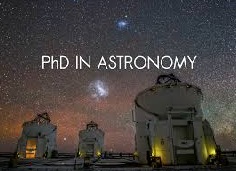
Ph.D. in Astrophysics
Studying celestial bodies, cosmic phenomena, and the fundamental physics of the cosmos is the focus of a Ph.D. program in astrophysics, which is research-oriented. The curriculum, which usually las...
Ph.D. in Astrophysics
×Studying celestial bodies, cosmic phenomena, and the fundamental physics of the cosmos is the focus of a Ph.D. program in astrophysics, which is research-oriented. The curriculum, which usually lasts 3-5 years, blends theoretical work with practical research in fields such as high-energy astrophysics, galaxy formation, black holes, cosmology, and stellar evolution. Students explore the basic forces of nature using sophisticated computational techniques, observatories, and simulations. A master's degree in physics or a similar discipline is often required for admission. Program graduates go on to work in academia, research facilities, and space organizations, furthering our knowledge of the cosmos overall.
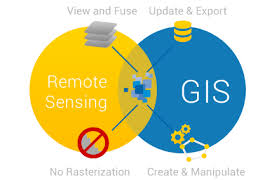
Ph.D. in Remote Sensing & GIS Applications
Ph.D. in Remote Sensing and GIS Applications is a research-oriented program that uses geographic information systems (GIS) and remote sensing technology to examine and analyze spatial data. The pro...
Ph.D. in Remote Sensing & GIS Applications
×Ph.D. in Remote Sensing and GIS Applications is a research-oriented program that uses geographic information systems (GIS) and remote sensing technology to examine and analyze spatial data. The program typically lasts three to five years and covers topics such as satellite imagery analysis, spatial data modeling, environmental monitoring, urban planning, and natural resource management. Students undertake innovative research on remote sensing and GIS tools for use in agriculture, climate change, disaster management, and land-use planning. The curriculum covers coursework in data analysis, geospatial technology, and research methods, which culminates in a dissertation. Graduates frequently pursue positions in academia, environmental research, government organizations, or enterprises that use geospatial data.

Ph.D. in Aerospace Engineering
Ph.D. in Aerospace Engineering is a rigorous research degree that focuses on the advancement of technology and knowledge in fields like as aerodynamics, propulsion, space systems, and aerospace mat...
Ph.D. in Aerospace Engineering
×Ph.D. in Aerospace Engineering is a rigorous research degree that focuses on the advancement of technology and knowledge in fields like as aerodynamics, propulsion, space systems, and aerospace materials. The program typically lasts 4-6 years and includes advanced education in fluid dynamics, control systems, structural mechanics, and thermodynamics, as well as extensive research. Students work on original projects, generally in spacecraft design, UAV technology, or propulsion improvements, to improve flight efficiency, safety, and sustainability. Graduates frequently seek professions in academia, aerospace research organizations, and sectors such as defense, aviation, and space exploration, which drive advancements in air and space travel technology.

Ph.D. in Space Science & Technology
Ph.D. in Space Science & Technology is a rigorous research-focused program, typically lasting 3-5 years, where scholars explore advanced topics in space systems, astrophysics, planetary science...
Ph.D. in Space Science & Technology
×Ph.D. in Space Science & Technology is a rigorous research-focused program, typically lasting 3-5 years, where scholars explore advanced topics in space systems, astrophysics, planetary science, satellite engineering, and remote sensing. This doctorate emphasizes both theoretical and applied research, often involving collaborations with research institutions, space agencies, or private aerospace firms. Candidates may work on projects ranging from satellite design to space exploration strategies and data analysis from space missions. Graduates contribute to scientific knowledge and technological advancements in space exploration and often find opportunities in academia, government space agencies, or private aerospace companies.

Ph.D. in Operations Management
Ph.D. in Operations management focuses on advanced study into the design, optimization, and administration of company operations, with a particular emphasis on supply chain management, manufacturin...
Ph.D. in Operations Management
×Ph.D. in Operations management focuses on advanced study into the design, optimization, and administration of company operations, with a particular emphasis on supply chain management, manufacturing processes, and logistics. The program typically lasts 3 to 5 years and integrates intensive instruction in quantitative methods, business strategy, and systems modeling with original research. Students learn about process optimization, inventory management, quality control, and operational sustainability. Graduates are prepared for employment in academia, research institutes, or consultancy, where they can help to improve operational efficiency, enhance corporate performance, and discover innovative solutions to complicated challenges in a variety of industries.
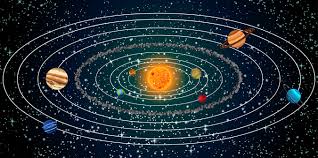
Ph.D. in Astronomy
The average completion time for a Ph.D. in Astronomy is 4 - 6 years. The curriculum includes original research leading to a dissertation in addition to rigorous training in subjects like astro...
Ph.D. in Astronomy
×The average completion time for a Ph.D. in Astronomy is 4 - 6 years. The curriculum includes original research leading to a dissertation in addition to rigorous training in subjects like astrophysics, cosmology, stellar astronomy, and planetary science. Ph.D. candidates become proficient in data analysis, scientific communication, and observational methods. Graduates are equipped for jobs in academia, research facilities, space agencies, and the business community, where they will further our knowledge of the galaxy through inventive discoveries.