
Ph.D. in architecture usually takes 3-5 years to complete, depending on the curriculum and research specialization. This postgraduate degree focuses on unique research and theoretical investigation in architectural studies. Candidates specialize in fields such as sustainable design, urban planning, architectural history, and emerging construction technologies. The curriculum often includes coursework, rigorous tests, and a dissertation that adds new understanding to the topic. Students learn advanced critical thinking, research methods, and academic writing abilities. Graduates can pursue various professions in academia, research institutions, or high-level roles within architectural firms. This degree equips students to be thought leaders and innovators in architectural theory and practice.

Sushant University
Sushant University Admission Open

Ph.D. in Commerce
The Ph.D. in Commerce is a required 4-5 year advanced research degree program that gives comprehensive training in the theory, research methodologies, and practical applications of numerous bu...
Ph.D. in Commerce
×The Ph.D. in Commerce is a required 4-5 year advanced research degree program that gives comprehensive training in the theory, research methodologies, and practical applications of numerous business and management fields. The program includes in-depth study of accounting, finance, marketing, human resources, operations, and strategy. Independent research projects, scholarly publications, and collaborations with industry and academia help students develop expertise in identifying and investigating complex business problems, designing innovative solutions, and contributing to the advancement of knowledge in the dynamic and multifaceted field of business. Graduates of this program have the opportunity to work as business researchers, consultants, policymakers, and faculty members in universities, research institutions, and major corporations.

Ph.D. in Computer Science
Ph.D. in computer science usually takes 4-6 years to complete, depending on the coursework and research progress. This advanced degree emphasizes producing unique research in a specific field...
Ph.D. in Computer Science
× Ph.D. in computer science usually takes 4-6 years to complete, depending on the coursework and research progress. This advanced degree emphasizes producing unique research in a specific field of computer science, such as artificial intelligence, cybersecurity, or algorithms. Students undergo advanced courses, take thorough tests, and produce a dissertation based on their research findings. The curriculum trains participants in critical thinking, problem solving, and innovative technology development. Graduates frequently pursue careers in academia, research institutions, or managerial positions in the technology business. A Ph.D. in Computer Science necessitates devotion, intellectual curiosity, and the capacity to bring novel information to the area.

Ph.D. in Mechanical Engineering
Ph.D. in Mechanical Engineering takes around 4-6 years to complete, depending on the university and research project. This advanced degree focuses on developing cutting-edge knowledge in fields suc...
Ph.D. in Mechanical Engineering
×Ph.D. in Mechanical Engineering takes around 4-6 years to complete, depending on the university and research project. This advanced degree focuses on developing cutting-edge knowledge in fields such as robotics, thermodynamics, fluid mechanics, materials science, and control systems. Students take challenging courses, perform unique research, and complete a PhD dissertation. The curriculum promotes problem-solving, critical thinking, and innovative abilities, preparing graduates to take on leadership roles in academia, industry, or research organizations. Ph.D. candidates usually collaborate on interdisciplinary projects, publish in peer-reviewed journals, and give presentations at conferences, all of which contribute to growth in sectors such as renewable energy, aerospace, automotive engineering, and biomedical devices.

Ph.D. in Electronics And Communication Engineering
Ph.D. in Electronics and Communication Engineering generally takes 3-5 years to complete, depending on the university and the level of the study. This advanced degree focuses the latest development...
Ph.D. in Electronics And Communication Engineering
×Ph.D. in Electronics and Communication Engineering generally takes 3-5 years to complete, depending on the university and the level of the study. This advanced degree focuses the latest developments in signal processing, wireless communications, microelectronics, and embedded systems. Students undertake challenging courses, implement original research, and write their dissertations under faculty supervision. The program promotes skills in developing complex electronic systems, creating innovative communication technologies, and addressing real-world engineering challenges. Graduates are well-prepared to work in academia, research institutions, or high-tech enterprises, helping to improve disciplines such as 5G/6G networks, IoT, artificial intelligence, and quantum computing. This degree involves strong analytical skills, creativity, and an intense passion for technological advancement.

Ph.D. in Electrical Engineering
Ph.D. in Electrical Engineering generally requires 4-6 years to complete, depending on a master's degree. This advanced degree emphasizes cutting-edge research and specific fields like signal p...
Ph.D. in Electrical Engineering
×Ph.D. in Electrical Engineering generally requires 4-6 years to complete, depending on a master's degree. This advanced degree emphasizes cutting-edge research and specific fields like signal processing, power systems, and telecommunications. Candidates take challenging courses, perform distinctive research, and defend a dissertation. Advanced mathematics, electromagnetic theory, and computer engineering are common topics in the curriculum. Graduates possess the skills for job opportunities in academia, research institutes, and high-tech business organizations. This degree desires strong analytical abilities, creativity, and tenacity. It provides opportunity to contribute to technological developments and solve complicated engineering challenges, making it a lucrative career path for those who enjoy innovation in electrical systems and technology.

Ph.D. in Supply Chain Management
PhD in Supply Chain Management normally takes 4-5 years to complete and is aimed for individuals who want to contribute advanced research to the area. This program aims to develop expertise in supp...
Ph.D. in Supply Chain Management
×PhD in Supply Chain Management normally takes 4-5 years to complete and is aimed for individuals who want to contribute advanced research to the area. This program aims to develop expertise in supply chain strategy, logistics, operations management, and data analytics. Students pursue tough courses, perform unique research, and finish a dissertation. International supply chain optimization, logistical sustainability, risk management, and future supply chain technologies such as blockchain and AI are all important topics of study. Graduates are prepared to pursue careers in academia, research organizations, or high-level roles in industry, where they may use their advanced expertise to address complex supply chain difficulties and promote innovation in the field.

Ph.D. in Management
Ph.D. in Management typically requires 4-6 years to complete, depending on the university and the student's progress. This postgraduate degree program focuses on enhancing awareness of manageme...
Ph.D. in Management
×Ph.D. in Management typically requires 4-6 years to complete, depending on the university and the student's progress. This postgraduate degree program focuses on enhancing awareness of management theory, research methods, and organizational behavior. Students pursue demanding coursework, thorough tests, and original research, culminating in a PhD dissertation. Strategic management, leadership, organizational psychology, and advanced statistics are common themes in the curriculum. Graduates are equipped for jobs in academia, research institutions, or high-level consultancy positions. The curriculum demands a good academic background, which typically includes a master's degree, and stresses critical thinking, analytical skills, and the ability to contribute new information to the field of management.

Ph.D. in Human Resource Management
Ph.D. in Human Resource Management normally takes 3-5 years to complete, depending on the institution and whether the student studies full-time or part-time. This advanced degree focuses on the gro...
Ph.D. in Human Resource Management
×Ph.D. in Human Resource Management normally takes 3-5 years to complete, depending on the institution and whether the student studies full-time or part-time. This advanced degree focuses on the growth of expertise in human resource theory, research methodology, and human capital strategy. Students undergo difficult coursework on topics such as organizational behavior, labor relations, talent management, and HR analytics. The curriculum concludes with original research and a dissertation, which contributes new knowledge to the discipline. Graduates are suitable for high-level roles in academia, research institutions, or as human resource executives in large corporations. This degree prepares students to develop HR policy, lead corporate change, and tackle difficult workforce concerns in a global environment.

Ph.D. in Chemistry
Ph.D. in Chemistry takes around 4-6 years to complete, depending on the research project and institution. This doctoral program emphasizes distinctive research in certain areas of chemistry, such a...
Ph.D. in Chemistry
×Ph.D. in Chemistry takes around 4-6 years to complete, depending on the research project and institution. This doctoral program emphasizes distinctive research in certain areas of chemistry, such as organic, inorganic, physical, or analytical chemistry. Students pursue more advanced courses, perform substantial laboratory research, and develop a dissertation based on their findings. The program includes generating hypotheses, designing experiments, analyzing data, and bringing new knowledge to the field. Ph.D. candidates frequently interact with other experts, give presentation at conferences, and publish articles in scientific publications. This degree equips graduates with job opportunities in academia, industry research, government laboratories, and other scientific fields that require advanced chemical skills.

Ph.D. in Mathematics
Ph.D. in Mathematics is a terminal degree that usually requires 4-7 years to accomplish after acquiring a bachelor's degree. The curriculum comprises advanced coursework in pure and appli...
Ph.D. in Mathematics
×Ph.D. in Mathematics is a terminal degree that usually requires 4-7 years to accomplish after acquiring a bachelor's degree. The curriculum comprises advanced coursework in pure and applied mathematics, as well as independent research that leads to the completion of a doctorate research. PhD students acquire proficiency in abstract algebra, real and complex analysis, topology, and discrete mathematics. The degree prepares graduates for academic careers as university professors and researchers, as well as jobs in industries such as banking, technology, and government that require strong quantitative and problem-solving abilities.

Ph.D. in Physics
Ph.D. in Physics generally requires 5-7 years to complete, and it comprises advanced coursework, independent research, and a doctorate dissertation. Students explore the fundamental concepts...
Ph.D. in Physics
×Ph.D. in Physics generally requires 5-7 years to complete, and it comprises advanced coursework, independent research, and a doctorate dissertation. Students explore the fundamental concepts of matter and energy, and often specialize in quantum mechanics, astrophysics, or particle physics. The program fosters critical thinking, problem-solving skills, and knowledge in experimental or theoretical physics. Graduates are prepared to work in academia, research institutions, or industry, contributing to innovative scientific discoveries and technical developments. This challenging degree requires dedication, intellectual curiosity, and the ability to push the limits of human knowledge of the physical cosmos.

Ph.D. in Pharmacy
Doctor of Philosophy (Ph.D.) in Pharmaceutics is a rigorous 5-7 year research-focused doctoral program that provides students to serve as leading specialists in the development and improvemen...
Ph.D. in Pharmacy
×Doctor of Philosophy (Ph.D.) in Pharmaceutics is a rigorous 5-7 year research-focused doctoral program that provides students to serve as leading specialists in the development and improvement of drug delivery systems. The program includes advanced topics in pharmaceutical sciences such as pharmacokinetics, medication development, manufacturing methods, and regulatory issues. Ph.D. candidates perform original laboratory and clinical research, culminating in the submission of a doctoral dissertation which contributes significantly to the field of pharmaceutics. Graduates have been trained for positions as pharmaceutical scientists, university instructors, regulatory advisors, and R&D professionals in the pharmaceutical business. The Ph.D. in Pharmaceutics program equips students with the specific knowledge required to revolutionize drug delivery methods, improve patient outcomes, and impact the future of pharmaceutical product development.

Ph.D. in Pharmaceutical Sciences
Doctor of Philosophy (Ph.D.) in Pharmaceutics is a rigorous 5-7 year research-focused doctoral program that provides students to serve as leading specialists in the development and improvement of d...
Ph.D. in Pharmaceutical Sciences
×Doctor of Philosophy (Ph.D.) in Pharmaceutics is a rigorous 5-7 year research-focused doctoral program that provides students to serve as leading specialists in the development and improvement of drug delivery systems. The program includes advanced topics in pharmaceutical sciences such as pharmacokinetics, medication development, manufacturing methods, and regulatory issues. Ph.D. candidates perform original laboratory and clinical research, culminating in the submission of a doctoral dissertation which contributes significantly to the field of pharmaceutics. Graduates have been trained for positions as pharmaceutical scientists, university instructors, regulatory advisors, and R&D professionals in the pharmaceutical business. The Ph.D. in Pharmaceutics program equips students with the specific knowledge required to revolutionize drug delivery methods, improve patient outcomes, and impact the future of pharmaceutical product development.
Ph.D. in Commerce
The Ph.D. in Commerce is a required 4-5 year advanced research degree program that gives comprehensive training in the theory, research methodologies, and practical applications of numerous bu...
Ph.D. in Commerce
×The Ph.D. in Commerce is a required 4-5 year advanced research degree program that gives comprehensive training in the theory, research methodologies, and practical applications of numerous business and management fields. The program includes in-depth study of accounting, finance, marketing, human resources, operations, and strategy. Independent research projects, scholarly publications, and collaborations with industry and academia help students develop expertise in identifying and investigating complex business problems, designing innovative solutions, and contributing to the advancement of knowledge in the dynamic and multifaceted field of business. Graduates of this program have the opportunity to work as business researchers, consultants, policymakers, and faculty members in universities, research institutions, and major corporations.
Ph.D. in Management
Ph.D. in Management typically requires 4-6 years to complete, depending on the university and the student's progress. This postgraduate degree program focuses on enhancing awareness of manageme...
Ph.D. in Management
×Ph.D. in Management typically requires 4-6 years to complete, depending on the university and the student's progress. This postgraduate degree program focuses on enhancing awareness of management theory, research methods, and organizational behavior. Students pursue demanding coursework, thorough tests, and original research, culminating in a PhD dissertation. Strategic management, leadership, organizational psychology, and advanced statistics are common themes in the curriculum. Graduates are equipped for jobs in academia, research institutions, or high-level consultancy positions. The curriculum demands a good academic background, which typically includes a master's degree, and stresses critical thinking, analytical skills, and the ability to contribute new information to the field of management.

Ph.D. in Psychology
Ph.D. in Psychology is a rigorous 5-7-year advanced research degree program that gives in-depth instruction in psychological science theory, research methods, and applications. The program includes...
Ph.D. in Psychology
×Ph.D. in Psychology is a rigorous 5-7-year advanced research degree program that gives in-depth instruction in psychological science theory, research methods, and applications. The program includes in-depth studies in cognitive, social, developmental, clinical, and industrial/organizational psychology. Through independent research projects, scholarly publications, and collaborations with research institutions and industry partners, students gain expertise in identifying complex human behavior and mental processes, designing innovative interventions, and contributing to scientific advancement in the dynamic and multifaceted field of psychology. Graduates of this program have the opportunity to work as research psychologists, clinical/counseling practitioners, organizational consultants, and faculty members at universities, research institutions, and major commercial and public sector enterprises.

Ph.D. in Business Administration
Ph.D. in Business Administration normally takes 3-5 years and focuses on advanced research approaches and theoretical frameworks in a variety of business fields, including management, fi...
Ph.D. in Business Administration
×Ph.D. in Business Administration normally takes 3-5 years and focuses on advanced research approaches and theoretical frameworks in a variety of business fields, including management, finance, marketing, and organizational behavior. The program frequently demands the completion of core courses, rigorous tests, and a dissertation that provides original information about the discipline. Students conduct in-depth studies and analyses of current business difficulties, preparing them for academic, research, and high-level consulting positions. Admission often requires a suitable master's degree, a strong academic record, and research proposals that outline a clear vision for future research interests.

Ph.D. in Marketing Management
With an emphasis on advanced research in fields like consumer behavior, brand management, digital marketing, marketing strategy, and marketing analytics, a Ph.D. in marketing management normally ta...
Ph.D. in Marketing Management
×With an emphasis on advanced research in fields like consumer behavior, brand management, digital marketing, marketing strategy, and marketing analytics, a Ph.D. in marketing management normally takes 4-6 years to finish. With a focus on doing unique research for the dissertation, the curriculum blends demanding courses in statistical analysis, marketing theory, and research methodology. Students contribute to the field's academic and practical expertise while critically interacting with today's marketing concerns. Strong backgrounds in business, marketing, or allied fields are typically required for admission, and graduates are equipped for positions in academia, research, consulting, and marketing leadership.

Ph.D. in Criminal Law
A Ph.D. in Criminal Law is a research-based program that examines criminal justice, legal frameworks, and sociopolitical dimensions of crime and punishment. The program typically lasts 3 to 5 years...
Ph.D. in Criminal Law
×A Ph.D. in Criminal Law is a research-based program that examines criminal justice, legal frameworks, and sociopolitical dimensions of crime and punishment. The program typically lasts 3 to 5 years and covers topics such as criminal culpability, sentence, criminal procedure, constitutional protections, and the rights of the accused. Students conduct innovative research on contemporary themes such as criminal justice reform, international criminal law, and the confluence of law and human rights. Admission often necessitates a Master's degree in law or a related subject. Graduates work in academics, law firms, government organizations, and international criminal tribunals.

Ph.D. in Constitutional Law
A Ph.D. in Constitutional Law is a research-oriented program that examines the principles, interpretation, and application of a country's constitution, with an emphasis on governance, fundament...
Ph.D. in Constitutional Law
×A Ph.D. in Constitutional Law is a research-oriented program that examines the principles, interpretation, and application of a country's constitution, with an emphasis on governance, fundamental rights, and legal frameworks. The program typically lasts 3-5 years and covers topics like as constitutional theory, judicial review, separation of powers, human rights, and federalism. Students perform original research to examine constitutional concerns, significant court decisions, and legal changes. Admission often necessitates a Master's degree in law or a related subject. Graduates go on to work in academia, legal practice, the judiciary, public policy, or government, where they help to shape and interpret constitutional law.

Ph.D. in Human Rights
A Ph.D. in Human Rights is a research-based program that looks at the legal, political, and social aspects of human rights protection and advocacy. The program typically lasts 3-5 years and co...
Ph.D. in Human Rights
×A Ph.D. in Human Rights is a research-based program that looks at the legal, political, and social aspects of human rights protection and advocacy. The program typically lasts 3-5 years and covers themes such as international human rights legislation, humanitarian law, gender rights, social justice, and the importance of human rights in global government. Students conduct interdisciplinary research to address modern human rights concerns such as inequality, discrimination, and refugee rights. In most cases, admission needs a Master's degree in law, political science, or a similar discipline. Graduates go on to work in academia, non-governmental organizations (NGOs), international organizations, and government agencies focused on human rights advocacy and policy.

Ph.D. in Intellectual Property Rights
A Ph.D. in Intellectual Property Rights (IPR) is a research-based program that examines the legal, economic, and ethical elements of intellectual property protection, such as patents, copyrights, t...
Ph.D. in Intellectual Property Rights
×A Ph.D. in Intellectual Property Rights (IPR) is a research-based program that examines the legal, economic, and ethical elements of intellectual property protection, such as patents, copyrights, trademarks, and trade secrets. The program typically lasts 3 to 5 years and covers topics such as international intellectual property law, innovation, digital copyright, patent law, and IP commercialization. Students conduct original research to address contemporary concerns such as the balance of innovation and public access, intellectual property enforcement, and the impact of developing technology. Admission often needs a Master's degree in law, business, or a similar discipline. Graduates work in academics, law firms, government organizations, and international enterprises.

Ph.D. in Banking Management
A Ph.D. in Banking Management is a research-oriented program that focuses on bank and financial institution management, regulation, and financial performance. The curriculum typically lasts 3-5&nbs...
Ph.D. in Banking Management
×A Ph.D. in Banking Management is a research-oriented program that focuses on bank and financial institution management, regulation, and financial performance. The curriculum typically lasts 3-5 years and covers topics like as financial markets, risk management, banking legislation, corporate governance, and banking technologies. Students do advanced research to investigate issues such as financial stability, customer behavior, and innovation in banking services. Admission typically needs a Master's degree in Business Administration, Finance, or a related subject. Graduates work in academics, financial consultancy, policymaking, and senior management positions in banks, investment firms, and regulatory agencies.

Ph.D. in International Business
A Ph.D. in International corporate is a research-based program that examines the worldwide dynamics of corporate operations, commerce, and cross-border management. The program typically lasts 3-5&n...
Ph.D. in International Business
×A Ph.D. in International corporate is a research-based program that examines the worldwide dynamics of corporate operations, commerce, and cross-border management. The program typically lasts 3-5 years and covers topics such as worldwide marketing, global supply chains, foreign direct investment, cross-cultural management, and international finance. Students perform unique research to solve critical issues in international business, such as globalization, market entry tactics, and emerging economies. In most cases, admission needs a Master's degree in Business Administration or a comparable discipline. Graduates work in academia, research institutions, multinational enterprises, and international organizations, helping to promote global business practices and policy.

Ph.D. in Social Science
A Ph.D. in Social Science is an advanced research degree that examines human behavior, societal structures, and social change via a variety of disciplinary perspectives, including sociology, anthro...
Ph.D. in Social Science
×A Ph.D. in Social Science is an advanced research degree that examines human behavior, societal structures, and social change via a variety of disciplinary perspectives, including sociology, anthropology, economics, and political science. The curriculum, which typically lasts 3-5years, uses both qualitative and quantitative research approaches to address complex social issues such as inequality, globalization, and policy formation. Students gain knowledge in fields such as social theory, ethnography, social justice, and public policy. Admission often necessitates a Master's degree in Social Sciences or a comparable subject. Graduates frequently go on to work in academia, research, or government, non-governmental, and international organizations.

Ph.D. in Material Science
The study of materials, including their characteristics, composition, and functionality, is the main focus of a research-driven Ph.D. program in material science. This program, which usually lasts...
Ph.D. in Material Science
×The study of materials, including their characteristics, composition, and functionality, is the main focus of a research-driven Ph.D. program in material science. This program, which usually lasts 3-5 years, covers subjects such advanced manufacturing techniques, semiconductors, polymers, nanomaterials, and biomaterials. Students investigate material behavior at the atomic and molecular level through theoretical and experimental study, with applications in engineering, electronics, and energy storage. A Master's degree in engineering, physics, or material science is typically required for admission. Graduates can pursue academic positions in material research and development or contribute to innovation in sectors including electronics, healthcare, and aerospace.

Ph.D. in Machine Learning
Ph.D. in Machine Learning is a graduate research degree that focuses on creating algorithms and models that allow computers to learn from data and make predictions or judgments. The program, which...
Ph.D. in Machine Learning
×Ph.D. in Machine Learning is a graduate research degree that focuses on creating algorithms and models that allow computers to learn from data and make predictions or judgments. The program, which typically takes 3-5 years to finish, covers advanced mathematics, statistics, data mining, neural networks, and deep learning courses, as well as considerable research. Students work on projects involving supervised and unsupervised learning, reinforcement learning, and artificial intelligence applications. Graduates frequently work in academia, research labs, or technology firms, contributing to advances in artificial intelligence, data science, and automation in fields such as healthcare, finance, and robotics.

Ph.D. in Women & Child Law
Ph.D. in Women & Child Law is an advanced research degree that focuses on legal protections, rights, and policies for women and children. The 3-5-year curriculum includes training on gender jus...
Ph.D. in Women & Child Law
×Ph.D. in Women & Child Law is an advanced research degree that focuses on legal protections, rights, and policies for women and children. The 3-5-year curriculum includes training on gender justice, child rights, family law, and international human rights law, followed by extensive original research. Students engage in multidisciplinary studies, examining themes such as domestic abuse, child welfare, reproductive rights, and gender discrimination from legal, social, and policy perspectives. Graduates frequently pursue professions in academia, law, policy advocacy, and government, where they impact legislative frameworks and promote justice and equality for women and children around the world.

Ph.D. in Finance and Accounting
Ph.D. in Finance and Accounting is a research-based program that aims to give advanced knowledge and skill in financial theory, accounting processes, and their applications in real-world business s...
Ph.D. in Finance and Accounting
×Ph.D. in Finance and Accounting is a research-based program that aims to give advanced knowledge and skill in financial theory, accounting processes, and their applications in real-world business settings. The program typically lasts 3-5 years and covers topics such as financial markets, corporate finance, financial modeling, accounting theory, auditing, taxation, financial reporting, and international finance. Students conduct original research on topics such as financial regulation, risk management, valuation, behavioral finance, and the role of accounting in decision-making. Graduates frequently pursue professions in academia, financial research, consulting, investment banking, corporate finance, or government regulatory agencies. Admission typically needs a Master's degree in finance, accounting, economics, or a related discipline, as well as good mathematical and research skills.

Ph.D. in Design
Ph.D. in Design is a graduate research degree that focuses on the theory, practice, and application of design in a variety of domains, including product design, graphic design, industrial design, a...
Ph.D. in Design
×Ph.D. in Design is a graduate research degree that focuses on the theory, practice, and application of design in a variety of domains, including product design, graphic design, industrial design, and user experience design. The curriculum typically lasts 3-5 years and covers themes such as design thinking, innovation, sustainable design, human-centered design, aesthetics, materials science, and the relationship between design and culture. Students do original research to learn about design processes, creative techniques, and the role of design in society, technology, and business. Graduates frequently seek professions in academia, design research, consultancy, innovation management, or sectors such as technology, manufacturing, and marketing. Admission often needs a Master's degree in design, architecture, or a related discipline, along with a good portfolio of design work and solid research.
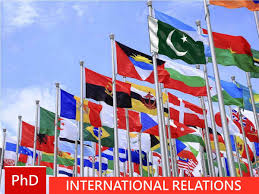
Ph.D. in International Relations
Ph.D. in International Relations is a research-intensive degree that examines global political processes, international conflicts, diplomacy, global governance, and international law. The curriculu...
Ph.D. in International Relations
×Ph.D. in International Relations is a research-intensive degree that examines global political processes, international conflicts, diplomacy, global governance, and international law. The curriculum, which typically lasts 3-5 years, focuses on essential subjects such as foreign policy analysis, international organizations (for example, the United Nations), security studies, international trade, human rights, and global environmental concerns. Students do innovative research on the interactions between states, non-state actors, and international institutions, as well as the effects of globalization, power dynamics, and international cooperation. Graduates of the program work in academia, government, international organizations, think tanks, diplomatic services, and global consulting firms. Admission normally needs a master's degree in political science, international relations, or a comparable discipline, with a strong research background and analytical skills.

Ph.D. in Food Safety & Quality
Ph.D. in Food Safety & Quality is a research-focused doctoral program designed to develop expertise in food safety, quality assurance, and regulatory standards. The course typically spans...
Ph.D. in Food Safety & Quality
×Ph.D. in Food Safety & Quality is a research-focused doctoral program designed to develop expertise in food safety, quality assurance, and regulatory standards. The course typically spans 3-5 years and equips students with advanced knowledge in microbiology, toxicology, food chemistry, and hazard analysis. Students learn to identify foodborne risks, develop quality control protocols, and understand global food safety regulations. The program combines theoretical study with practical research, preparing graduates for leadership roles in academia, industry, government agencies, or private sectors focused on food safety and quality management. Key research areas include foodborne pathogens, contamination prevention, and sustainable food practices.

Ph.D. in Industrial Engineering
Ph.D. in Industrial Engineering is a research-focused program that delves into optimizing complex systems, processes, and organizations. The program typically spans 3 - 5 years, depending on...
Ph.D. in Industrial Engineering
×Ph.D. in Industrial Engineering is a research-focused program that delves into optimizing complex systems, processes, and organizations. The program typically spans 3 - 5 years, depending on the student's pace and research topic. It emphasizes areas such as operations research, supply chain management, manufacturing systems, human factors, and quality control. Students engage in advanced coursework, followed by independent research under the guidance of faculty experts. The goal is to contribute new knowledge to the field, often with applications in industries like manufacturing, logistics, healthcare, and technology. Graduates often pursue careers in academia, industry, or consulting.

Ph.D. in Corporate Law
Ph.D. in Corporate Law is a highly specialized research program that focuses on the legal elements of business organizations, corporate governance, mergers and acquisitions, securities legisl...
Ph.D. in Corporate Law
× Ph.D. in Corporate Law is a highly specialized research program that focuses on the legal elements of business organizations, corporate governance, mergers and acquisitions, securities legislation, and commercial agreements. The degree typically lasts 3 to 5 years and includes instruction in corporate law, commercial ethics, financial laws, and international trade law, as well as extensive research. Students learn about company accountability, shareholder rights, and financial market regulation. Graduates are prepared to work in academia, legal practice, policymaking, or corporate consulting, helping to shape legal frameworks that govern business practices, corporate responsibility, and global economic activities.

Ph.D. in Operations Management
Ph.D. in Operations management focuses on advanced study into the design, optimization, and administration of company operations, with a particular emphasis on supply chain management, manufacturin...
Ph.D. in Operations Management
×Ph.D. in Operations management focuses on advanced study into the design, optimization, and administration of company operations, with a particular emphasis on supply chain management, manufacturing processes, and logistics. The program typically lasts 3 to 5 years and integrates intensive instruction in quantitative methods, business strategy, and systems modeling with original research. Students learn about process optimization, inventory management, quality control, and operational sustainability. Graduates are prepared for employment in academia, research institutes, or consultancy, where they can help to improve operational efficiency, enhance corporate performance, and discover innovative solutions to complicated challenges in a variety of industries.

Ph.D. in Procedural Law
The rules and procedures that regulate the legal system, such as civil, criminal, and administrative procedures, are the main focus of a Ph.D. program in procedural law. The program, which is usual...
Ph.D. in Procedural Law
×The rules and procedures that regulate the legal system, such as civil, criminal, and administrative procedures, are the main focus of a Ph.D. program in procedural law. The program, which is usually finished in 3-5 years, entails in-depth study and research on subjects like trial procedures, litigation processes, legal remedies, and the administration of justice. Students investigate how procedural laws affect people's rights and the way courts operate. Graduates are equipped to work as legal academics, researchers, instructors, or practitioners, helping to create more equitable and effective legal procedures in both domestic and global legal systems.

Ph.D. in Business Law
The legal facets of business, commerce, and industry are the main focus of a Ph.D. program in business law. The program, which is usually finished in 3-5 years, entails advanced studies in fie...
Ph.D. in Business Law
×The legal facets of business, commerce, and industry are the main focus of a Ph.D. program in business law. The program, which is usually finished in 3-5 years, entails advanced studies in fields like international trade rules, corporate governance, intellectual property law, contract law, and antitrust laws. Students work on academic projects that tackle legal concerns in corporate operations and how they affect international marketplaces. Graduates are equipped to work as corporate lawyers, law professors, legal researchers, or consultants, helping to create legal frameworks that promote moral and effective company practices in an increasingly globalized market.